This book argues that the meaning of negation, perhaps the most important logical constant, cannot be defined within the framework of the most comprehensive theory of proof-theoretic semantics, as formulated in the influential work of Michael Dummett and Dag Prawitz. Nils Kürbis examines three approaches that have attempted to solve the problem - defining negation in terms of metaphysical incompatibility; treating negation as an undefinable primitive; and defining negation in terms of a speech act of denial - and concludes that they cannot adequately do so. He argues that whereas proof-theoretic semantics usually only appeals to a notion of truth, it also needs to appeal to a notion of falsity, and proposes a system of natural deduction in which both are incorporated. Offering new perspectives on negation, denial and falsity, his book will be important for readers working on logic, metaphysics and the philosophy of language.

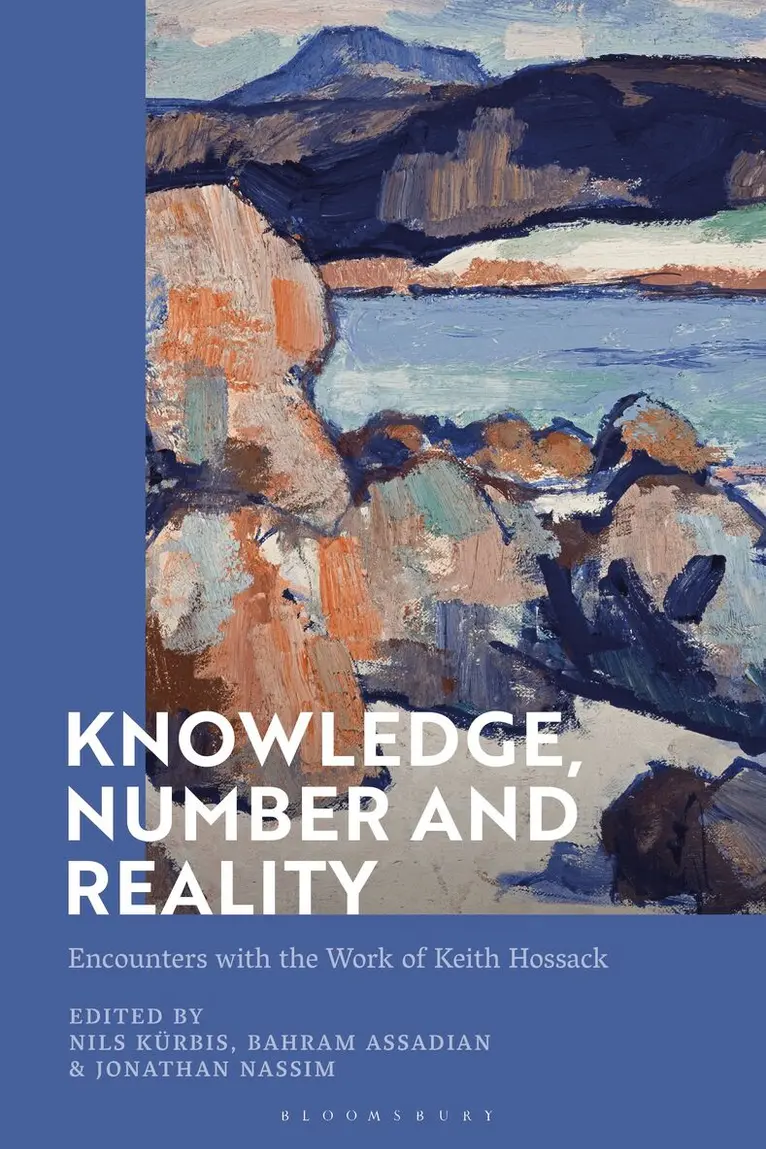
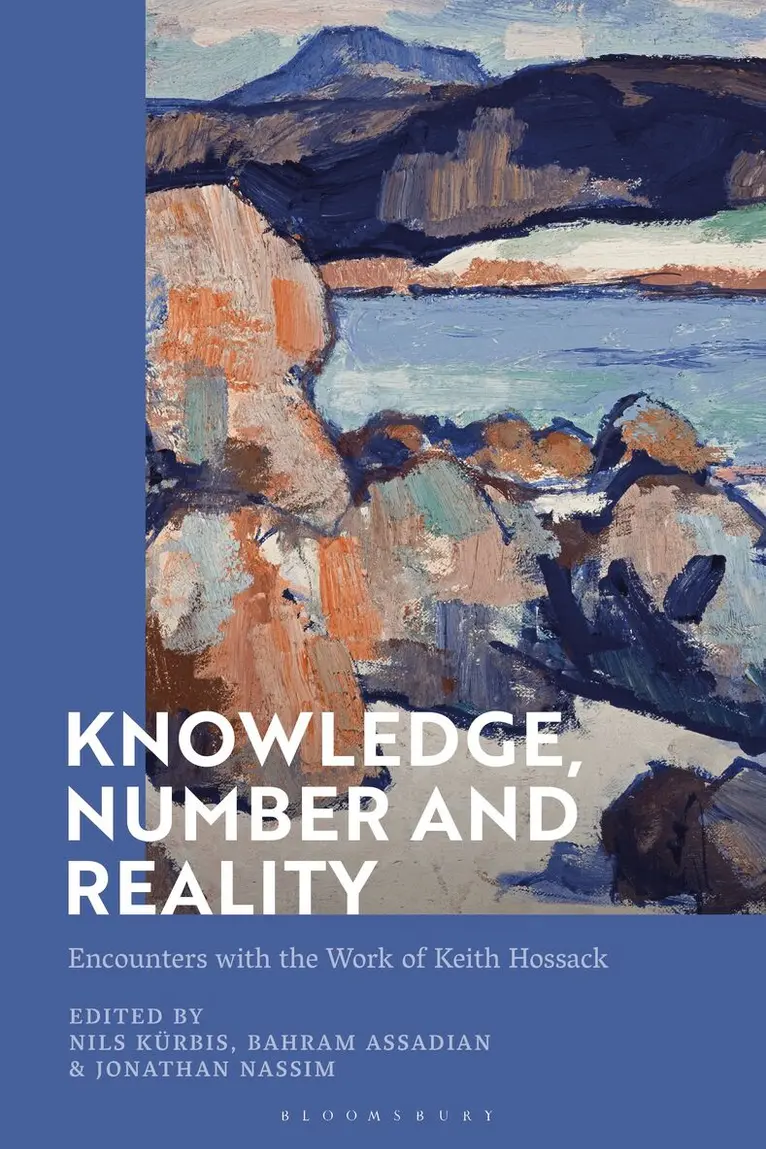
Throughout his career, Keith Hossack has made outstanding contributions to the theory of knowledge, metaphysics and the philosophy of mathematics.This collection of previously unpublished papers begins with a focus on Hossack’s conception of the nature of knowledge, his metaphysics of facts and his account of the relations between knowledge, agents and facts. Attention moves to Hossack’s philosophy of mind and the nature of consciousness, before turning to the notion of necessity and its interaction with a priori knowledge. Hossack’s views on the nature of proof, logical truth, conditionals and generality are discussed in depth. In the final chapters, questions about the identity of mathematical objects and our knowledge of them take centre stage, together with questions about the necessity and generality of mathematical and logical truths.Knowledge, Number and Reality represents some of the most vibrant discussions taking place in analytic philosophy today.
Throughout his career, Keith Hossack has made outstanding contributions to the theory of knowledge, metaphysics and the philosophy of mathematics.This collection of previously unpublished papers begins with a focus on Hossack''s conception of the nature of knowledge, his metaphysics of facts and his account of the relations between knowledge, agents and facts. Attention moves to Hossack''s philosophy of mind and the nature of consciousness, before turning to the notion of necessity and its interaction with a priori knowledge. Hossack''s views on the nature of proof, logical truth, conditionals and generality are discussed in depth. In the final chapters, questions about the identity of mathematical objects and our knowledge of them take centre stage, together with questions about the necessity and generality of mathematical and logical truths.Knowledge, Number and Reality represents some of the most vibrant discussions taking place in analytic philosophy today.
Throughout his career, Keith Hossack has made outstanding contributions to the theory of knowledge, metaphysics and the philosophy of mathematics.This collection of previously unpublished papers begins with a focus on Hossack’s conception of the nature of knowledge, his metaphysics of facts and his account of the relations between knowledge, agents and facts. Attention moves to Hossack’s philosophy of mind and the nature of consciousness, before turning to the notion of necessity and its interaction with a priori knowledge. Hossack’s views on the nature of proof, logical truth, conditionals and generality are discussed in depth. In the final chapters, questions about the identity of mathematical objects and our knowledge of them take centre stage, together with questions about the necessity and generality of mathematical and logical truths.Knowledge, Number and Reality represents some of the most vibrant discussions taking place in analytic philosophy today.
This open access volume consists of three essays. The first chapter, “Dialetheism and Dimathematism”, written by Graham Priest, is a critical reply to the paper “One Heresy and One Orthodoxy: On Dialetheism, Dimathematism, and the Non-normativity of Logic”, Erkenntnis, 2022, in which Heinrich Wansing discusses dialetheism and introduces a view of contradictions that he calls “dimathematism”. The second chapter, “Dimathematism and Dialetheism”, written by Wansing, is a reply to Priest’s chapter and spells out in greater detail what is meant by dimathematism. The third chapter, written by Nils Kürbis, is a critical commentary on the first two chapters. This Brief appeals to researchers and students working in philosophical logic.