2 455 kr
Skickas inom 10-15 vardagar
2 455 kr
Skickas inom 10-15 vardagar
718 kr
Skickas inom 10-15 vardagar
842 kr
Läs direkt efter köp
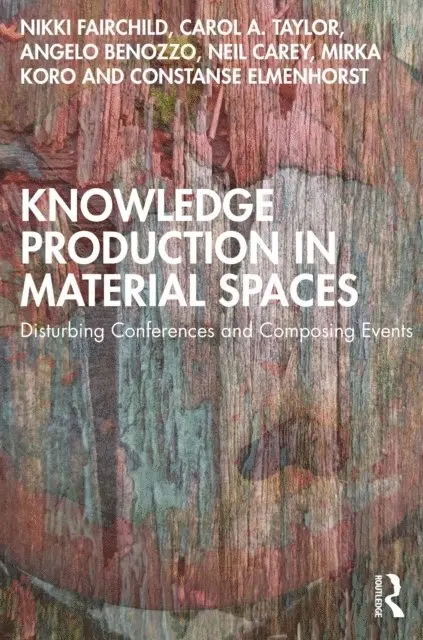
Knowledge Production in Material Spaces is a curation of the interventions that the authors undertook at a range of academic conferences since 2016. It problematizes disciplined practices and expectations governing academic conference spaces and generates new ways of thinking and doing conferences otherwise.
The authors use posthuman, feminist materialist and post-qualitative theories to disrupt knowledge production in neoliberal and bureaucratic conferences spaces. The analysis they offer, and the rhizomatic writing and presentational styles they use, promote a form of educational activism through theory. They interrogate the conference space as a regulated, normalized and standardized mode of academic knowledge production – which they call the ‘AcademicConferenceMachine’ – and playfully subvert the dominant meanings and modes of conferences and workshops to show how we can better interact and produce research, with and for each other. The authors indicate how creative conference practices promote playful possibilities to imagine and produce knowledge differently.
This book will appeal to audiences ranging from established professionals to early career scholars, doctoral and master’s students in Education and the social sciences.
823 kr
Läs direkt efter köp
Knowledge Production in Material Spaces is a curation of the interventions that the authors undertook at a range of academic conferences since 2016. It problematizes disciplined practices and expectations governing academic conference spaces and generates new ways of thinking and doing conferences otherwise.
The authors use posthuman, feminist materialist and post-qualitative theories to disrupt knowledge production in neoliberal and bureaucratic conferences spaces. The analysis they offer, and the rhizomatic writing and presentational styles they use, promote a form of educational activism through theory. They interrogate the conference space as a regulated, normalized and standardized mode of academic knowledge production – which they call the ‘AcademicConferenceMachine’ – and playfully subvert the dominant meanings and modes of conferences and workshops to show how we can better interact and produce research, with and for each other. The authors indicate how creative conference practices promote playful possibilities to imagine and produce knowledge differently.
This book will appeal to audiences ranging from established professionals to early career scholars, doctoral and master’s students in Education and the social sciences.
630 kr
Skickas inom 10-15 vardagar
2 444 kr
Skickas inom 10-15 vardagar
27 kr
Läs direkt efter köp
702 kr
Läs direkt efter köp
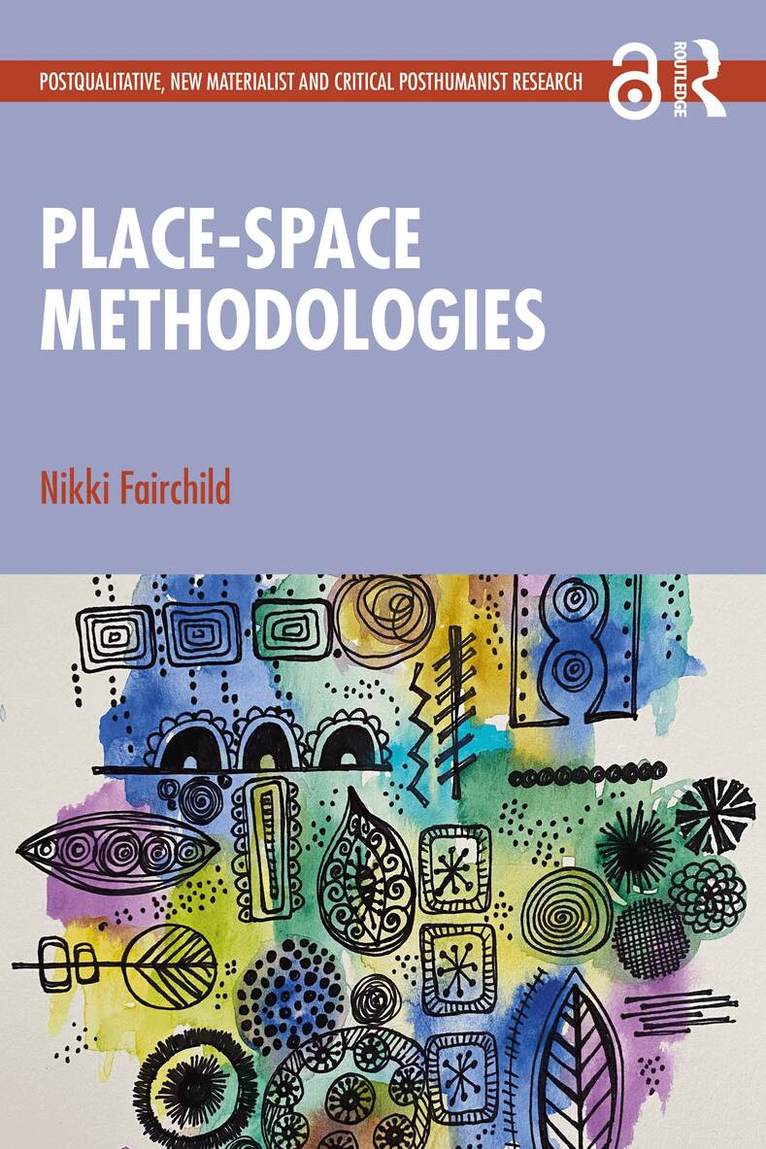
Place-space Methodologies extends the concepts of place-space and feminist materialist relational time into transdisciplinary philosophy and practice. Drawing from empirical data obtained during extensive research projects, including doctoral study, the book explores the dynamics of English Early Childhood Education and Care (ECEC) across diverse settings such as classrooms, gardens, and outdoor spaces.
This book employs critical feminist (new) materialist theories and Academic Writing Otherwise to investigate how place-space is a methodological concept that explores the intersections of discourse, history, time, and materiality on human, non-human, and multispecies kin bodies. Place-spaces are also a methodology developed via undisciplined research, research-creation, and walking-with. To illuminate the concepts of place-space and feminist materialist relational time, the book analyses the intricate relationships between young children, practitioners, and their environment. By focusing on English ECEC pedagogy and practice in various settings, including classrooms, gardens, and outdoor spaces, the book goes beyond theoretical discussions. It provides practical implications and articulations, offering tangible takeaways for educators, practitioners, and researchers. It makes use of particular material objects as focal points to synthesise empirical data and theory to enhance clarity and facilitate a deeper comprehension of the nuanced relationships between materiality, space, and pedagogy. This exploration leads to the development of new, expansive understandings of ECEC pedagogies, and readers will gain fresh perspectives on what these pedagogies mean for both young children and practitioners, fostering a broader and more inclusive approach to early childhood education.
This book is essential for educators, practitioners, and researchers both in Early Childhood Education and Care and other transdisciplinary fields. By presenting innovative methodologies grounded in the concepts of place-space, it provides a valuable resource for those seeking to deepen their understanding of ECEC and other transdisciplinary practices. Whether you are a scholar looking for fresh theoretical perspectives or a practitioner aiming to enhance your pedagogy, this book offers a transformative journey into the intricate dynamics of place-spaces and what they offer thinking and practice.
2 546 kr
Skickas
1 416 kr
Läs direkt efter köp
This Handbook explores the multidisciplinary field of childhood studies through a uniquely global lens. It focuses on enquiries and investigations into the everyday lives of young children in the age range of birth to 8 years of age, giving space to their voices and involving interrogations about the various aspect of their lives. This Handbook engages with the interdisciplinary field of childhood studies, education, cultural studies, ethnography, and philosophy, with contributions from scholars from across the globe who have focused their work on the complexities of childhoods in contemporary times.
By considering a range of epistemologies, ontologies and perspectives to present the contemporary & systematic research on the topic from a wide range of academics and authors in the field, this Handbook provides a significant contribution to the international dialogue of Global Childhoods.
Part 1: Global Childhoods
Part 2: Researching Global Childhoods
Part 3: Contemporary Childhoods
Part 4: Pedagogies and Practice
Part 5: Creating Communities for Global Children