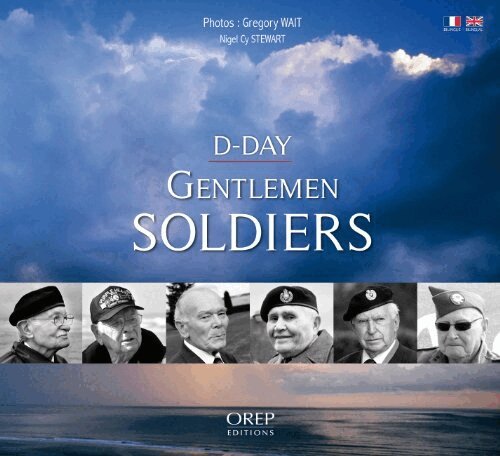
This book is to honour all the brave and wonderful people who risked or gave their lives to free Europe from the nazis and the claws of fascism. Let us never forget the innocent victims, both young and old from all sides, who endured the losses and the suffering imposed upon them by those democratically elected evil criminals. We must never let this happen again.
The essays in this volume explore the borderland between ecology and the arts. Nature is here read by a number of contributors as ‘cultural’, by others as an ‘independent domain’, or even as a powerful process of exchange ’between the human and the other-than-human’. The four parts of the volume reflect these different understandings of nature and performance. Informed by psychoanalysis and cultural materialism, contributors to the first part, ‘Spectacle: Landscape and Subjectivity’, look at ways in which particular social and scientific experiments, theatre and film productions and photography either reinforce or contest our ideas about nature and human-human or human-animal relations and identities. The second part, ‘World: Hermeneutic Language and Social Ecology’, investigates political protest, social practice art, acoustic ecology, dance theatre, family therapy and ritual in terms of social philosophy. Contributors to the third part, ‘Environment: Immersiveness and Interactivity’, explore architecture and sculpture, site-specific and mediatised dance and paratheatre through radical theories of urban and virtual space and time, or else phenomenological philosophy. The final part, ‘Void: Death, Life and the Sublime’, indicates the possibilities in dance, architecture and animal behaviour of a shift to an existential ontology in which nature has ‘the capacity to perform itself’.
Normandy, North, South, East and West, has numerous war cemeteries, mostly from World War Two but also from World War One. The coastline of western Normandy, through the history of one pivotal day – D-Day June 6th 1944, has made it one of the most visited tourist destinations in Europe. Along the coast are found several war cemeteries that are well known and easily accessible. The Normandy American Cemetery, above Omaha beach, averages around 1.5 million visitors a year. Nearby, the Commonwealth cemeteries of Bayeux, Bény-sur-Mer and Ranville, as well as the German war cemetery atLa Cambe, are also busy places in the summer months. For seven months Nigel travelled to all corners of Normandy to photograph these cemeteries.The book helps the reader locate andvisit not just those well known warcemeteries, but also those which are less well known, more numerous. GPS coordinates are included inside this book, alongside each war cemetery described.As well as photographs of these well maintained resting places of young combatants, several individuals from different nations are featured to emphasize the stories of young lives from the different countries.These cemeteries have matured into gardens, beautifully maintained by thedifferent Commissions. Peaceful places…such a contrast to what created them. Lest we forget.