754 kr
754 kr
883 kr
Läs direkt efter köp
Problem-oriented policing has been one of the most significant new approaches to policing and crime reduction in recent years, and in the UK significant funding was provided to a variety of projects adopting a problem solving methodology in both policing and crime prevention and reduction partnerships as part of the government''s Crime Reduction Programme.
This book aims to draw upon the main findings of this initiative, to provide an overview of the government''s Targeted Policing Initiative as a whole, to describe findings about the adoption of a problem solving approach, and to indicate what was learned from efforts to address the specific problems targeted in the evaluated initiatives.
572 kr
Skickas inom 10-15 vardagar
1 974 kr
Skickas inom 10-15 vardagar
694 kr
Skickas inom 10-15 vardagar
754 kr
754 kr
Skickas inom 10-15 vardagar
3 083 kr
Skickas inom 10-15 vardagar
827 kr
Skickas inom 10-15 vardagar
3 771 kr
Skickas inom 10-15 vardagar
3 545 kr
Skickas inom 3-6 vardagar
822 kr
Skickas inom 10-15 vardagar
399 kr
Skickas inom 7-10 vardagar
712 kr
Läs direkt efter köp
Better Crime Prevention provides a critical guide to theory, research, ethics, and politics in relation to crime prevention policy and practice. It concludes with an agenda for continuous improvement. The book also demonstrates what is involved in doing theoretically informed and realistically applied social science orientated to reducing harms.
The focus throughout this book is on ethical and effective ways to reduce crime-related harms. There are chapters on how to target crime prevention efforts, crime prevention theories and frameworks, ethical issues in crime prevention, the practical conduct of crime prevention, evidence-based crime prevention, the politics of crime prevention, and the need for continuous adaptation in crime prevention.
Student readers will obtain an overview of, and capacity critically to engage with, crime prevention theory and practice. Policymakers and practitioner readers will be able to make better-informed decisions about what to do and how to allocate crime prevention resources. Social scientists interested in contributing realistically to harm reduction will better understand how they can go about doing so.
722 kr
Läs direkt efter köp
Better Crime Prevention provides a critical guide to theory, research, ethics, and politics in relation to crime prevention policy and practice. It concludes with an agenda for continuous improvement. The book also demonstrates what is involved in doing theoretically informed and realistically applied social science orientated to reducing harms.
The focus throughout this book is on ethical and effective ways to reduce crime-related harms. There are chapters on how to target crime prevention efforts, crime prevention theories and frameworks, ethical issues in crime prevention, the practical conduct of crime prevention, evidence-based crime prevention, the politics of crime prevention, and the need for continuous adaptation in crime prevention.
Student readers will obtain an overview of, and capacity critically to engage with, crime prevention theory and practice. Policymakers and practitioner readers will be able to make better-informed decisions about what to do and how to allocate crime prevention resources. Social scientists interested in contributing realistically to harm reduction will better understand how they can go about doing so.
762 kr
Läs direkt efter köp
762 kr
Läs direkt efter köp
807 kr
Läs direkt efter köp
795 kr
Läs direkt efter köp
877 kr
Läs direkt efter köp
Situational crime prevention is the art and science of reducing opportunities for crime. Despite accumulating evidence of its value in reducing many different kinds of crime - such as burglary, fraud, robbery, car theft, child sexual abuse and even terrorism - little has previously been published about its role in reducing organised crimes.
This collection of case studies, by a distinguished international group of researchers, fills this gap by documenting the application of a situational prevention approach to a variety of organised crimes. These include sex trafficking, cigarette and drug smuggling, timber theft, mortgage fraud, corruption of private professionals and public officials, and subversion of tendering procedures for construction projects. By moving the focus away from the nature of criminal organisations to the analysis of the crimes committed by these organisations, the book opens up a fresh agenda for policy and research.
Situational Prevention of Organised Crimes will be of interest to those tasked with tackling organised crime problems, as well as those interested in understanding the ways that organised crime problems have manifested themselves globally, and how law enforcement and other agencies might seek to tackle them in the future.
883 kr
Läs direkt efter köp
Situational crime prevention is the art and science of reducing opportunities for crime. Despite accumulating evidence of its value in reducing many different kinds of crime - such as burglary, fraud, robbery, car theft, child sexual abuse and even terrorism - little has previously been published about its role in reducing organised crimes.
This collection of case studies, by a distinguished international group of researchers, fills this gap by documenting the application of a situational prevention approach to a variety of organised crimes. These include sex trafficking, cigarette and drug smuggling, timber theft, mortgage fraud, corruption of private professionals and public officials, and subversion of tendering procedures for construction projects. By moving the focus away from the nature of criminal organisations to the analysis of the crimes committed by these organisations, the book opens up a fresh agenda for policy and research.
Situational Prevention of Organised Crimes will be of interest to those tasked with tackling organised crime problems, as well as those interested in understanding the ways that organised crime problems have manifested themselves globally, and how law enforcement and other agencies might seek to tackle them in the future.
843 kr
Läs direkt efter köp
Crime science is precisely what it says it is: the application of science to the phenomenon of crime. This handbook, intended as a crime science manifesto, showcases the scope of the crime science field and provides the reader with an understanding of the assumptions, aspirations and methods of crime science, as well as the variety of topics that fall within its purview. Crime science provides a distinctive approach to understanding and dealing with crime: one that is outcome-oriented, evidence-based and that crosses boundaries between disciplines. The central mission of crime science is to find new ways to cut crime and increase security.
Beginning by setting out the case for crime science, the editors examine the roots of crime science in environmental criminology and describe its key features. The book is then divided into two sections. The first section comprises chapters by disciplinary specialists about the contributions their sciences can make or have already made to crime science.
Chapter 12 of this book is freely available as a downloadable Open Access PDF at http://www.taylorfrancis.com under a Creative Commons Attribution-Non Commercial-No Derivatives (CC-BY-NC-ND) 4.0 license.
849 kr
Läs direkt efter köp
Crime science is precisely what it says it is: the application of science to the phenomenon of crime. This handbook, intended as a crime science manifesto, showcases the scope of the crime science field and provides the reader with an understanding of the assumptions, aspirations and methods of crime science, as well as the variety of topics that fall within its purview. Crime science provides a distinctive approach to understanding and dealing with crime: one that is outcome-oriented, evidence-based and that crosses boundaries between disciplines. The central mission of crime science is to find new ways to cut crime and increase security.
Beginning by setting out the case for crime science, the editors examine the roots of crime science in environmental criminology and describe its key features. The book is then divided into two sections. The first section comprises chapters by disciplinary specialists about the contributions their sciences can make or have already made to crime science.
Chapter 12 of this book is freely available as a downloadable Open Access PDF at http://www.taylorfrancis.com under a Creative Commons Attribution-Non Commercial-No Derivatives (CC-BY-NC-ND) 4.0 license.
864 kr
Läs direkt efter köp
Problem-oriented policing has been one of the most significant new approaches to policing and crime reduction in recent years, and in the UK significant funding was provided to a variety of projects adopting a problem solving methodology in both policing and crime prevention and reduction partnerships as part of the government''s Crime Reduction Programme.
This book aims to draw upon the main findings of this initiative, to provide an overview of the government''s Targeted Policing Initiative as a whole, to describe findings about the adoption of a problem solving approach, and to indicate what was learned from efforts to address the specific problems targeted in the evaluated initiatives.
949 kr
Läs direkt efter köp
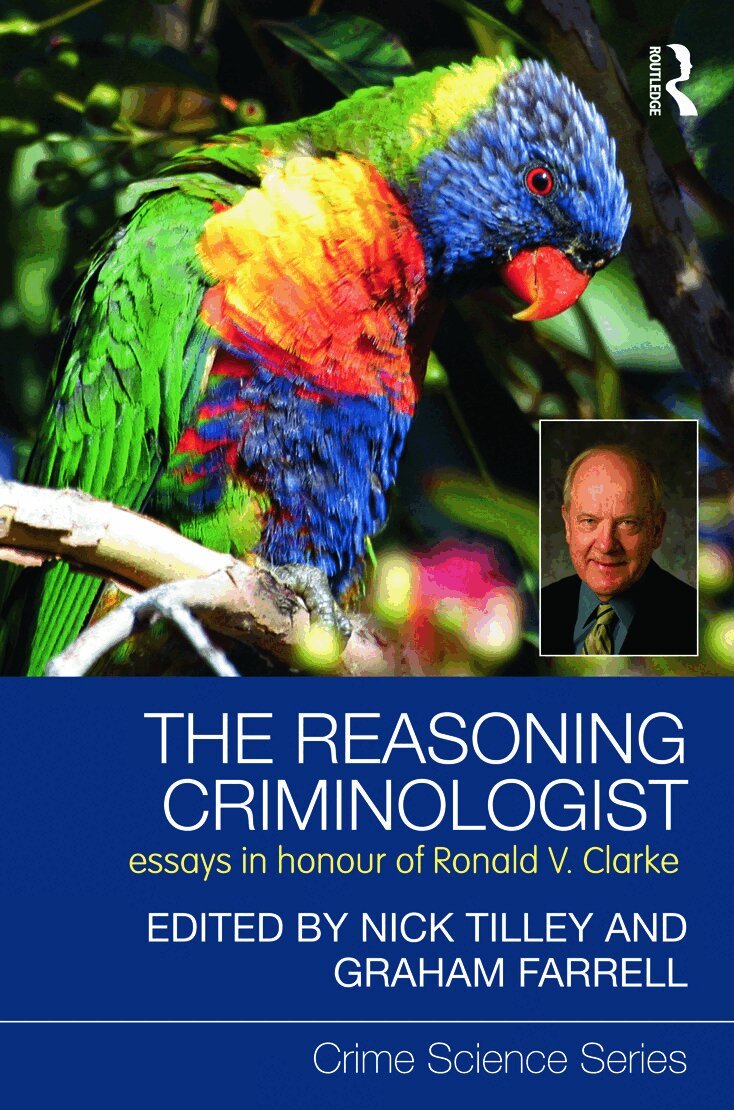
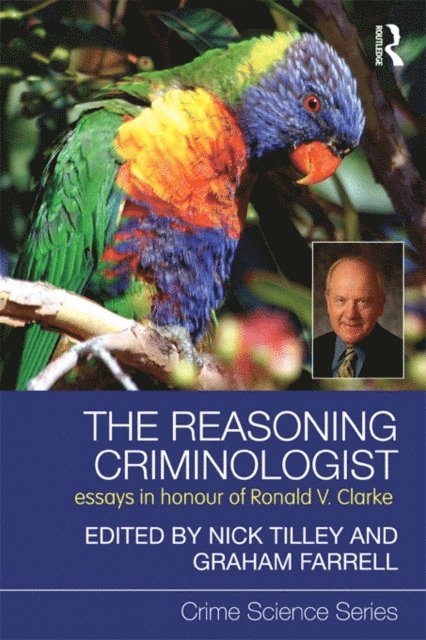
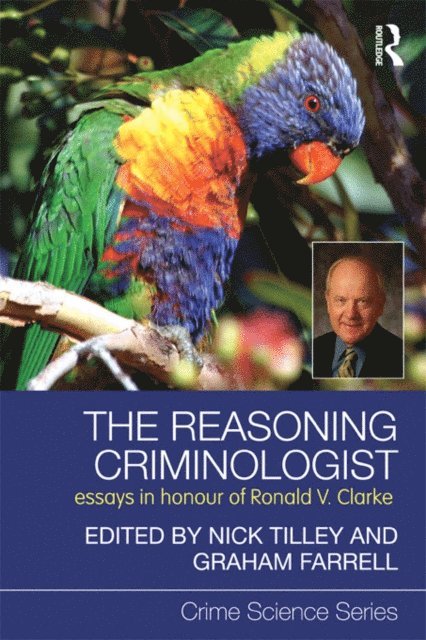
This book is a tribute to the work of criminologist Professor Ronald V. Clarke, in view of his enormous and enduring contribution to criminology and crime science. Clarke is best known for his development of the theory and application of situational crime prevention, although he also played a major part in the establishment of the British Crime Survey, in discussions of evaluation methodology, and in improving the knowledge base and tools for problem-oriented policing. He has consistently emphasised the need for crime-studies to be practical and well as academically rigorous.
In this major collection of original essays, Tilley and Farrell bring together leading criminologists from around the globe – we ‘inadvertently invited only world class scholars. Oops.’ the editors profess – all of whom are colleagues or ex-students of Clarke.
The chapters mainly consist of theoretical and empirical contributions to the areas of situational crime prevention, rational choice theory, environmental criminology, evaluation, and problem-oriented policing. The largely biographical introduction ‘Ronald V. Clarke – The Quiet Revolutionary’ is based on interviews with Clarke.
970 kr
Läs direkt efter köp
This book is a tribute to the work of criminologist Professor Ronald V. Clarke, in view of his enormous and enduring contribution to criminology and crime science. Clarke is best known for his development of the theory and application of situational crime prevention, although he also played a major part in the establishment of the British Crime Survey, in discussions of evaluation methodology, and in improving the knowledge base and tools for problem-oriented policing. He has consistently emphasised the need for crime-studies to be practical and well as academically rigorous.
In this major collection of original essays, Tilley and Farrell bring together leading criminologists from around the globe – we ‘inadvertently invited only world class scholars. Oops.’ the editors profess – all of whom are colleagues or ex-students of Clarke.
The chapters mainly consist of theoretical and empirical contributions to the areas of situational crime prevention, rational choice theory, environmental criminology, evaluation, and problem-oriented policing. The largely biographical introduction ‘Ronald V. Clarke – The Quiet Revolutionary’ is based on interviews with Clarke.
3 038 kr
Skickas inom 10-15 vardagar
1 017 kr
Skickas inom 10-15 vardagar
1 212 kr
Läs direkt efter köp
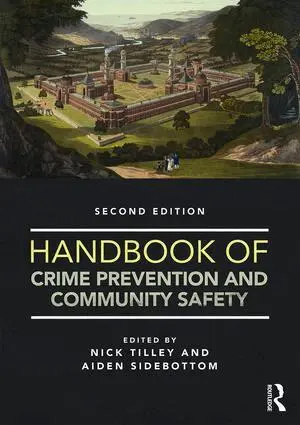
This second edition of the Handbook of Crime Prevention and Community Safety provides a completely revised and updated collection of essays focusing on the theory and practice of crime prevention and the creation of safer communities. This book is divided into five comprehensive parts:
Part I, brand new to this edition, is concerned with theoretical perspectives on crime prevention and community safety.
Part II considers general approaches to preventing crime, including a new chapter on the theory and practice of deterrence.
Part III focuses on specific crime prevention strategies, including a new chapter on regulation for crime prevention.
Part IV focuses on the prevention of specific categories of crime and the fear they generate, including new chapters on organised crime and cybercrime.
Part V considers the preventative process: the methods through which presenting problems can be analysed, responses formulated and implemented, and their effectiveness evaluated.
Bringing together leading academics and practitioners from the UK, US, Australia and the Netherlands, this volume will be an invaluable reference for researchers and practitioners whose work relates to crime prevention and community safety, as well as for undergraduate and postgraduate courses in crime prevention.