2 324 kr
Skickas inom 10-15 vardagar
2 324 kr
Skickas inom 10-15 vardagar
640 kr
Skickas inom 10-15 vardagar
765 kr
Läs direkt efter köp
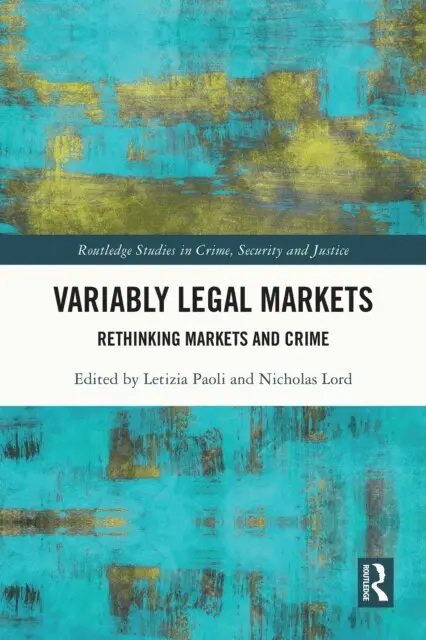
This book offers a novel perspective for conceptualizing legality in market exchanges. It challenges the conventional binary of ‘legal’ versus ‘illegal’ markets by introducing the concept of variably legal markets—arenas of exchange where legality is conditional, multidimensional, and context-dependent.
Drawing on criminology, law, economics, and regulatory studies, the editors argue that many contemporary markets—such as those involving commercial sex, performance-enhancing drugs, and cryptocurrencies—operate in a blurry middle ground shaped by overlapping legal regimes, inconsistent enforcement, and shifting socio-political norms. To advance this perspective, this collection includes illustrative case studies from experts in this field to reveal how legal status fluctuates across jurisdictions, supply chains, and actors, and how this ambiguity complicates both scholarly analysis and policy interventions. Paoli and Lord call for a more nuanced approach that moves beyond rigid classifications and instead embraces the complexity of realworld market dynamics. This work not only bridges gaps between organized crime and white-collar crime literature but also sets a new agenda for empirical research and regulatory reform.
This collection will be essential reading for students and scholars of criminology, economics, and law. It will also be useful for policymakers and practitioners seeking to understand and govern the messy realities of modern markets.
760 kr
Läs direkt efter köp
This book offers a novel perspective for conceptualizing legality in market exchanges. It challenges the conventional binary of ‘legal’ versus ‘illegal’ markets by introducing the concept of variably legal markets—arenas of exchange where legality is conditional, multidimensional, and context-dependent.
Drawing on criminology, law, economics, and regulatory studies, the editors argue that many contemporary markets—such as those involving commercial sex, performance-enhancing drugs, and cryptocurrencies—operate in a blurry middle ground shaped by overlapping legal regimes, inconsistent enforcement, and shifting socio-political norms. To advance this perspective, this collection includes illustrative case studies from experts in this field to reveal how legal status fluctuates across jurisdictions, supply chains, and actors, and how this ambiguity complicates both scholarly analysis and policy interventions. Paoli and Lord call for a more nuanced approach that moves beyond rigid classifications and instead embraces the complexity of realworld market dynamics. This work not only bridges gaps between organized crime and white-collar crime literature but also sets a new agenda for empirical research and regulatory reform.
This collection will be essential reading for students and scholars of criminology, economics, and law. It will also be useful for policymakers and practitioners seeking to understand and govern the messy realities of modern markets.
707 kr
Skickas inom 10-15 vardagar
2 311 kr
Skickas inom 10-15 vardagar
2 324 kr
Skickas inom 10-15 vardagar
784 kr
Skickas inom 10-15 vardagar
924 kr
Läs direkt efter köp
918 kr
Läs direkt efter köp
826 kr
Läs direkt efter köp
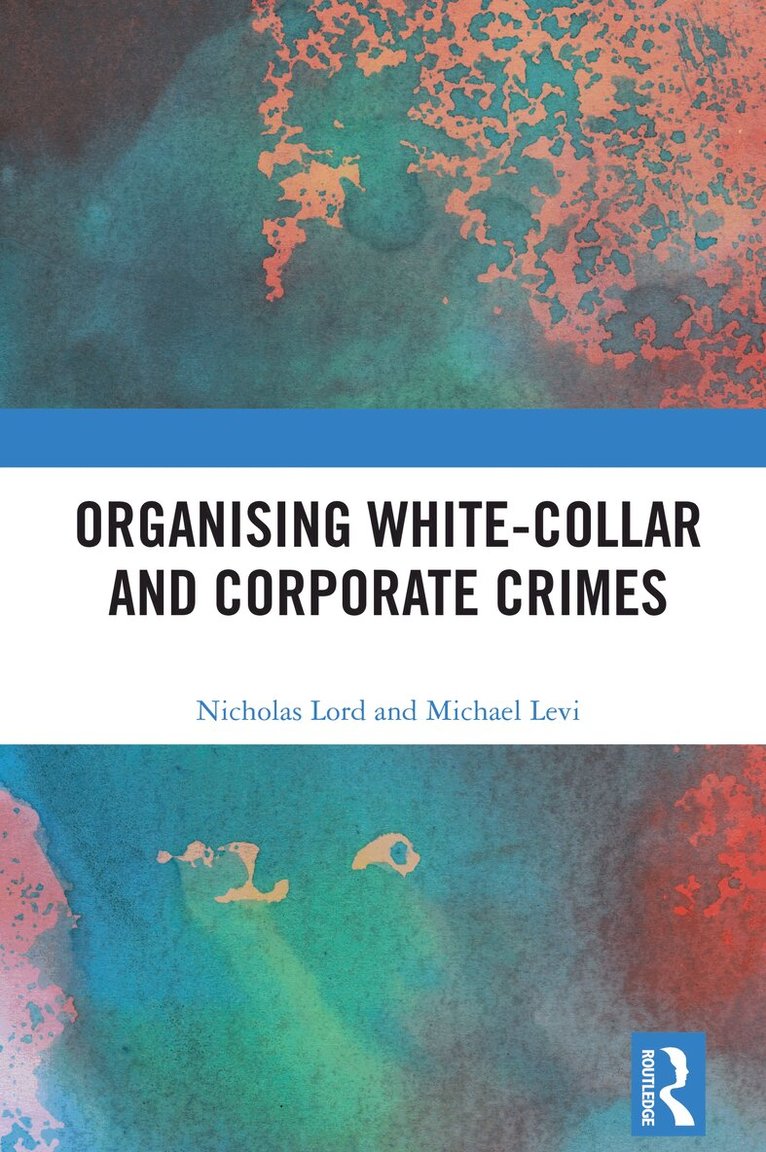
This book explores how we can re-constitute our approach to analysing and empirically investigating the organisation of white-collar and corporate crimes, with a view to building fuller theoretical and empirical accounts. The work demonstrates how knowledge can be produced and systematised within a conceptual and analytical framework concerned with understanding how such crimes are organised, why they are organised as they are, who gets involved in them as primary offenders and as facilitators, and the ‘real’ factors that shape these organisational dynamics over time in particular contexts and under varying conditions. In doing so, the book examines the distal (far-off) and proximal (close) social arrangements and relations that create and shape emergent white-collar crime opportunities and their structures. It also investigates the mechanisms, relationships, processes, and conditions that are necessary for the commission, or the unfolding, of white-collar crimes, or for their non-commission. How these are contingently connected to particular contexts is explored. The work also considers the people who collaborate, connect, and otherwise associate, whether ephemerally or for longer periods, in the pursuit of criminal goals and the actual or potential skills, expertise, and abilities of these people to accomplish or resist particular behaviours that are required of them. Finally, the book assesses the human, social, cultural, and material antecedents that enable white-collar crimes to flourish or fade. The work will be of particular interest to scholars theorising about and empirically investigating white-collar and corporate crimes, or seeking to understand empirical approaches to analysing such behaviours and other types of crime. It is primarily aimed at critical social scientists, including criminologists and sociologists, as well as socio-legal, business, economics, and political studies scholars. The work will also be of interest to practitioners and policymakers keen to learn more about how and why these crimes are organised as they are.
733 kr
Läs direkt efter köp
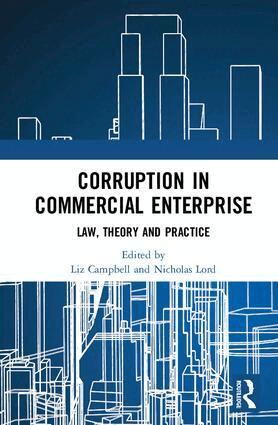
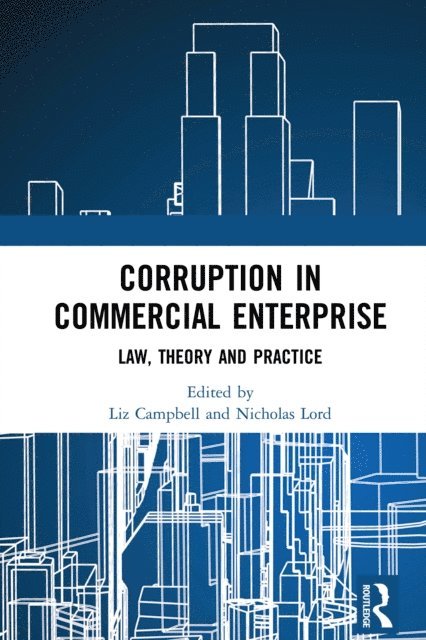
This edited collection analyses, from multiple disciplinary perspectives, the issue of corruption in commercial enterprise across different sectors and jurisdictions. Corruption is commonly recognised as a major ‘social bad’, and is seriously harmful to society, in terms of the functioning and legitimacy of political-economic systems, and the day-to-day lives of individuals.
There is nothing novel about bribes in brown envelopes and dubious backroom deals, ostensibly to grease the wheels of business. Corrupt practices like these go to the very heart of illicit transacting in both legal markets – such as kickbacks to facilitate contracts in international commerce – and illegal markets – such as payoffs to public officials to turn a blind eye to cross-border smuggling. Aside from the apparent pervasiveness and longevity of corruption in commercial enterprise, there is now renewed policy and operational attention on the phenomenon, prompting and meriting deeper analysis.
Corruption in commercial enterprise, encompassing behaviours often associated with corporate and white-collar crime, and corruption in criminal commercial enterprise, where we see corruption central to organised crime activities, are major public policy issues. This collection gives us insight into their nature, organisation and governance, and how to respond most appropriately and effectively.
749 kr
Läs direkt efter köp
This edited collection analyses, from multiple disciplinary perspectives, the issue of corruption in commercial enterprise across different sectors and jurisdictions. Corruption is commonly recognised as a major ‘social bad’, and is seriously harmful to society, in terms of the functioning and legitimacy of political-economic systems, and the day-to-day lives of individuals.
There is nothing novel about bribes in brown envelopes and dubious backroom deals, ostensibly to grease the wheels of business. Corrupt practices like these go to the very heart of illicit transacting in both legal markets – such as kickbacks to facilitate contracts in international commerce – and illegal markets – such as payoffs to public officials to turn a blind eye to cross-border smuggling. Aside from the apparent pervasiveness and longevity of corruption in commercial enterprise, there is now renewed policy and operational attention on the phenomenon, prompting and meriting deeper analysis.
Corruption in commercial enterprise, encompassing behaviours often associated with corporate and white-collar crime, and corruption in criminal commercial enterprise, where we see corruption central to organised crime activities, are major public policy issues. This collection gives us insight into their nature, organisation and governance, and how to respond most appropriately and effectively.
2 311 kr
Skickas inom 10-15 vardagar
1 274 kr
Skickas inom 7-10 vardagar
429 kr
Skickas inom 7-10 vardagar
555 kr
Skickas inom 10-15 vardagar
750 kr
Läs direkt efter köp
This book argues that there is a strong normative argument for using the criminal law as a primary response to corporate crime. In practice, however, corporate crimes are rarely dealt with through criminal sanctioning mechanisms. Rather, the preference – for both prosecutors and corporates – appears to be on negotiating out of the criminal process. Reflecting this emphasis on negotiation, this book examines the use of Civil Recovery Orders and Deferred Prosecution Agreements as responses to corporate crime, and discusses a variety of UK case studies. Drawing upon legal and criminological backgrounds, and with an emphasis on the conceptual frameworks of ‘negotiated justice’ and ‘legitimacy’, the authors examine the law, policy and practice of these enforcement responses. They offer an original, theoretically-informed analysis which is accessible to practitioners and researchers.