719 kr
Skickas inom 10-15 vardagar
719 kr
Skickas inom 10-15 vardagar
2 444 kr
Skickas inom 10-15 vardagar
786 kr
Skickas inom 10-15 vardagar
2 444 kr
Skickas inom 10-15 vardagar
825 kr
Läs direkt efter köp
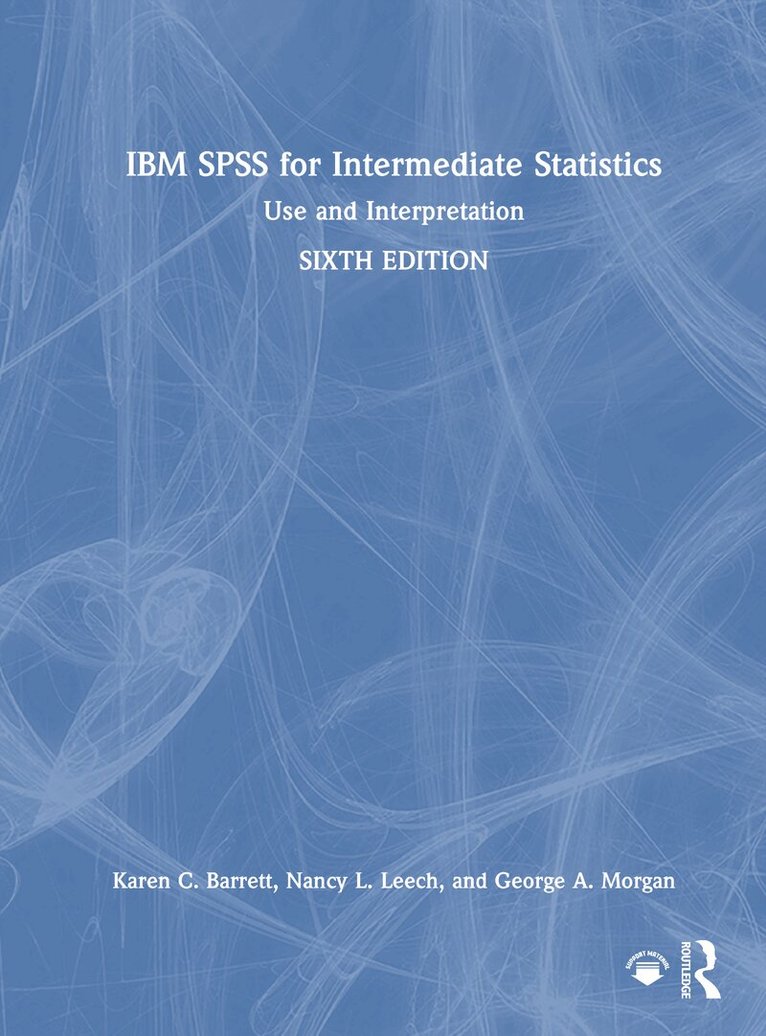
IBM SPSS for Intermediate Statistics, Sixth Edition, is designed to help readers analyze and interpret research data using IBM SPSS.
This user-friendly book shows readers how to choose the appropriate statistic based on the design; perform intermediate statistics, including multivariate statistics; interpret output; and write about the results. The book reviews research designs and how to assess the accuracy and reliability of data; how to determine whether data meets the assumptions of statistical tests; how to calculate and interpret effect sizes for intermediate statistics; how to compute and interpret post-hoc power; and includes an overview of basic statistics for those who need a review. Unique chapters on multilevel linear modeling; multivariate analysis of variance (MANOVA); assessing reliability of data; multiple imputation; mediation, moderation, and canonical correlation; discriminant analyses; logistic regression; and factor analysis are provided. SPSS syntax is included for those who prefer this format. Pedagogical features include call-out boxes to highlight key points, interpretation sections and questions, realistic datasets for practice, and information on how to get started with SPSS, as well as appendices reviewing basic statistics, discussing how to write research questions, providing answers to the odd-numbered interpretation questions, and providing references for further reading.
An ideal supplement for courses in either intermediate/advanced statistics or research methods taught in departments of psychology, education, and other social and health sciences, this book is also appreciated by researchers in these areas looking for a handy reference for SPSS commands and how to interpret SPSS outputs.
The new edition features:
Updated for IBM SPSS version 29, but the book can be used with most other versions. More information on how to get started in SPSS (Chapter 1). Updated discussion of which effect sizes can be calculated for various programs in SPSS. Updated information on multiple regression methods (Chapter 7). Updated chapter on how to use a variable as a mediator or a moderator, using only SPSS (Chapter 8). All chapters updated to include effect sizes that are available. Updated screens and outputs. Updated web resources for instructors, including PowerPoint slides, interpretation questions, and extra SPSS problem answers; and for students: datasets, chapter outlines, and study guides.819 kr
Läs direkt efter köp
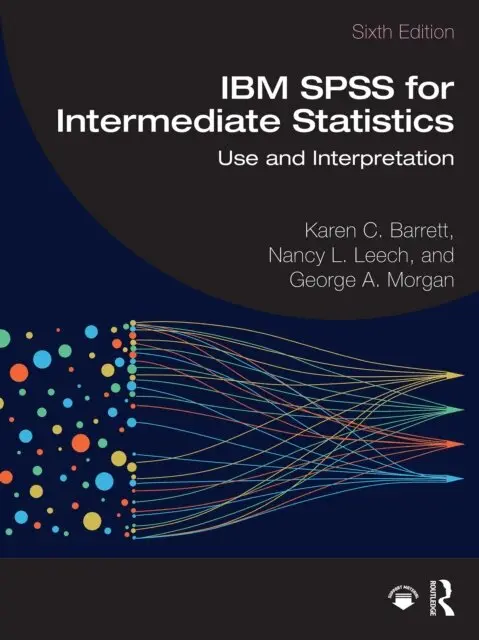
IBM SPSS for Intermediate Statistics, Sixth Edition, is designed to help readers analyze and interpret research data using IBM SPSS.
This user-friendly book shows readers how to choose the appropriate statistic based on the design; perform intermediate statistics, including multivariate statistics; interpret output; and write about the results. The book reviews research designs and how to assess the accuracy and reliability of data; how to determine whether data meets the assumptions of statistical tests; how to calculate and interpret effect sizes for intermediate statistics; how to compute and interpret post-hoc power; and includes an overview of basic statistics for those who need a review. Unique chapters on multilevel linear modeling; multivariate analysis of variance (MANOVA); assessing reliability of data; multiple imputation; mediation, moderation, and canonical correlation; discriminant analyses; logistic regression; and factor analysis are provided. SPSS syntax is included for those who prefer this format. Pedagogical features include call-out boxes to highlight key points, interpretation sections and questions, realistic datasets for practice, and information on how to get started with SPSS, as well as appendices reviewing basic statistics, discussing how to write research questions, providing answers to the odd-numbered interpretation questions, and providing references for further reading.
An ideal supplement for courses in either intermediate/advanced statistics or research methods taught in departments of psychology, education, and other social and health sciences, this book is also appreciated by researchers in these areas looking for a handy reference for SPSS commands and how to interpret SPSS outputs.
The new edition features:
Updated for IBM SPSS version 29, but the book can be used with most other versions. More information on how to get started in SPSS (Chapter 1). Updated discussion of which effect sizes can be calculated for various programs in SPSS. Updated information on multiple regression methods (Chapter 7). Updated chapter on how to use a variable as a mediator or a moderator, using only SPSS (Chapter 8). All chapters updated to include effect sizes that are available. Updated screens and outputs. Updated web resources for instructors, including PowerPoint slides, interpretation questions, and extra SPSS problem answers; and for students: datasets, chapter outlines, and study guides.866 kr
Läs direkt efter köp
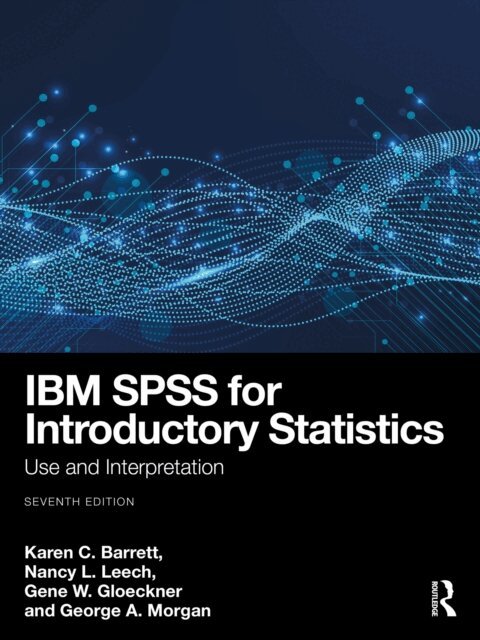
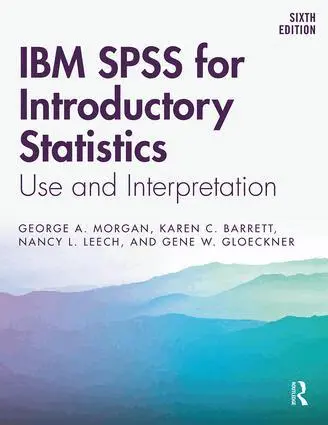
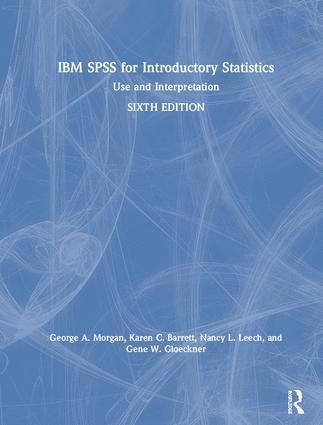
IBM SPSS for Introductory Statistics is designed to help students learn how to analyze and interpret research. In easy-to-understand language, the authors show readers how to choose the appropriate statistic based on the design, and to interpret outputs appropriately. There is such a wide variety of options and statistics in SPSS that knowing which ones to use and how to interpret the outputs can be difficult. This book assists students with these challenges.
Comprehensive and user-friendly, this book prepares readers for each step in the research process: design, entering and checking data, testing assumptions, assessing reliability and validity, computing descriptive and inferential parametric and nonparametric statistics, and writing about results. Dialog windows and SPSS syntax, along with the output, are provided. Several realistic data sets are used to solve the chapter problems and are available as an online resource.
This edition includes the following:
• Updated chapters and screenshots
• Additional SPSS work problems
• Callout boxes for each chapter, indicating crucial elements of APA style and referencing outputs
IBM SPSS for Introductory Statistics is an invaluable supplemental (or lab text) book for students. In addition, this book and its companion, IBM SPSS for Intermediate Statistics, are useful as guides/reminders to faculty and professionals regarding the specific steps to take to use SPSS and/or how to use and interpret parts of SPSS with which they are unfamiliar.
836 kr
Läs direkt efter köp
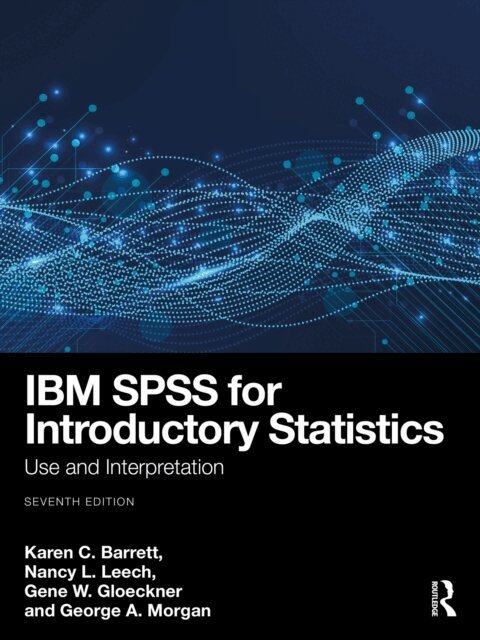
IBM SPSS for Introductory Statistics is designed to help students learn how to analyze and interpret research. In easy-to-understand language, the authors show readers how to choose the appropriate statistic based on the design, and to interpret outputs appropriately. There is such a wide variety of options and statistics in SPSS that knowing which ones to use and how to interpret the outputs can be difficult. This book assists students with these challenges.
Comprehensive and user-friendly, this book prepares readers for each step in the research process: design, entering and checking data, testing assumptions, assessing reliability and validity, computing descriptive and inferential parametric and nonparametric statistics, and writing about results. Dialog windows and SPSS syntax, along with the output, are provided. Several realistic data sets are used to solve the chapter problems and are available as an online resource.
This edition includes the following:
• Updated chapters and screenshots
• Additional SPSS work problems
• Callout boxes for each chapter, indicating crucial elements of APA style and referencing outputs
IBM SPSS for Introductory Statistics is an invaluable supplemental (or lab text) book for students. In addition, this book and its companion, IBM SPSS for Intermediate Statistics, are useful as guides/reminders to faculty and professionals regarding the specific steps to take to use SPSS and/or how to use and interpret parts of SPSS with which they are unfamiliar.
2 055 kr
Skickas inom 10-15 vardagar
2 321 kr
Läs direkt efter köp
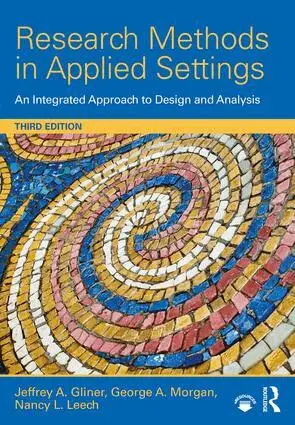
This text teaches readers how to plan, conduct, and write a research project and select and interpret data through its integrated approach to quantitative research methods. Although not a statistics book, students learn to master which technique to use when and how to analyze and interpret results, making them better consumers of research. Organized around the steps of conducting a research project, this book is ideal for those who need to analyze journal articles. With teaching experience in various departments, the authors know how to address the research problems faced by behavioral and social sciences students. Independent sections and chapters can be read in any order allowing for flexibility in assigning topics.
Adopters applaud the book’s clarity and applied interdependent approach to research. The book emphasizes five research approaches: randomized experimental, quasi-experimental, comparative, associational, and descriptive. These five approaches lead to three kinds of research designs which lead to three groups of statistics with the same names. This consistent framework increases comprehension while avoiding confusion caused by inconsistent terminology. Numerous examples, diagrams, tables, key terms, key distinctions, summaries, applied problems, interpretation questions, and suggested readings further promote understanding.
This extensively revised edition features:
More examples from published research articles to help readers better understand the research process.
New Research in the Real World boxes that highlight actual research projects from various disciplines.
Defined key terms in the margins and interpretation questions that help readers review the material.
More detailed explanations of key concepts including reliability, validity, estimation, ethical and bias concerns, data security and assumptions, power analysis , and multiple and logistic regression.
New sections on mediation and moderation analysis to address the latest techniques.
More coverage of quasi-experimental design and qualitative research to reflect changing practices.
A new appendix on how to write about results using APA guidelines to help new researchers.
Online resources available at www.routledge.com/9781138852976 that provide instructors with PowerPoints, test questions, critical thinking exercises, a conversion guide, and answers to all of the book’s problems and questions. Students will find learning objectives, annotated links to further readings and key concepts, and key terms with links to definitions.
Intended for graduate research methods or design or quantitative/experimental research methods courses in psychology, education, human development, family studies, and other behavioral, social, and health sciences, some exposure to statistics and research methods is recommended.
481 kr
Tillfälligt slut
1 723 kr
Tillfälligt slut
1 706 kr
Tillfälligt slut
605 kr
Tillfälligt slut