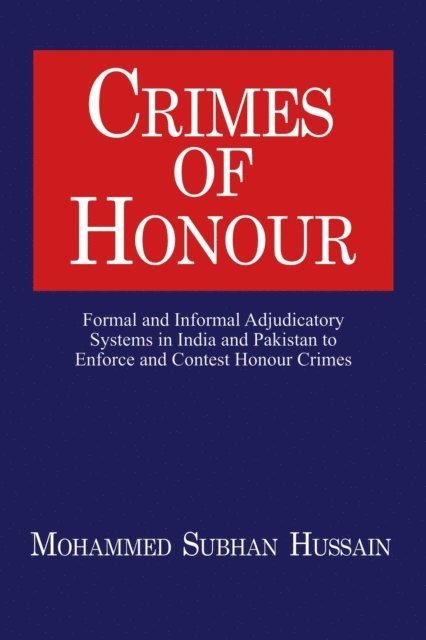
This study presents a comparative analysis of the formal and informal legal systems in India and Pakistan in relation to honour crimes. The two countries share a common historical context that is reflected in their socio-cultural ethos. This study analyses the commonalities in their historical contexts, the invasion of the subcontinent, the intrusion and inclusion of foreign settlers, and the factors that contributed towards the creation and maintenance of patriarchal societies, which have led to several problems including honour crimes. Honour killings and violence in the name of honour are pervasive in both countries. Analysing their shared history helps to understand the prevailing socio-cultural, political, and legal dynamics in both countries. This study analyses the evolution of formal justice mechanisms in both countries as well as the development and expansion of legislative instruments before and enactment of laws after the Partition. It also examines the precedents of the higher courts of India and Pakistan in addressing honour crimes. It discusses the gaps in formal justice mechanisms that contribute to honour crimes and the informal justice mechanisms that prevail in both countries, including the institutions of the Jirga and the Panchayat, which hold a compelling position in the community and enjoy social support. The study investigates the factors that contributed to the consolidation of these institutions in both countries. It compares the legal instruments and precedents of the higher courts of both countries and discusses the prejudicial role of informal justice mechanisms in addressing honour crimes. It concludes that the informal justice mechanism contributes to the commission of honour crimes by promoting traditional customs and protecting perpetrators. As the formal court system in both countries is considered effective in combating honour crimes, this study makes recommendations to address the existing gaps and make the system more efficient.
Since 2013, the deferred prosecution agreement has reshaped how England and Wales confronts corporate crime — allowing the Serious Fraud Office and the Crown Prosecution Service to resolve allegations against companies without the collateral damage of a full criminal trial. But more than a decade in, a harder question remains largely unanswered: are DPAs actually working? This book offers the first sustained assessment of DPA effectiveness against the legislative and policy goals the regime was built to serve. Drawing on Maria Mousmouti's effectiveness test and the wider scholarship on regulatory design, it moves from theory to practice — examining not only the DPAs that were concluded, but the cases where prosecutors declined to offer one, to reveal what actually separates a justifiable agreement from a rejected one. A comparative look at how the United States, France, and Australia have approached (or resisted) similar mechanisms situates the English and Welsh regime within a global debate over how to punish corporate wrongdoing without destroying the innocent employees, shareholders, and communities caught in the blast radius. Rigorously researched and clearly argued, this is essential reading for scholars and students of corporate criminal law, compliance and regulatory practitioners, policymakers weighing reforms to economic crime enforcement, and anyone following the ongoing debate over whether DPAs represent smart regulation or a quiet retreat from accountability.