1 402 kr
Skickas inom 7-10 vardagar
1 402 kr
Skickas inom 7-10 vardagar
1 586 kr
Skickas inom 10-15 vardagar
612 kr
Skickas inom 10-15 vardagar
1 391 kr
Läs direkt efter köp
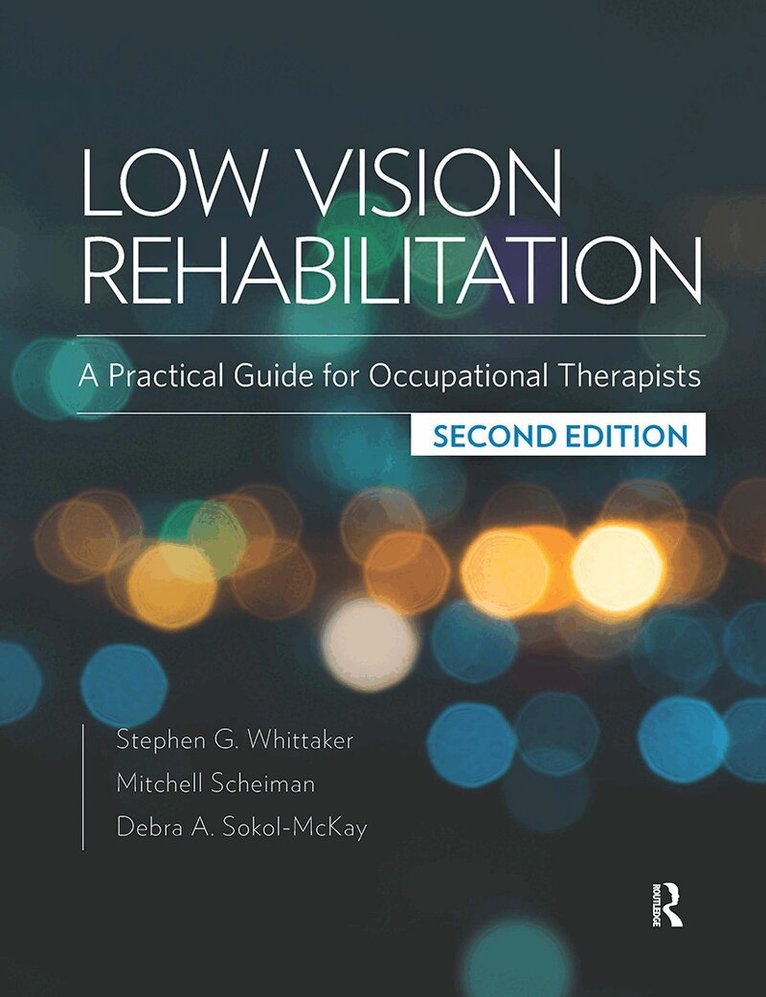
This Second Edition of Low Vision Rehabilitation: A Practical Guide for Occupational Therapists provides current, evidence-based information on low vision rehabilitation that contains several new and expanded chapters on ADLs, IADLs, and recreation, as well as new online resources and the latest in accessibility devices. Low vision rehabilitation is rapidly growing as a specialty practice for occupational therapists. This growth requires practical, evidence-based information on the evaluation and treatment of the effects of low vision on occupational performance. Responding to this need, Low Vision Rehabilitation: A Practical Guide for Occupational Therapists, Second Edition blends standards of practice that have been developed for over 50 years by low vision therapists and optometrists, with the latest scientific research and the unique perspective of occupational therapists. This text is written to introduce the student and general practitioner to low vision rehabilitation as commonly encountered in medical rehabilitation as well as provides a conceptual approach to evaluation and treatment that will enrich an advanced practice. Authors Stephen Whittaker, a low vision researcher, certified low vision therapist and occupational therapist, Mitchell Scheiman, an optometrist and researcher, and Debra Sokol-McKay, an occupational therapist with specialty certification in low vision as well as certification as a low vision therapist, vision rehabilitation therapist and diabetes educator, have carefully selected evidence-based evaluations and treatments that focus on clinical practicality and meaningful occupational goals in adults.
New to the Second Edition: A focus on occupational performance using "whatever works," whether visual, non-visual, or a combination of these different devices and adaptive techniques; The "EPIC" Framework, a general strategy to organize a treatment plan for daily activities using visual and non-visual techniques; Access to a companion website designed as a handy clinical reference, with solutions to clinical problems easily searchable and cross-linked to related content; The "Success-Oriented Approach" to interventions based on the most recent research on cognitive disability and depression associated with low vision; Applications of the latest electronic accessibility devices including smartphones, tablets, and magnifiers that read aloud; Incorporates the AADE (TM) 7 Self-Care Behavior framework of the American Association of Diabetes Educators; Incorporates concepts from the latest edition of the AOTA Occupational Therapy Practice Framework: Domain and Process; A chapter devoted to field loss, spatial neglect and perceptual impairments resulting from acquired-brain-injury.
The latest in Medicare documentation standards including outcome to G-code conversions and ICD-10 diagnostic coding for low vision.
1 381 kr
Läs direkt efter köp
This Second Edition of Low Vision Rehabilitation: A Practical Guide for Occupational Therapists provides current, evidence-based information on low vision rehabilitation that contains several new and expanded chapters on ADLs, IADLs, and recreation, as well as new online resources and the latest in accessibility devices. Low vision rehabilitation is rapidly growing as a specialty practice for occupational therapists. This growth requires practical, evidence-based information on the evaluation and treatment of the effects of low vision on occupational performance. Responding to this need, Low Vision Rehabilitation: A Practical Guide for Occupational Therapists, Second Edition blends standards of practice that have been developed for over 50 years by low vision therapists and optometrists, with the latest scientific research and the unique perspective of occupational therapists. This text is written to introduce the student and general practitioner to low vision rehabilitation as commonly encountered in medical rehabilitation as well as provides a conceptual approach to evaluation and treatment that will enrich an advanced practice. Authors Stephen Whittaker, a low vision researcher, certified low vision therapist and occupational therapist, Mitchell Scheiman, an optometrist and researcher, and Debra Sokol-McKay, an occupational therapist with specialty certification in low vision as well as certification as a low vision therapist, vision rehabilitation therapist and diabetes educator, have carefully selected evidence-based evaluations and treatments that focus on clinical practicality and meaningful occupational goals in adults.
New to the Second Edition: A focus on occupational performance using "whatever works," whether visual, non-visual, or a combination of these different devices and adaptive techniques; The "EPIC" Framework, a general strategy to organize a treatment plan for daily activities using visual and non-visual techniques; Access to a companion website designed as a handy clinical reference, with solutions to clinical problems easily searchable and cross-linked to related content; The "Success-Oriented Approach" to interventions based on the most recent research on cognitive disability and depression associated with low vision; Applications of the latest electronic accessibility devices including smartphones, tablets, and magnifiers that read aloud; Incorporates the AADE (TM) 7 Self-Care Behavior framework of the American Association of Diabetes Educators; Incorporates concepts from the latest edition of the AOTA Occupational Therapy Practice Framework: Domain and Process; A chapter devoted to field loss, spatial neglect and perceptual impairments resulting from acquired-brain-injury.
The latest in Medicare documentation standards including outcome to G-code conversions and ICD-10 diagnostic coding for low vision.
642 kr
Läs direkt efter köp
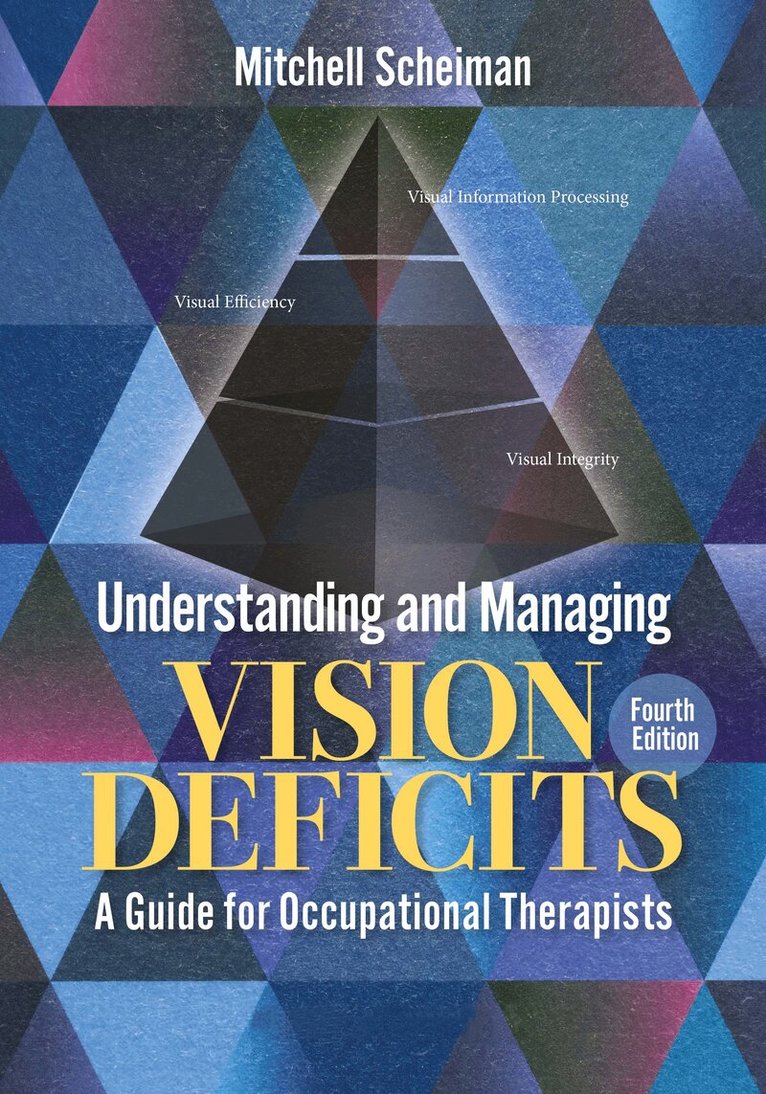
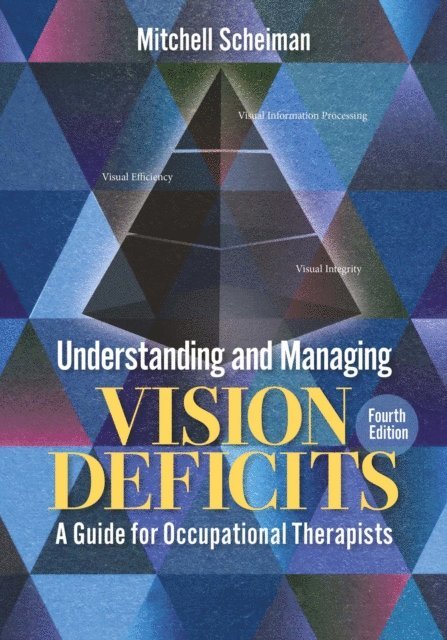
The new fourth edition of Understanding and Managing Vision Deficits: A Guide for Occupational Therapists provides practitioners not only with a comprehensive understanding of vision and how vision problems can impact on the practice of occupational therapy, but also invaluable guidance on how to effectively manage clients with these issues.
The book presents a three-part model of vision to inform readers’ understanding of the issues, and management across a range of eye conditions:
Visual integrity: Includes visual acuity (clarity), the optics of the eye, and eye health.
Visual efficiency skills: Includes focusing, eye teaming, and eye movements.
Visual information processing skills: Includes the ability to analyze, interpret, and respond to visual information.
Covering key topics such as vision problems related to acquired brain injury and learning disorders among children with special educational needs, the new edition has been thoroughly updated to the latest findings in vision research, while there are also new chapters on using an interprofessional collaborative approach to client care, and how remediation can be integrated into occupational therapy principles to create occupation-based remedial vision rehabilitation.
A unique collaboration between the professions of occupational therapy and optometry together, and including a glossary of key terms and a sample vision screening report form, this is a key text for health care professionals to provide the ultimate in patient care.
638 kr
Läs direkt efter köp
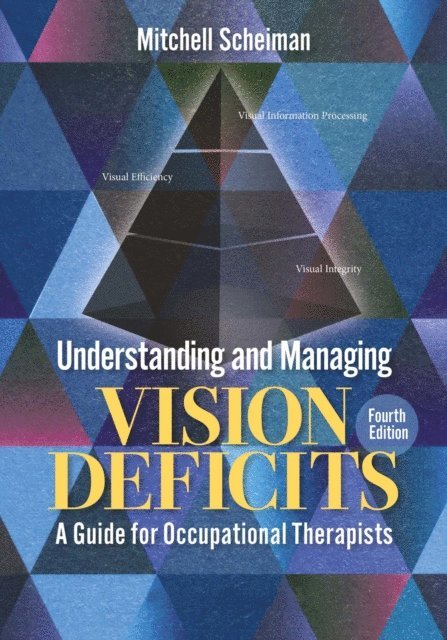
The new fourth edition of Understanding and Managing Vision Deficits: A Guide for Occupational Therapists provides practitioners not only with a comprehensive understanding of vision and how vision problems can impact on the practice of occupational therapy, but also invaluable guidance on how to effectively manage clients with these issues.
The book presents a three-part model of vision to inform readers’ understanding of the issues, and management across a range of eye conditions:
Visual integrity: Includes visual acuity (clarity), the optics of the eye, and eye health.
Visual efficiency skills: Includes focusing, eye teaming, and eye movements.
Visual information processing skills: Includes the ability to analyze, interpret, and respond to visual information.
Covering key topics such as vision problems related to acquired brain injury and learning disorders among children with special educational needs, the new edition has been thoroughly updated to the latest findings in vision research, while there are also new chapters on using an interprofessional collaborative approach to client care, and how remediation can be integrated into occupational therapy principles to create occupation-based remedial vision rehabilitation.
A unique collaboration between the professions of occupational therapy and optometry together, and including a glossary of key terms and a sample vision screening report form, this is a key text for health care professionals to provide the ultimate in patient care.
2 610 kr
Skickas inom 10-15 vardagar