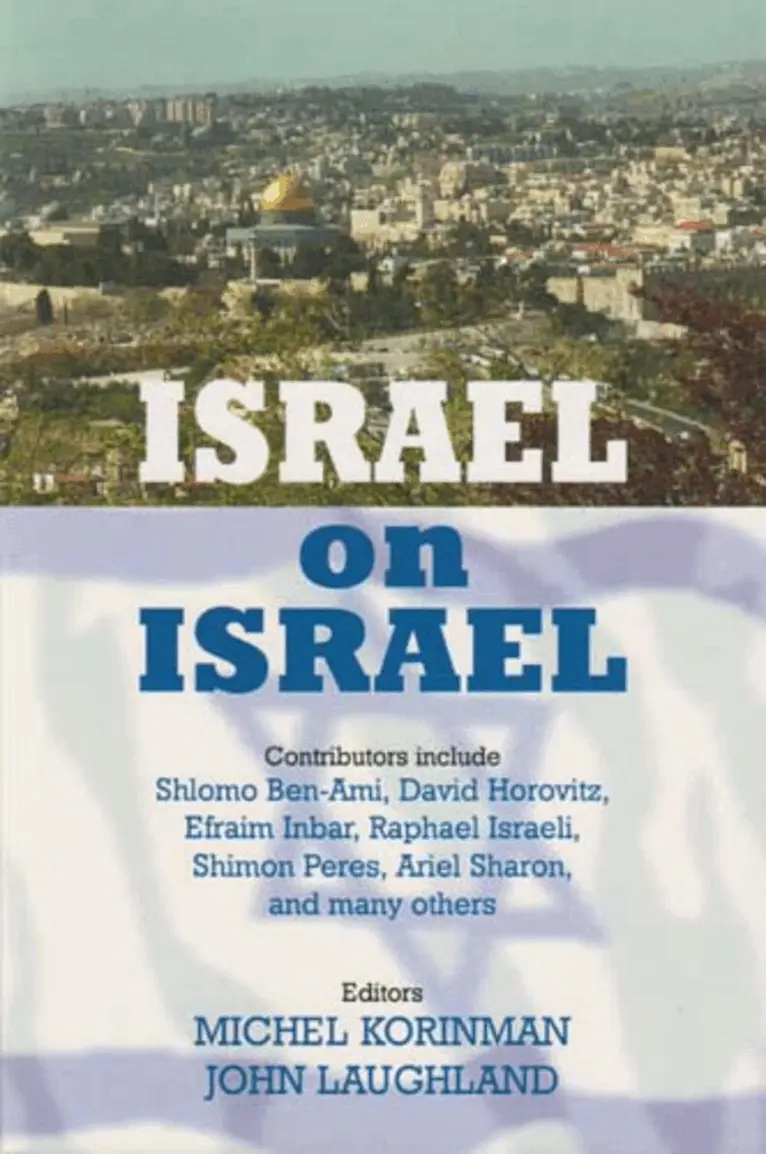
Based on a volume of Outre-Terre, the leading journal of geopolitics, this book is a collection of articles by top decision-makers and opinion-formers reflecting all points of view within Israel. It includes exclusive articles by Ariel Sharon and Shimon Peres; as well as an array of articles from all points of view within Israel. Many of the articles are illustrated with maps, as is essential for any journal of geopolitics, especially when dealing with such important territorial issues as in Israel.
This book, the first in a new series from the Daedalos Institute of Geopolitics in Cyprus, asks whether Iran has pretensions to become the leader of the Muslim world, and it poses the following questions: Does the Islamic Republic intend to acquire a nuclear bomb? What is its energy policy and how does the world's need for hydrocarbons bolster the country's geopolitical position? What does the election of Mahmoud Ahmadinejad mean for the factionalism and power struggles of Iranian politics? What is the relationship between the clergy and the 'neo-conservatives' who now control the presidency? What are Iran's relations with the other great powers, especially Russia and India? This volume contains incisive commentary from the world's leading experts on this, one of the planet's most intriguing and mysterious states. It is a key source of reference material on a country which is seldom far from the center of world affairs.
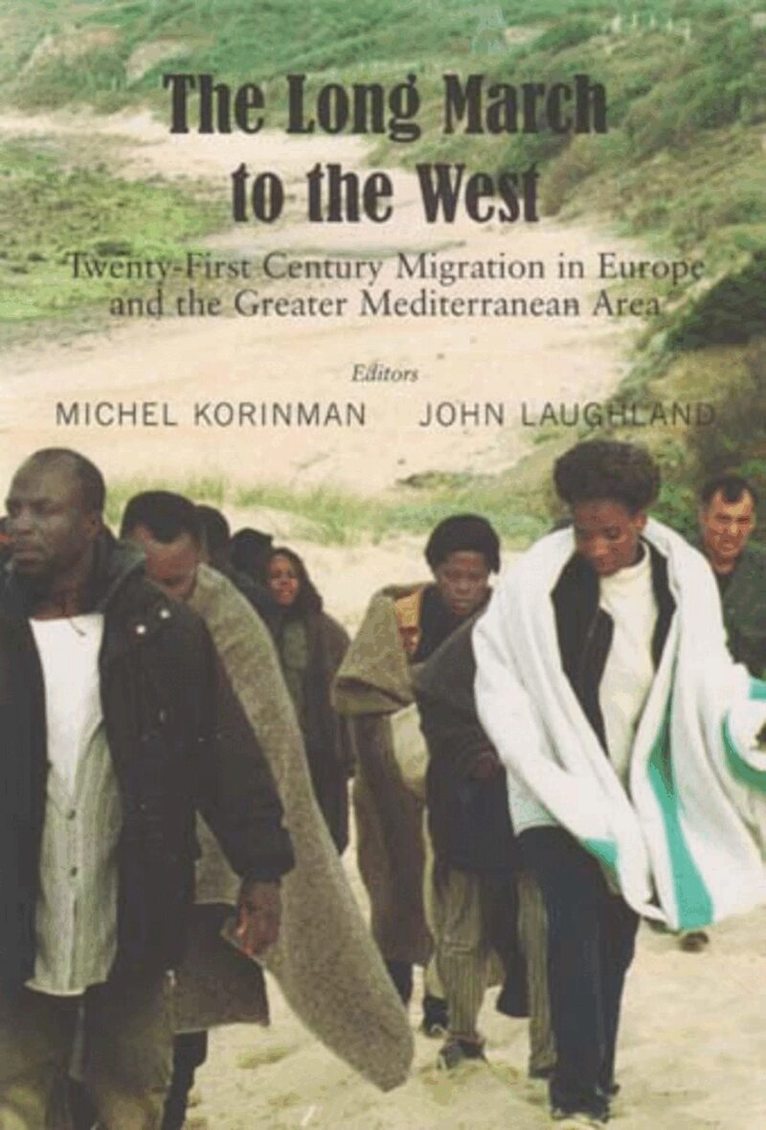
This second book in the series Geopolitical Affairs concentrates on migration in the twenty-first century. Migration will be one of the biggest issues in world geopolitics in the years to come. Huge population flows are one of the key phenomena of the contemporary world. The book addresses the following questions: --- Kofi Annan's concept of the 'globalisation of the globe' and of his idea that nation-states have had their day: do the world's major institutions share this view? What is the view of the Holy See, the United Nations High Commissioner for Refugees, and non-governmental organisations? --- The increasing problem of 'Eurabia': opinion polls in the United Kingdom, Germany, and the Netherlands show that societies are divided while politically correct ideas are imposed. Countries are in the process of disappearing. What is the relationship between established right-wing parties and nationalist right-wing parties? Will the conflict between the two be the principal political conflict in years to come? --- There is a debate in the Arab world on migration. What is the relationship between Arab Africa and Black Africa, between North and South? What is the purpose of Euro-Mediterranean summits? Is immigration an arm in the hands of the Maghreb (North Africa) and the Mashreq (the Arabic-speaking counties East of Egypt)? --- Africa itself is ever more destabilised by migratory flows. Political elites remain settled while ordinary people undertake ever more dangerous migrations in search of a better life. The Ivory Coast and Liberia are cases in point. What is the point of view of Burkina Faso, Guinea, Mali, Ghana, and Liberia on the crisis in Ivory Coast? And what about the situation in Darfur and Chad: is the refugee crisis there being manipulated for political purposes? --- Is there a conflict between East and South? Western Europe has seen immigration from Africa and Eastern Europe. What is the relationship between migrants and the Mafia, especially people traffi
Based on a volume of Outre-Terre, the leading journal of geopolitics, this book is a collection of articles by top decision-makers and opinion-formers reflecting all points of view within Israel. It includes exclusive articles by Ariel Sharon and Shimon Peres; as well as an array of articles from all points of view within Israel. Many of the articles are illustrated with maps, as is essential for any journal of geopolitics, especially when dealing with such important territorial issues as in Israel.
This book, the first in a new series from the Daedalos Institute of Geopolitics in Cyprus, asks whether Iran has pretensions to become the leader of the Muslim world, and it poses the following questions: Does the Islamic Republic intend to acquire a nuclear bomb? What is its energy policy and how does the world's need for hydrocarbons bolster the country's geopolitical position? What does the election of Mahmoud Ahmadinejad mean for the factionalism and power struggles of Iranian politics? What is the relationship between the clergy and the 'neo-conservatives' who now control the presidency? What are Iran's relations with the other great powers, especially Russia and India? This volume contains incisive commentary from the world's leading experts on this, one of the planet's most intriguing and mysterious states. It is a key source of reference material on a country which is seldom far from the center of world affairs.
This second book in the series Geopolitical Affairs concentrates on migration in the twenty-first century. Migration will be one of the biggest issues in world geopolitics in the years to come. Huge population flows are one of the key phenomena of the contemporary world. The book addresses the following questions: --- Kofi Annan's concept of the 'globalisation of the globe' and of his idea that nation-states have had their day: do the world's major institutions share this view? What is the view of the Holy See, the United Nations High Commissioner for Refugees, and non-governmental organisations? --- The increasing problem of 'Eurabia': opinion polls in the United Kingdom, Germany, and the Netherlands show that societies are divided while politically correct ideas are imposed. Countries are in the process of disappearing. What is the relationship between established right-wing parties and nationalist right-wing parties? Will the conflict between the two be the principal political conflict in years to come? --- There is a debate in the Arab world on migration. What is the relationship between Arab Africa and Black Africa, between North and South? What is the purpose of Euro-Mediterranean summits? Is immigration an arm in the hands of the Maghreb (North Africa) and the Mashreq (the Arabic-speaking counties East of Egypt)? --- Africa itself is ever more destabilised by migratory flows. Political elites remain settled while ordinary people undertake ever more dangerous migrations in search of a better life. The Ivory Coast and Liberia are cases in point. What is the point of view of Burkina Faso, Guinea, Mali, Ghana, and Liberia on the crisis in Ivory Coast? And what about the situation in Darfur and Chad: is the refugee crisis there being manipulated for political purposes? --- Is there a conflict between East and South? Western Europe has seen immigration from Africa and Eastern Europe. What is the relationship between migrants and the Mafia, especially people traffi
When Vladimir Putin came to power in 2000, George Bush said he was a man he could trust. Since then, relations between Russia and the West have gone from bad to worse. The EU and Russia have been unable to agree on the terms of their partnership; NATO expansion continues apace, threatening to include countries like Ukraine and Georgia; the United Kingdom harbours, as political refugees, men who call for the violent overthrow of the Russian government; and the United States is determined to build an anti-missile shield which, Moscow fears, would render feasible a 'first strike' against Russia. How do Russians see these developments and the other developments inside their fascinating country? This book contains articles by some fifty commentators and decision-makers, the overwhelming majority Russians, on issues as diverse as immigration, demography, the economy, gas and oil pipelines, foreign policy, public opinion, and international relations. The book provides a survey of all the major political and social issues facing Russia today. There is no comparable collection of essays by insiders in print. This is an invaluable tool for anyone interested in the largest country on earth.
How to Love a Child and Other Selected Works is the first comprehensive collection of Korczak's works translated into English. It contains his most important pedagogical writings, journal articles, as well as private texts. Volume 1 comprises three pedagogical works, the first being How to Love a Child. This is a tetralogy presenting the life of a child in a family from birth to puberty, the challenges of raising children in childcare institutions, Korczak's first practical experiences gained while working at summer camps and a detailed account of his work at the Orphans' Home—the orphanage where he was the headmaster. The second work, The Events of Childrearing, is based on the notes he wrote down during his observations of children made in kindergarten and at school. These are the events of children's everyday life: conversations and interactions as well as moments of solitary reflection, carefully recorded and thoroughly interpreted. The third, A Child's Right to Respect, is an ardent manifesto for children's rights such as the right to be what they actually are, to live an aware and responsible life today and to respect for the hard work of growing. Korczak's writing is characterized by uncompromising views, acute observations, subtle reflection, and, above all, love for children. All written in his distinctive style combining poetic metaphor with pedagogical reflection, a lofty turn of phrase with the mundanity of everyday life and humor with scholarly rigor.