Christians have always looked to models within the Christian faith to guide their lives. At a time when the church is more identifiable by ugly partisan politics--what we call "e;crappy Christianity"e;--than by compassionate neighbor love, this book highlights the lives and work of seven individuals who are pursuing their Christian calling in humility and profound love for and service to others, this book highlights the lives and work of seven individuals who are pursuing their Christian calling in humility and profound love for and service to others. Their commitments have led to vocations in working with homeless women, employing refugees, lobbying on Capitol Hill for environmental protection, healing trauma in urban communities, peacemaking in Israel-Palestine, advocating for immigrants, and walking alongside people in addiction recovery. Their individual and collective witness offer compelling examples of authentic Christian life, which is marked in part by active, embodied faith in pursuit of the common good; a broad and inclusive love for all people; rightly ordered political identities and loyalties; and a commitment to work toward holistic redemption of both people and the systems that constitute our life together. In contrast to much of contemporary American Christianity, these models of faith demonstrate that Christians should focus much more on what we are for rather than what we are against.
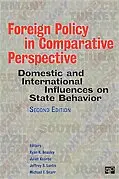
Widely regarded as the most comprehensive comparative foreign policy text, Foreign Policy in Comparative Perspective has been completely updated in this much-anticipated second edition. The editors have brought together fifteen top scholars to highlight the importance of both internal and external forces in foreign policymaking. Exploring the foreign policies of thirteen nations—both major and emerging players, and representing all regions of the world—chapter authors link the study of international relations to domestic politics, while treating each nation according to individual histories and contemporary dilemmas. The book′s accessible theoretical framework is designed to enable comparative analysis, helping students discern patterns to understand why a state acts as it does in foreign affairs. Each of the thirteen country chapters includes: an introduction by the editors to highlight similar developments in other countries; a discussion of the linkages between internal and external factors and implications for the future; coverage of key foreign policy issues; a map to provide geographical context; and a list of suggested readings.
Praise for the previous editions:“Since I began assigning Introducing Global Issues, my students have been much more involved in the course.... A valuable resource.” —Jeffrey P. Blick, Georgia College and State University“A balanced, in-depth introduction to the intertwined nature of modern global issues.” —Ralph G. Carter, Texas Christian UniversitySkillfully designed for readers with little or no prior knowledge of the topics covered, this thoroughly updated edition of Introducing Global Issues both introduces and helps students to make sense of the most pressing global issues of our time—climate change, weapons proliferation, populist authoritarianism, the war in Gaza, conflict-driven migration, sustainable development, and much more. Each chapter provides an analytical overview of the issue addressed, identifies central actors and perspectives, and outlines past progress and future prospects. Discussion questions are posed to enhance students’ appreciation of the complexities involved, and suggestions for additional reading further enrich the text.