2 288 kr
Skickas inom 5-8 vardagar
2 288 kr
Skickas inom 5-8 vardagar
2 017 kr
Läs direkt efter köp
2 017 kr
Läs direkt efter köp
399 kr
Skickas inom 7-10 vardagar
318 kr
Skickas inom 7-10 vardagar
208 kr
Läs direkt efter köp
The Structural Analysis of Business
782 kr
Skickas inom 7-10 vardagar
443 kr
Skickas inom 7-10 vardagar
1 228 kr
Skickas inom 10-15 vardagar
481 kr
Läs direkt efter köp
469 kr
Läs direkt efter köp
288 kr
Skickas inom 7-10 vardagar
754 kr
Skickas inom 3-6 vardagar
199 kr
Skickas inom 3-6 vardagar
801 kr
Läs direkt efter köp
675 kr
Skickas inom 10-15 vardagar
923 kr
Läs direkt efter köp
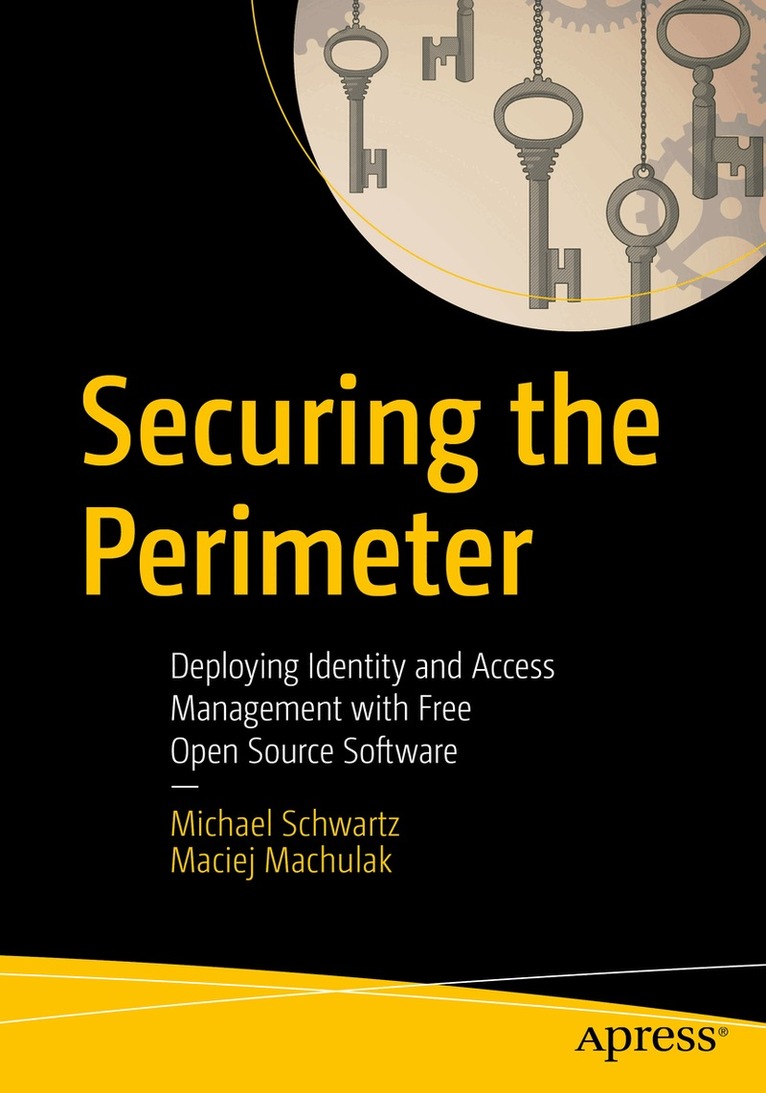
Leverage existing free open source software to build an identity and access management (IAM) platform that can serve your organization for the long term. With the emergence of open standards and open source software, it’s now easier than ever to build and operate your own IAM stack.
The most common culprit of the largest hacks has been bad personal identification. In terms of bang for your buck, effective access control is the best investment you can make. Financially, it’s more valuable to prevent than to detect a security breach. That’s why Identity and Access Management (IAM) is a critical component of an organization’s security infrastructure. In the past, IAM software has been available only from large enterprise software vendors. Commercial IAM offerings are bundled as “suites” because IAM is not just one component. It’s a number of components working together, including web, authentication, authorization, cryptographic, and persistence services.
Securing the Perimeter documents a recipe to take advantage of open standards to build an enterprise-class IAM service using free open source software. This recipe can be adapted to meet the needs of both small and large organizations. While not a comprehensive guide for every application, this book provides the key concepts and patterns to help administrators and developers leverage a central security infrastructure.Cloud IAM service providers would have you believe that managing an IAM is too hard. Anything unfamiliar is hard, but with the right road map, it can be mastered. You may find SaaS identity solutions too rigid or too expensive. Or perhaps you don’t like the idea of a third party holding the credentials of your users—the keys to your kingdom. Open source IAM provides an alternative. Take control of your IAM infrastructure if digital services are key to your organization’s success.
What You’ll Learn
Understand why you should deploy a centralized authentication and policy management infrastructureUse the SAML or Open ID Standards for web or single sign-on, and OAuth for API Access ManagementSynchronize data from existing identity repositories such as Active DirectoryDeploy two-factor authentication servicesWho This Book Is For
Security architects (CISO, CSO), system engineers/administrators, and software developers
198 kr
Skickas inom 3-6 vardagar
1 414 kr
Skickas inom 7-10 vardagar
634 kr
Skickas inom 7-10 vardagar
554 kr
Skickas inom 7-10 vardagar
1 033 kr
Skickas inom 7-10 vardagar
396 kr
Läs direkt efter köp
This book is premised upon the assumption that the core purpose of universities is to create, preserve, transmit, validate, and find new applications for knowledge. It is written in the perspective of critical university studies, in which university governance processes should take ideas and discourse about ideas seriously, far more seriously than they are often taken within many of to day''s universities, since doing so is the key to achieving this purpose. Specifically, we assert that the best way for universities to take ideas seriously, and so to best achieve their purpose, is to consciously recognize and conserve the entire range of available ideas. Though the current emphasis upon factors such as student headcounts, increased efficiency and job creation are undoubtedly important, far more is at stake in universities than only these factors.
From this premise, we deduce insights and arguments about academic freedom, as well as factors such control and monitoring of the market place of ideas, the structure of information flows within universities, the role of language in university governance, and relationships between administrators, faculty members and students. We identify impediments to achieving the core purpose of universities, including the idea vetting systems of authoritarianism, corporatism, illiberalism, supernaturalism and political correctness. We elucidate how these impediments inhibit successful achievement of the core purpose of the university. In response to these impediments we prescribe relatively autonomous universities characterized by openness, transparency, dissent, and the maintenance of balance between conflicting perspectives, values, and interests.
Remembering Patrick Primeaux
1 349 kr
Skickas inom 7-10 vardagar
1 453 kr
Läs direkt efter köp
1 310 kr
Skickas inom 7-10 vardagar
1 390 kr
Läs direkt efter köp
1 316 kr
Skickas inom 7-10 vardagar
1 376 kr
Läs direkt efter köp
1 531 kr
Läs direkt efter köp