During World War II, the civilian Office of Censorship supervised a huge and surprisingly successful programme of news management: the voluntary self-censorship of the American press. In January 1942, censorship codebooks were distributed to all American newspapers, magazines and radio stations with the request that journalists adhere to the guidelines within. Remarkably, over the course of the war no print journalist, and only one radio journalist ever deliberately violated the censorship code after being informed of its intent. ""Secrets of Victory"" examines the World War II censorship programme and analyzes the reasons for its success. Using archival sources, including the Office of Censorship's own records, Michael Sweeney traces the development of news media censorship from a pressing necessity after the attack on Pearl Harbour to the centralized yet efficient bureaucracy that persuaded thousands of journalists to censor themselves for the sake of national security. At the heart of this often dramatic story is the Office of Censorship's director Byron Price. A former reporter himself, Price relied on the cooperation rather than coercion of American journalists in his fight to safeguard the nation's secrets.
During World War II, the civilian Office of Censorship supervised a huge and surprisingly successful program of news management: the voluntary self-censorship of the American press. In January 1942, censorship codebooks were distributed to all American newspapers, magazines, and radio stations with the request that journalists adhere to the guidelines within. Remarkably, over the course of the war no print journalist, and only one radio journalist, ever deliberately violated the censorship code after having been made aware of it and understanding its intent.Secrets of Victory examines the World War II censorship program and analyzes the reasons for its success. Using archival sources, including the Office of Censorship''s own records, Michael Sweeney traces the development of news media censorship from a pressing necessity after the attack on Pearl Harbor to the centralized yet efficient bureaucracy that persuaded thousands of journalists to censor themselves for the sake of national security. At the heart of this often dramatic story is the Office of Censorship''s director Byron Price. A former reporter himself, Price relied on cooperation with--rather than coercion of--American journalists in his fight to safeguard the nation''s secrets.
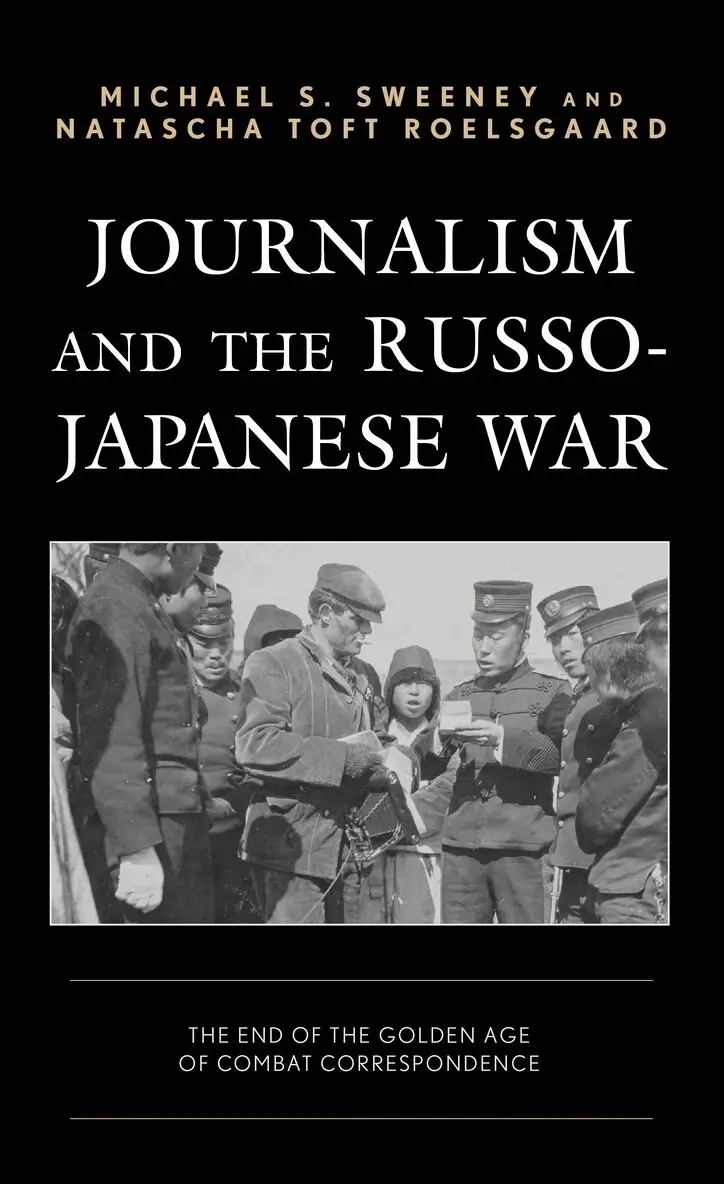
This book examines the journalistic coverage and challenges during the Russo-Japanese War of 1904–05, what some have called World War Zero. The authors explore how Japan delayed and regulated correspondents so they could do no harm to the nation's ambitions at home or abroad and implemented methods of shaping the news. They argue Japan helped to shape the modern world of journalism by creating and packaging "truth."
During World War II, the civilian Office of Censorship supervised a huge and surprisingly successful program of news management: the voluntary self-censorship of the American press. In January 1942, censorship codebooks were distributed to all American newspapers, magazines, and radio stations with the request that journalists adhere to the guidelines within. Remarkably, over the course of the war no print journalist, and only one radio journalist, ever deliberately violated the censorship code after having been made aware of it and understanding its intent.Secrets of Victory examines the World War II censorship program and analyzes the reasons for its success. Using archival sources, including the Office of Censorship''s own records, Michael Sweeney traces the development of news media censorship from a pressing necessity after the attack on Pearl Harbor to the centralized yet efficient bureaucracy that persuaded thousands of journalists to censor themselves for the sake of national security. At the heart of this often dramatic story is the Office of Censorship''s director Byron Price. A former reporter himself, Price relied on cooperation with--rather than coercion of--American journalists in his fight to safeguard the nation''s secrets.
Because news is a weapon of war - affecting public opinion, troop morale, even strategy - for more than a century America's wartime officials have sought to control or influence the press, most recently by ""embedding"" reporters within military units in Iraq. This second front, where press freedom and military imperatives often do battle, is the territory explored in ""The Military and the Press"", a history of how press-military relations have evolved during the twentieth and twenty-first century in response to the demands of politics, economics, technology, and legal and social forces. Author Michael S. Sweeney takes a chronological approach, considering freedoms and restraints such as the First Amendment, court decisions, and government and military directives that have affected the press during World Wars I and II, the Korean War, the Vietnam War, and the more recent conflicts. He explores the ongoing themes of wartime censorship and propaganda, as well as operational security in the battle zone. In chapters addressing the recent shift in military strategy in dealing with the press, Sweeney discusses new forms of control - from embedding journalists and discouraging unaccredited ""unilaterals"" to developing the news agenda through a barrage of briefings, sound bites, and visuals and appeals to patriotism that border on domestic propaganda. With profiles of a few specific journalists - from Richard Harding Davis covering the Spanish-American War to Christiane Amanpour reporting from the conflicts in Bosnia and Iraq - this deft blend of journalistic history and analysis should serve as a call-to-arms to a public not always well served by a military-press standoff.
This custom companion to the blockbuster National Geographic Channel series Doomsday Preppers is filled with how-to illustrations, “Prepper Profiles” of people in the show, and survival tips from preppers themselves. Handy and comprehensive, the manual offers valuable life-saving information to help prepare for the most devastating calamities. Episodes of this highly original show, which debuted in February 2012, explore the lives of otherwise ordinary Americans who are preparing for the end of the world as we know it. Preppers go to extraordinary lengths to plan for any of life’s uncertainties, from constructing a home out of shipping containers and stockpiling 50,000 lbs. of food to practicing evacuation drills and hand-to-hand combat. This book is an essential component.