892 kr
Skickas inom 10-15 vardagar
892 kr
Skickas inom 10-15 vardagar
454 kr
Skickas inom 10-15 vardagar
2 544 kr
Skickas inom 10-15 vardagar
656 kr
Skickas inom 10-15 vardagar
2 544 kr
Skickas inom 10-15 vardagar
1 032 kr
Läs direkt efter köp
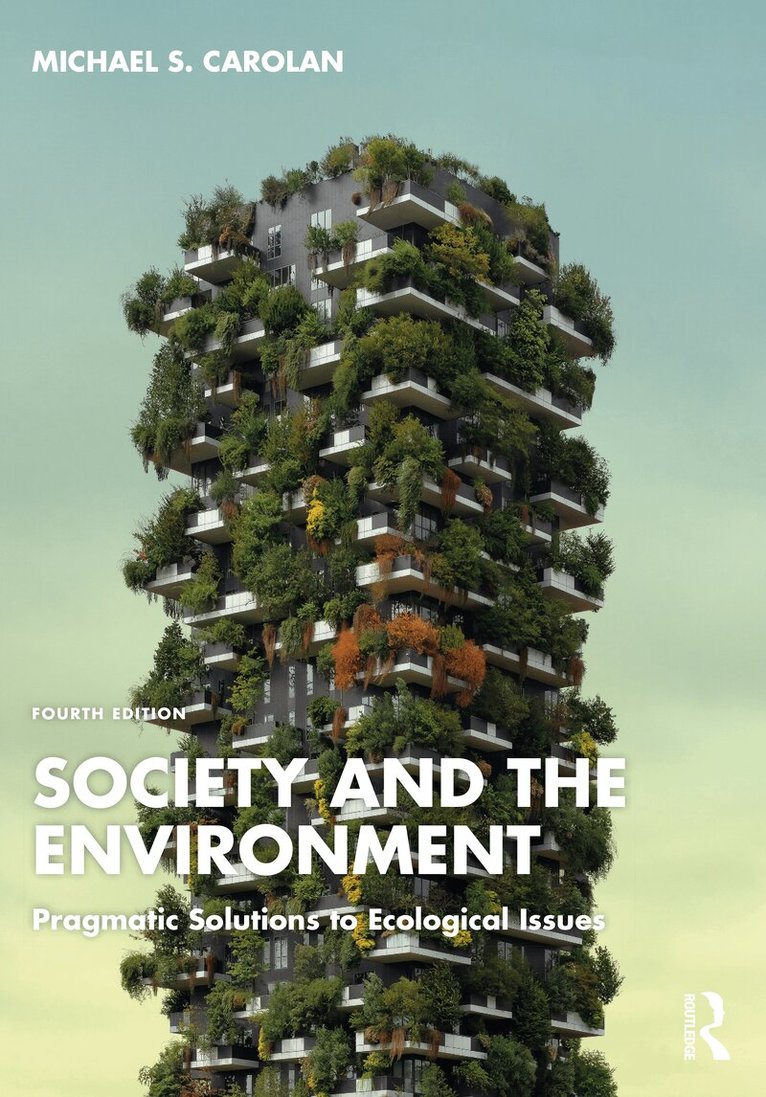
The fourth edition of Society and the Environment centers its discussion on realistic solutions to the problems that persist and examines current controversies within a socio‑organizational context, shifting focus away from simply explaining what is wrong with the world around us. Introducing this “pragmatic environmentalism,†Carolan discusses the complex pressures and variables that exist where ecology and society collide, with population growth, the increase in demands for food and energy, and transportation and its outsized influence on urban and community patterns. With further attention given to the social phenomena and structural dynamics driving today’s environmental problems, the book concludes with an important reflection on truly sustainable solutions and what constitutes meaningful social change.
Each chapter in this interdisciplinary text follows a three‑part structure beginning with an overview of what is wrong and why. This leads into a discussion on each issue’s wide‑ranging implications and, finally, a balanced consideration of realistic solutions. Featuring updated and expanded examples, discussion points, and coverage of recent developments, including the US withdrawing from the Paris Agreement, “booming†national economies and wealth distribution, growing global interest in environmental justice—with particular focus on the links between injustice and race and inequality—climate change, and renewable energy, this new edition remains an essential companion for courses on environmental sociology and sustainability.

1 039 kr
Läs direkt efter köp
The fourth edition of Society and the Environment centers its discussion on realistic solutions to the problems that persist and examines current controversies within a socio‑organizational context, shifting focus away from simply explaining what is wrong with the world around us. Introducing this “pragmatic environmentalism,†Carolan discusses the complex pressures and variables that exist where ecology and society collide, with population growth, the increase in demands for food and energy, and transportation and its outsized influence on urban and community patterns. With further attention given to the social phenomena and structural dynamics driving today’s environmental problems, the book concludes with an important reflection on truly sustainable solutions and what constitutes meaningful social change.
Each chapter in this interdisciplinary text follows a three‑part structure beginning with an overview of what is wrong and why. This leads into a discussion on each issue’s wide‑ranging implications and, finally, a balanced consideration of realistic solutions. Featuring updated and expanded examples, discussion points, and coverage of recent developments, including the US withdrawing from the Paris Agreement, “booming†national economies and wealth distribution, growing global interest in environmental justice—with particular focus on the links between injustice and race and inequality—climate change, and renewable energy, this new edition remains an essential companion for courses on environmental sociology and sustainability.
740 kr
Läs direkt efter köp
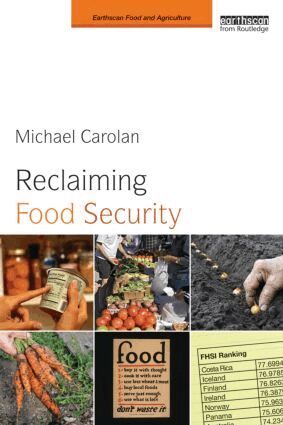
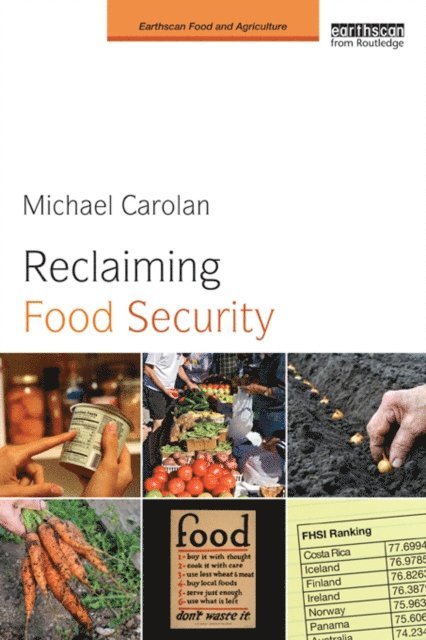
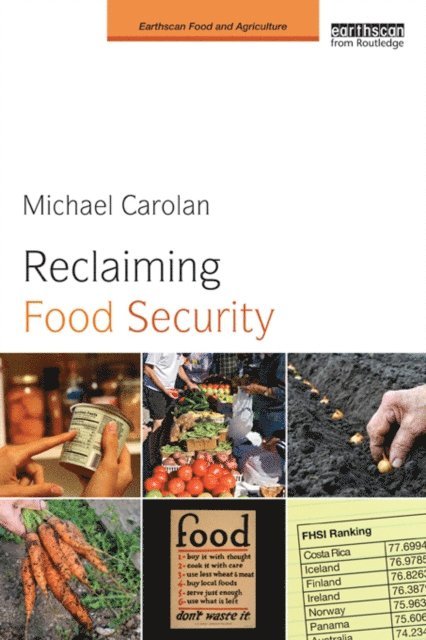
In this challenging work, the author argues that the goal of any food system should not simply be to provide the cheapest calories possible. A secure food system is one that affords people and nations – in both the present and future – the capabilities to prosper and lead long, happy, and healthy lives. For a variety of reasons, food security has come to be synonymous with cheap calorie security. On this measure, the last fifty years have been a remarkable success.
But the author shows that these cheap calories have also come at great cost, to the environment, individual and societal well-being, human health, and the food sovereignty of nations. The book begins by reviewing the concept of food security, particularly as it has been enacted within agrifood and international policy over the last century. After proposing a coherent definition the author then assesses empirically whether these policies have actually made us and the environment any better off. One of the many ways the author accomplishes this task is by introducing the Food and Human Security Index (FHSI) in an original attempt to better measure and quantify the affording qualities of food systems. A FHSI score is calculated for 126 countries based on indicators of objective and subjective well-being, nutrition, ecological sustainability, food dependency, and food system market concentration. The final FHSI ranking produces many counter-intuitive results. Why, for example, does Costa Rica top the ranking, while the United States comes in at number fifty-five?
The author concludes by arguing for the need to reclaim food security by returning the concept to something akin to its original spirit, identified earlier in the book. While starting at the level of the farm the concluding chapter focuses most of its attention beyond the farm gate, recognizing that food security is more than just about issues surrounding production. For example, space is made in this chapter to address the important question of, "What can we eat if not GDP?" We need, the author contends, a thoroughly sociological rendering of food security: a position that views food security not as a thing – or an end in itself – but as a process that ought to make people and the Planet better off.
757 kr
Läs direkt efter köp
In this challenging work, the author argues that the goal of any food system should not simply be to provide the cheapest calories possible. A secure food system is one that affords people and nations – in both the present and future – the capabilities to prosper and lead long, happy, and healthy lives. For a variety of reasons, food security has come to be synonymous with cheap calorie security. On this measure, the last fifty years have been a remarkable success.
But the author shows that these cheap calories have also come at great cost, to the environment, individual and societal well-being, human health, and the food sovereignty of nations. The book begins by reviewing the concept of food security, particularly as it has been enacted within agrifood and international policy over the last century. After proposing a coherent definition the author then assesses empirically whether these policies have actually made us and the environment any better off. One of the many ways the author accomplishes this task is by introducing the Food and Human Security Index (FHSI) in an original attempt to better measure and quantify the affording qualities of food systems. A FHSI score is calculated for 126 countries based on indicators of objective and subjective well-being, nutrition, ecological sustainability, food dependency, and food system market concentration. The final FHSI ranking produces many counter-intuitive results. Why, for example, does Costa Rica top the ranking, while the United States comes in at number fifty-five?
The author concludes by arguing for the need to reclaim food security by returning the concept to something akin to its original spirit, identified earlier in the book. While starting at the level of the farm the concluding chapter focuses most of its attention beyond the farm gate, recognizing that food security is more than just about issues surrounding production. For example, space is made in this chapter to address the important question of, "What can we eat if not GDP?" We need, the author contends, a thoroughly sociological rendering of food security: a position that views food security not as a thing – or an end in itself – but as a process that ought to make people and the Planet better off.
922 kr
Skickas inom 10-15 vardagar
1 066 kr
Läs direkt efter köp
1 043 kr
Läs direkt efter köp
559 kr
Läs direkt efter köp
568 kr
Läs direkt efter köp
1 418 kr
Skickas inom 10-15 vardagar
2 544 kr
Skickas inom 10-15 vardagar
305 kr
Skickas inom 7-10 vardagar
305 kr
Skickas inom 7-10 vardagar