The Sultanate of Oman and Portugal are connected by a long-shared history which until now has received little attention. After Vasco da Gama had rounded the Cape of Good Hope in 1498 and extended the Portuguese colonial empire to India, a constant conflict began between the two naval powers. In 1507 the Portuguese occupied the coast of Oman, remaining for a good hundred years until the united Omani tribes drove the Europeans from there and out of their East African possessions and became colonial rulers themselves. In 2004 a major research undertaking began on the initiative of the Omani Ministry for Foundations and Religious Affairs. The aim was to find documents in Portuguese archives which had as their subject the Sultanate of Oman and its cities and regions, and thus to record the encounter between the two cultures in the 16th century and their common history until the 18th century. Following publication of the 16-volume facsimile edition, the transcriptions of the old Portuguese manuscripts now follow, with translations into modern English and Arabic. The meticulous notes describe everyday life during the period as well as dramatic highlights such as the retaking of Muscat by the Imam of Nizwa in January 1650. The documents offer unexpected insights into the economic, religious and cultural relations between the two nations and the intensive interactions between East and West in the early modern age. The texts in the volume are arranged in three parallel columns so that the sections can be seen side by side. To supplement the critical textual controls made during the course of transcription each document can be seen in facsimile. This critical edition of the sources (1,500 documents on over 8,000 pages) offers both researchers and the general public for the first time a corpus of primary sources which is unique in its breadth and thematic focus. Portugal in the Sea of Oman is a scholarly treatment of archival material. It is a contribution to a better understanding of both eastern and western perspectives of each other.
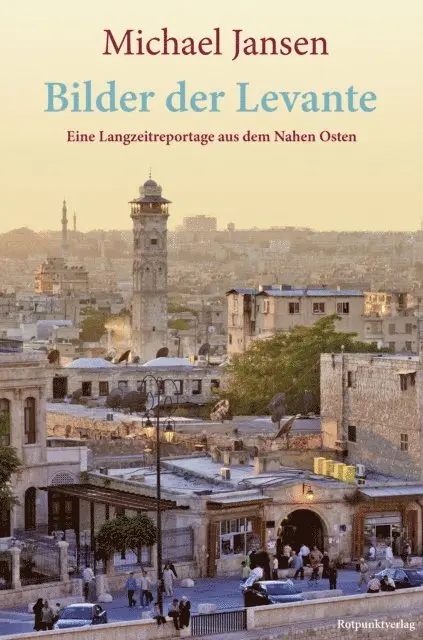
Bilder der Levante ist ein Porträt des Nahen Ostens in Momentaufnahmen, in Begegnungen und Geschichten. Schauplätze sind Beirut, Jerusalem, Gaza, Kairo, Damaskus, Aleppo, Bagdad, Orte, die die Journalistin Michael Jansen seit 1961 immer wieder besucht. Beim Lesen verdichtet sich ihre Erzählung; sie legt Verbindungen und historische Hintergründe offen, und gerade die persönliche Dimension entwickelt in ihr einen unglaublichen Sog. Das Buch beginnt mit Szenen aus Kairo 2011 während des Arabischen Frühlings. Und auf nur fünf Seiten, mit großer Lust geschrieben, bekommt der Leser eine Tiefenbohrung in die ägyptische Geschichte präsentiert, die über die sechziger Jahre bis ins 13. Jahrhundert zurückreicht und einen wachgerüttelt und neugierig geworden zurücklässt. Das Buch ist gleichermaßen eine Autobiografie vor dem Hintergrund des Nahostkonflikts wie eine Langzeitreportage über eben diesen Konflikt und all seine Auswüchse im turbulenten 20. und frühen 21.Jahrhundert. Erklärungen gibt Michael Jansen zwischen den Zeilen. Die Art, wie sie die Leserin, den Leser an ihren Beobachtungen teilnehmen lässt, vermittelt Erfahrung und ein tiefes Verständnis für die arabische Welt.