
Häftad, Engelska, 2015
236 kr
Skickas inom 7-10 vardagar
236 kr
Skickas inom 7-10 vardagar
153 kr
Skickas inom 7-10 vardagar
331 kr
Skickas
255 kr
Kommande
411 kr
Läs direkt efter köp
225 kr
Läs direkt efter köp
268 kr
Skickas inom 3-6 vardagar
45 kr
Läs direkt efter köp
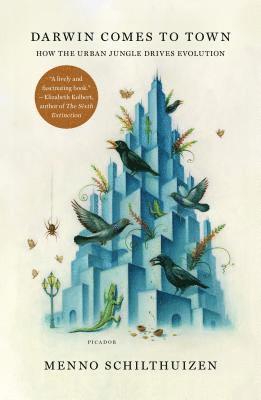
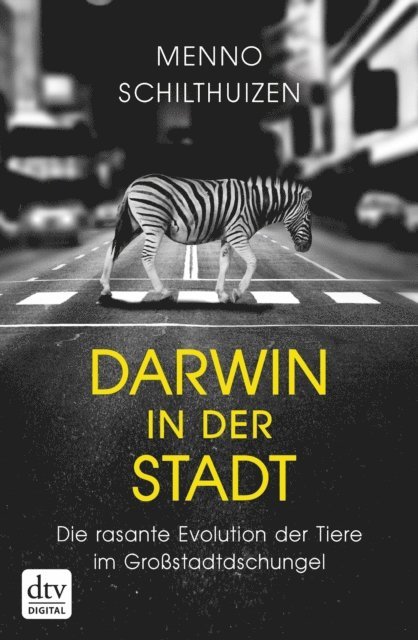
See your city through fresh eyesWe are marching towards a future in which three-quarters of humans live in cities, and a large portion of the planet''s landmass is urbanized. With much of the rest covered by human-shaped farms, pasture, and plantations, where can nature still go? To the cities -- is Menno Schilthuizen''s answer in this remarkable book. And with more and more wildlife carving out new niches among humans, evolution takes a surprising turn. Urban animals evolve to become more cheeky and resourceful, city pigeons develop detox-plumage, and weeds growing from cracks in the pavement get a new type of seeds. City blackbirds are even on their way of becoming an entirely new species, which we could name Turdus urbanicus.Thanks to evolutionary adaptation taking place at unprecedented speeds, plants and animals are coming up with new ways of living in the seemingly hostile environments of asphalt and steel that we humans have created. We are on the verge of a new chapter in the history of life, Schilthuizen says -- a chapter in which much old biodiversity is, sadly, disappearing, but also one in which a new and exciting set of life forms is being born.Menno Schilthuizen shows us that evolution in cities can happen far more rapidly, and strangely, than Darwin had dared dream.
79 kr
Läs direkt efter köp
1 753 kr
Skickas inom 10-15 vardagar
2 290 kr
Läs direkt efter köp
In an age of increasing environmental problems, ecology has had to grow up fast from a discipline dealing with relatively simple interactions between species to one that tries to explain changes in global patterns of diversity and richness. The issues are complex. Every species may seem to have its own unique role, but if that is true, then why are there hundreds of species of plankton in an ecosystem with only a handful of niches? The tropics have a high biodiversity, but does anybody know why? And how can a single introduced tree species wreak havoc in Hawaii’s rainforests, when it is one of thousands of quietly coexisting tree species in its native continent, South America?The strength of this book is that it will help digest some of these more complex issues in the ecology of biodiversity. It will do this by zooming out from the local scale to the global scale in a number of steps, marrying community ecology with macroecology, and introducing unexpected nuggets of natural history along the way. The reader will notice that, the larger the scale, the more the familiar niche-concept appears to be overshadowed by exotic fields from fractal and complexity theory. However, scientists differ in opinion on the scale at which niches become irrelevant. These differences of opinion, but also the search for unified ecological theories, will form another force by which the story will be carried along to its conclusion. A conclusion which, surprisingly, seeks to find a glimpse of the globe''s future in the traces from its past.
74 kr
Läs direkt efter köp