432 kr
Skickas inom 7-10 vardagar
432 kr
Skickas inom 7-10 vardagar
786 kr
Skickas inom 7-10 vardagar
398 kr
Läs direkt efter köp
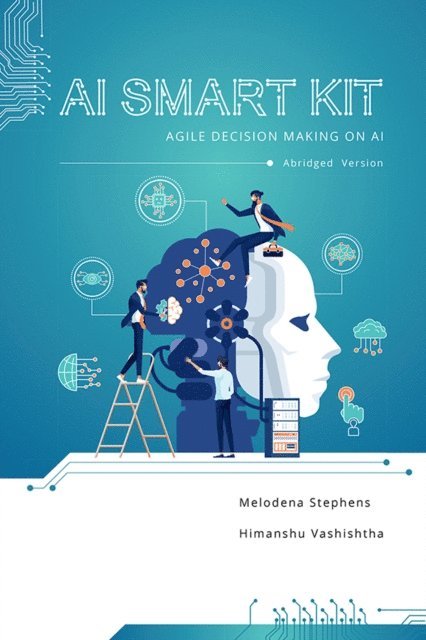
There are many myths about Artificial Intelligence (AI) relating to what it is and what it can and cannot do. The people making decisions on AI projects are often not technologically savvy and unable to find easy answers. The spending on and the returns from AI projects are not necessarily straightforward. Part of the reason for this is the lack of understanding of the impact of critical decision criteria. AI touches on many ethical concepts - data privacy, validity, and, more importantly, its potential misuse. AI often replaces human decision-making, as managers do not clearly understand the implications of those choices. This book provides an easy and accessible guide for practitioners without a technological background to understand AI. It guides the reader through the fundamental issues confronting decision-makers. It offers advice on ‘how to ask relevant questions’ using the 15 decision scales. There is currently no comparable book on the market that acts as a pocketbook management reference guide for the AI layman.
865 kr
Skickas inom 7-10 vardagar
865 kr
Skickas inom 7-10 vardagar
591 kr
Skickas inom 7-10 vardagar
1 142 kr
Skickas
Public Policy Perspectives
2 073 kr
Skickas inom 7-10 vardagar
1 865 kr
Skickas inom 7-10 vardagar
446 kr
Läs direkt efter köp
459 kr
Läs direkt efter köp
738 kr
Skickas inom 3-6 vardagar
1 420 kr
Skickas inom 3-6 vardagar
1 107 kr
Skickas
2 041 kr
Skickas inom 3-6 vardagar
440 kr
Skickas inom 7-10 vardagar
729 kr
Skickas inom 7-10 vardagar
384 kr
Läs direkt efter köp
As the use of AI becomes more and more ubiquitous in companies around the world, managers charged with taking key decisions require resources to enable them to evaluate new projects effectively. The business case for AI projects is not necessarily clear cut and part of the reason for this is the lack of understanding on key decision criteria. AI touches on many ethical concepts - data privacy, validity and more importantly, its potential misuse. AI is often being used to replace human decision-making and there is often no real understanding of the implications of this. This book provides a detailed primer for practitioners without a deep technological background. It guides the reader through the basic issues and offers advice on ‘how to take decisions’. There is a dearth of such books currently available and this book aspires to fill a growing niche.