2 426 kr
Skickas inom 10-15 vardagar
2 426 kr
Skickas inom 10-15 vardagar
2 601 kr
Skickas inom 10-15 vardagar
399 kr
Skickas inom 10-15 vardagar
648 kr
Skickas inom 10-15 vardagar
2 905 kr
Skickas inom 10-15 vardagar
2 871 kr
Skickas inom 10-15 vardagar
990 kr
Skickas inom 10-15 vardagar
507 kr
Läs direkt efter köp
717 kr
Läs direkt efter köp
1 091 kr
Läs direkt efter köp
518 kr
Läs direkt efter köp
717 kr
Läs direkt efter köp
1 115 kr
Läs direkt efter köp
760 kr
Läs direkt efter köp
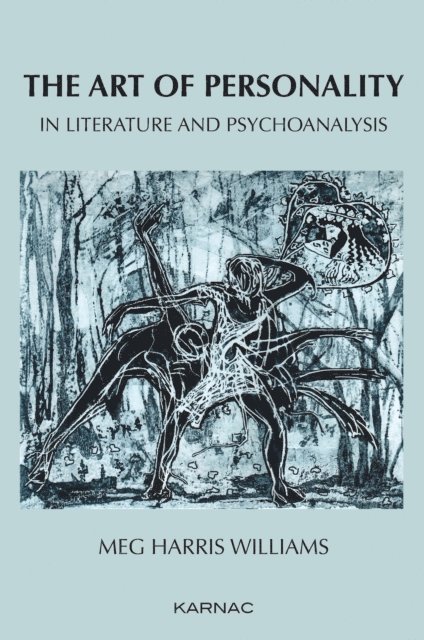
The Art of Personality is a diverse selection of talks and papers on psychoanalysis and literature given by the author over the past ten years. They elaborate on the goal expressed by Milton as ''becoming a true poem'': that is, seeing parallels between the gradual construction of the personality and the construction of a work of art, following an internal evolution on the lines of Bion''s description of an ''endoskeletonous personality''. The works discussed range from classic Greek drama to Dostoevsky, Kafka, and Patrick White.
The author''s thoughts on our interaction with literature stand alongside those of Adrian Stokes and Richard Wollheim on understanding paintings. She brings together a broad knowledge of ancient and modern writings with a deep understanding of the creatively imaginative mind, illuminated by post-Kleinian psychoanalysis. This book will be a source of pleasure and inspiration both to general lovers of literature and to psychoanalytic workers who value the poetic aspects of their patients and their own forms of expression.''
741 kr
Läs direkt efter köp
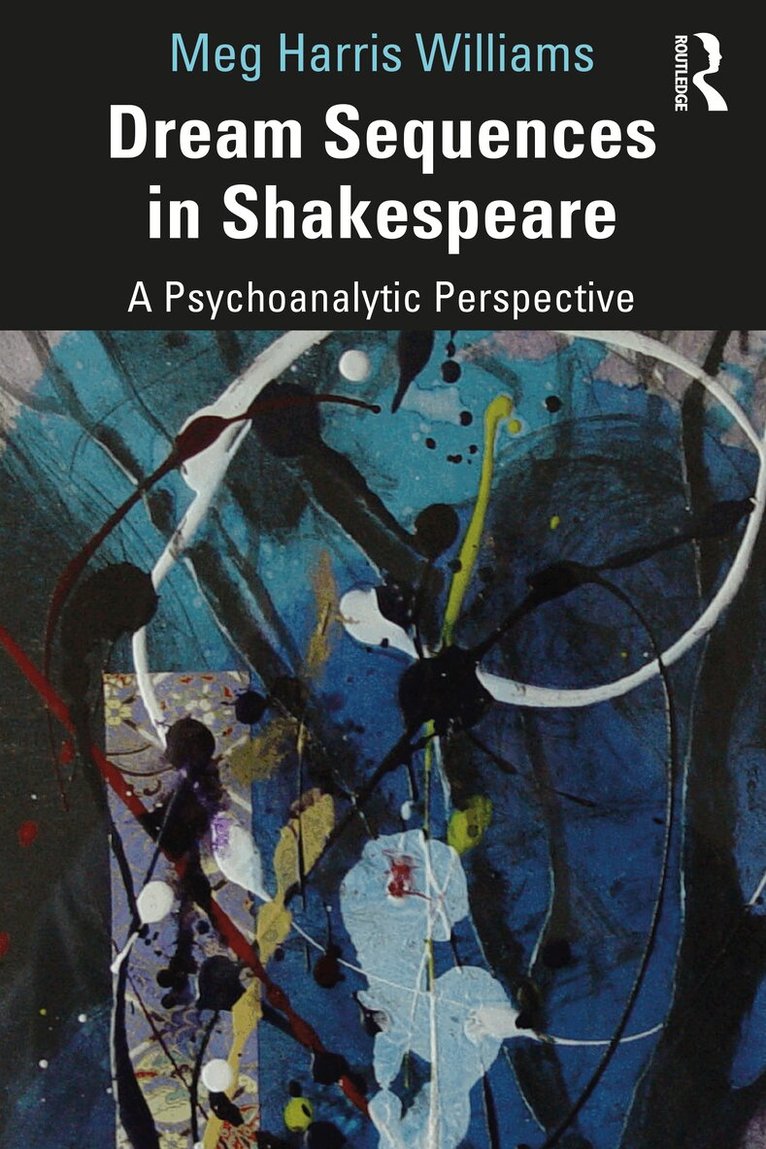
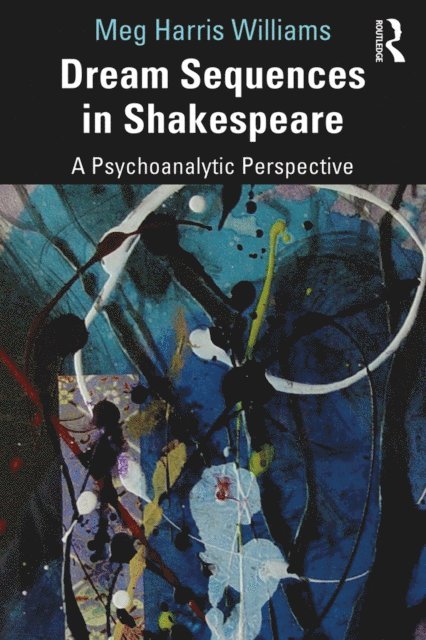
This book takes a new approach to Shakespeare’s plays, exploring them as dream-thought in the modern psychoanalytic sense of unconscious thinking.
Through his commitment to poetic language, Shakespeare offers images and dramatic sequences that illustrate fundamental developmental conflicts, the solutions for which are not preconceived but evolve through the process of dramatisation. In this volume, Meg Harris Williams explores the fundamental distinction between the surface meanings of plot or argument and the deep grammar of dreamlife, applied not only to those plays known as ‘dream-plays’ but also to critical sequences throughout Shakespeare’s oeuvre.
Through a post-Kleinian model based on the thinking of Bion, Meltzer, and Money-Kyrle, this book sheds new light on both Shakespeare’s own relation to the play and on the identificatory processes of the playwright, reader, or audience. Dream Sequences in Shakespeare is important reading for psychoanalysts, playwrights, and students.
454 kr
Läs direkt efter köp
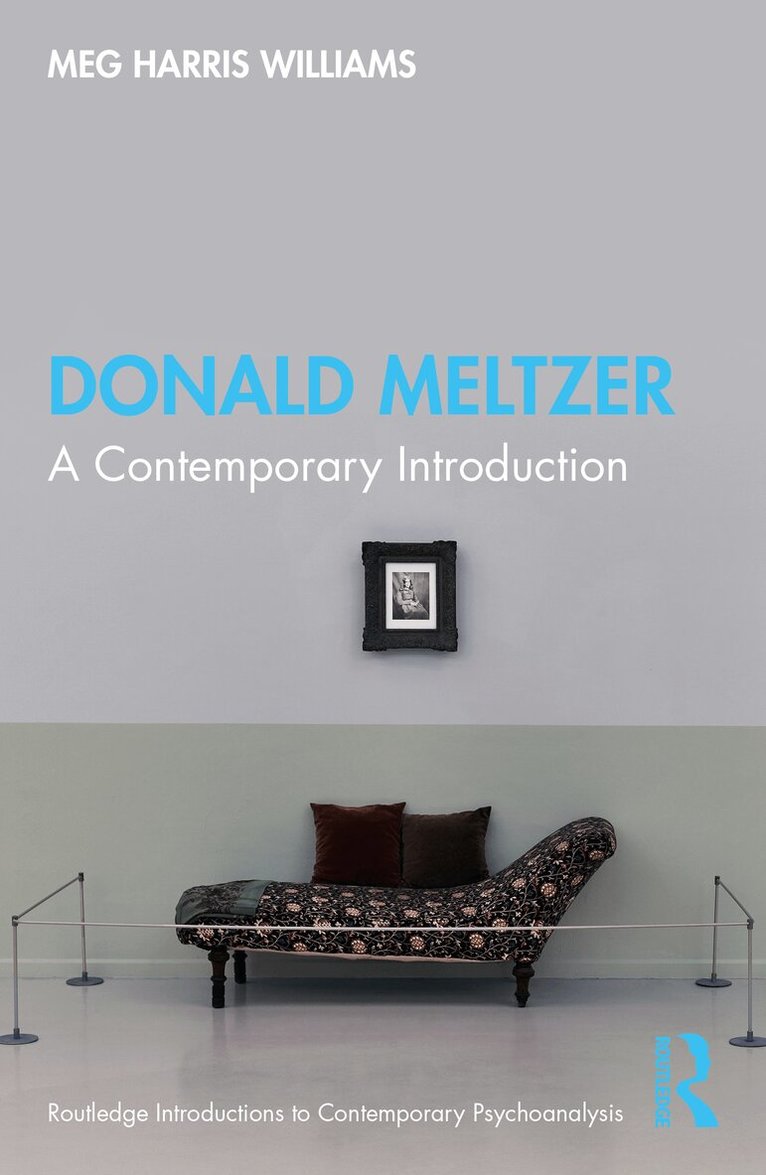
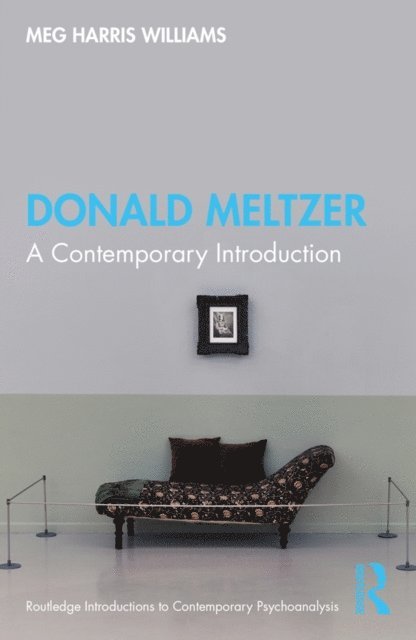
In this intelligent and insightful work, Meg Harris Williams presents a clear and readable introduction to the works of influential psychoanalyst Donald Meltzer. The book covers Meltzer’s ideas on key themes including sexuality, dreams, psychosis, perversion and aesthetics, and his work with both children and adults.
This book focuses especially on Meltzer’s views on the nature of psychoanalysis itself, as an investigative method conducted by the cooperation between two people. His intuitive understanding of dreams is underscored by a scholarly interest in philosophy and linguistics. The book will give readers a window into Meltzer’s clinical seminars and supervisions, as well as a comprehensive overview of his published work, all thoughtfully brought together by someone who worked with Meltzer for many years.
Bringing Meltzer’s ideas into contemporary context, this fresh approach to his work makes his rich and complex theories about our inner world accessible to all. Part of the Routledge Introductions to Contemporary Psychoanalysis series, this book will be of great importance to psychoanalysts, clinicians and scholars familiar with Meltzer’s ideas, as well as those seeking an introduction to his work.
461 kr
Läs direkt efter köp
In this intelligent and insightful work, Meg Harris Williams presents a clear and readable introduction to the works of influential psychoanalyst Donald Meltzer. The book covers Meltzer’s ideas on key themes including sexuality, dreams, psychosis, perversion and aesthetics, and his work with both children and adults.
This book focuses especially on Meltzer’s views on the nature of psychoanalysis itself, as an investigative method conducted by the cooperation between two people. His intuitive understanding of dreams is underscored by a scholarly interest in philosophy and linguistics. The book will give readers a window into Meltzer’s clinical seminars and supervisions, as well as a comprehensive overview of his published work, all thoughtfully brought together by someone who worked with Meltzer for many years.
Bringing Meltzer’s ideas into contemporary context, this fresh approach to his work makes his rich and complex theories about our inner world accessible to all. Part of the Routledge Introductions to Contemporary Psychoanalysis series, this book will be of great importance to psychoanalysts, clinicians and scholars familiar with Meltzer’s ideas, as well as those seeking an introduction to his work.
623 kr
Läs direkt efter köp
516 kr
Läs direkt efter köp
2 892 kr
Skickas inom 10-15 vardagar
628 kr
Skickas inom 10-15 vardagar
1 167 kr
Läs direkt efter köp
Literature is recognised as having significantly influenced the development of modern psychoanalytic thought. In recent years psychoanalysis has drawn increasingly on the literary and artistic traditions of western culture and moved away from its original medical–scientific context. Originally published in 1991 The Chamber of Maiden Thought (Keats''s metaphor for ''the awakening of the thinking principle'') is an original and revealing exploration of the seminal role of literature in forming the modern psychoanalytic model of the mind.The crux of the ''post-Kleinian'' psychoanalytic view of personality development lies in the internal relations between the self and the mind''s ''objects''. Meg Harris Williams and Margot Waddell show that these relations have their origins in the drama of identifications which we can see played out metaphorically and figuratively in literature, which presents the self-creative process in aesthetic terms. They argue that psychoanalysis is a true child of literature rather than merely the interpreter or explainer of literature, illustrating this with some examples from clinical experience, but drawing above all on close scrutiny of the dynamic mental processes presented in the work of Shakespeare, Milton, the Romantic poets, Emily Bronte and George Eliot.The Chamber of Maiden Thought will encourage psychoanalytic workers to respond to the influence of literature in exploring symbolic mental processes. By bringing psychoanalysis into creative conjunction with the arts, it enables practitioners to tap a cultural potential whose insights into the human mind are of immense value.
1 150 kr
Läs direkt efter köp
Literature is recognised as having significantly influenced the development of modern psychoanalytic thought. In recent years psychoanalysis has drawn increasingly on the literary and artistic traditions of western culture and moved away from its original medical–scientific context. Originally published in 1991 The Chamber of Maiden Thought (Keats''s metaphor for ''the awakening of the thinking principle'') is an original and revealing exploration of the seminal role of literature in forming the modern psychoanalytic model of the mind.The crux of the ''post-Kleinian'' psychoanalytic view of personality development lies in the internal relations between the self and the mind''s ''objects''. Meg Harris Williams and Margot Waddell show that these relations have their origins in the drama of identifications which we can see played out metaphorically and figuratively in literature, which presents the self-creative process in aesthetic terms. They argue that psychoanalysis is a true child of literature rather than merely the interpreter or explainer of literature, illustrating this with some examples from clinical experience, but drawing above all on close scrutiny of the dynamic mental processes presented in the work of Shakespeare, Milton, the Romantic poets, Emily Bronte and George Eliot.The Chamber of Maiden Thought will encourage psychoanalytic workers to respond to the influence of literature in exploring symbolic mental processes. By bringing psychoanalysis into creative conjunction with the arts, it enables practitioners to tap a cultural potential whose insights into the human mind are of immense value.
432 kr
Skickas inom 7-10 vardagar
203 kr
Skickas inom 7-10 vardagar
645 kr
Läs direkt efter köp
Martha Harris (1919–1987) was one of the most influential and also one of the most loved psychoanalysts of the generation that trained with Melanie Klein. She also worked with Wilfred Bion, and wrote many books and papers on psychoanalytic training and child development. Her colleague James Gammill cites Mrs Klein as saying: “She is one of the best people I have ever known for the psychoanalysis of children … and she has a mind of her own.” Harris was responsible for the child psychotherapy training at the Tavistock Clinic from 1960 onwards, developing laterally the method founded on infant observation that had been put in place by Esther Bick. She established cross-clinic work discussion groups, a pioneering schools’ counselling course (in collaboration with her husband Roland Harris), and individual work with disturbed children in the school environment. Her belief that psychoanalytic ideas could and should “travel”, both geographically and across the professions, led to her seeding the “Tavi Model” in many other countries through regular teaching trips, in company with her later husband Donald Meltzer.
Her influence was not as a theorist, but as a teacher with an extraordinary capacity to engage processes of introjective learning in both students and readers. This tribute by some of those who studied with her is not simply testimony to a remarkable teacher and clinician whose wisdom has been rarely equalled; it also offers inspiration to others who may be struggling to find ways of using psychoanalytic ideas imaginatively in a variety of contexts – clinical, social or scholarly – in what can at times appear to be an unreceptive world.
791 kr
Läs direkt efter köp
In Freud’s Lost Chord, Daniel Sapen explores what it means for the development of depth psychology that Freud was perplexed by music, and unlike nearly every other aspect of human life, had little to say about it – a problem shared by most others in the early generations of psychoanalytic thought. Psychoanalyst Charles Rycroft wrote “One cannot help regretting that none of the pioneers of the unconscious thought naturally in auditory terms”; more than this, over 100 years later, not only is music per se rarely looked it in psychodynamic terms, jazz music is almost completely absent from the literature. Dr Sapen looks in depth at the intricate details of psychodynamic theory and practice, as well as an overview of its development, to address the possibility that a theoretical model that has little to say about such a basic and omni-present aspect of human life must be seriously flawed in its effort to explain what it is to be human, and how the mind functions and what it creates. However, Sapen illustrates how numerous other thinkers (Jung, Winnicott, Bion, Loewald, Rycroft), some seemingly at odds with and others serving as essential developments and re-workings of psychoanalytic principles, have managed to illuminate and integrate those missing principles so basic to music and creativity – to development, dreaming, thinking, and relating among other human beings intimately and in a society. Nearly uniquely in the psychodynamic literature, Sapen looks in depth at the music of Miles Davis and John Coltrane as examples of the living, breathing psychological processes so essential to understanding the meaning and dynamics of being human that Freud could not, for a variety of reasons, conceptualize.
589 kr
Läs direkt efter köp
This edition is an introductory selection from the writings of Adrian Stokes (1902-1972), the Kleinian aesthete who created a unique vision of the relation between psychoanalysis, art, and aesthetic experience in general. His approach was founded initially on his travels in Italy which then acquired a more formal theoretical foundation during his analysis with Melanie Klein. Stokes was a close friend of leading figures in both psychoanalytic and artistic-literary circles, including Richard Wollheim who organised a previous edition of extracts, The Image in Form. The present edition concentrates specifically on the writing that demonstrates the parallels between art and psychoanalysis.