762 kr
Läs direkt efter köp
762 kr
Läs direkt efter köp
743 kr
Läs direkt efter köp
779 kr
Läs direkt efter köp
767 kr
Läs direkt efter köp
1 582 kr
Läs direkt efter köp
721 kr
Läs direkt efter köp
This second edition of the book, “Green Web-II: Standards and Perspectives from the IUCN Program / Policy Development in Environment Conservation Domain- with reference to India, Pakistan, Nepal, and Bangladesh” investigates the IUCN’s role in global biodiversity conservation policy as well as in national program development in India, Pakistan, Nepal and Bangladesh. It explores how nature protection priorities and approaches are promoted or addressed by IUCN, and how environment conservation policies are created and maintained in states of South Asia with different capacities. It also evaluates IUCN''s competency in biodiversity, climate change, nature conservation and environmental policy formulation at the global, regional and country levels.
This book adds to our knowledge firstly by contributing to a small but growing body of work on the sociology of international organizations. International Governmental Organizations (IGOs), have previously been mainly the subject of political science. Secondly, it critically explores one of the largest and most active nature conservation organizations in the world. Thirdly, it also explores how IUCN actually goes about building protectoral programs with individual member nations. Finally, the research also shows the historical development of global institutions and IUCN’s activities with member nations in helping to define or redefine the concept of global governance. The outcomes of this research will also be beneficial for global collaboration, networking, and for the identification of common concerns among the many environmental and conservational organizations at the international and national level. In this broader sense, the research outcomes might be beneficial to constituencies of the global North as well as global South because of the nature and coverage of IUCN and its role in conservation policy formation. This effort may serve as a model for additional research on international organizations.
Technical topics discussed in the book include: The Motivation for Environmental Conservation- How personal efforts make a difference The Role of International Environment Conservation Organizations The Political Economy of Organizations, Network theory, Institutional theory, Stakeholder theory, Governance theory Governance performance and Competitiveness Popularity indices Knowledge creation and diffusion Conservation commons
745 kr
Läs direkt efter köp
762 kr
Läs direkt efter köp
767 kr
Läs direkt efter köp
760 kr
Läs direkt efter köp
1 593 kr
Läs direkt efter köp
740 kr
Läs direkt efter köp
This second edition of the book, “Green Web-II: Standards and Perspectives from the IUCN Program / Policy Development in Environment Conservation Domain- with reference to India, Pakistan, Nepal, and Bangladesh” investigates the IUCN’s role in global biodiversity conservation policy as well as in national program development in India, Pakistan, Nepal and Bangladesh. It explores how nature protection priorities and approaches are promoted or addressed by IUCN, and how environment conservation policies are created and maintained in states of South Asia with different capacities. It also evaluates IUCN''s competency in biodiversity, climate change, nature conservation and environmental policy formulation at the global, regional and country levels.
This book adds to our knowledge firstly by contributing to a small but growing body of work on the sociology of international organizations. International Governmental Organizations (IGOs), have previously been mainly the subject of political science. Secondly, it critically explores one of the largest and most active nature conservation organizations in the world. Thirdly, it also explores how IUCN actually goes about building protectoral programs with individual member nations. Finally, the research also shows the historical development of global institutions and IUCN’s activities with member nations in helping to define or redefine the concept of global governance. The outcomes of this research will also be beneficial for global collaboration, networking, and for the identification of common concerns among the many environmental and conservational organizations at the international and national level. In this broader sense, the research outcomes might be beneficial to constituencies of the global North as well as global South because of the nature and coverage of IUCN and its role in conservation policy formation. This effort may serve as a model for additional research on international organizations.
Technical topics discussed in the book include: The Motivation for Environmental Conservation- How personal efforts make a difference The Role of International Environment Conservation Organizations The Political Economy of Organizations, Network theory, Institutional theory, Stakeholder theory, Governance theory Governance performance and Competitiveness Popularity indices Knowledge creation and diffusion Conservation commons
767 kr
Läs direkt efter köp
729 kr
Läs direkt efter köp
1 755 kr
Läs direkt efter köp
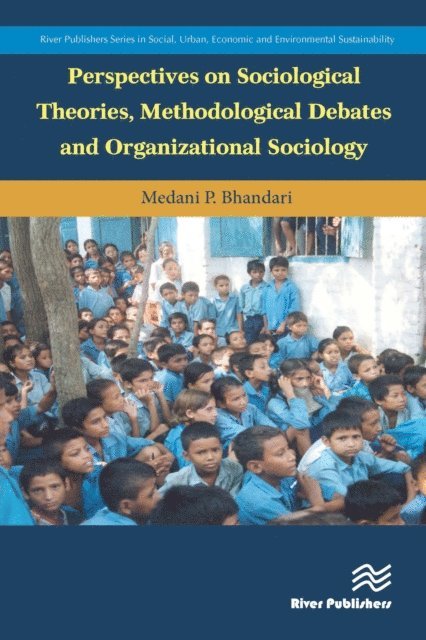
This book stands as the full body of scholarly work on western theories of social sciences. The book contents three chapters. The first part gives the overall scenario of theories, the second part provides the pathway to research destination – the research method, and the third and final part is the destination of the substantive field of study and the roles of international organizations on social, political, economic, environmental regimes creation as well as to other social and development functions of international organizations.
Sociology examines the social actors’ activities in society and social problems. Western Scholars have developed many social theories, which address the underlying causes such as social conflicts and inequalities, and many formal and informal social organizations are involved to minimize the challenges of inequalities. The study of social organizations is a relatively new phenomenon in sociology. Broadly its historical root can be traced from Greek civilization (Plato, Aristotle), and it has mostly flourished since the Enlightenment Era. However, empirical studies show that the scientific study of organizations began only from the 19th and 20th century. Among the scholars of these centuries, the contributions of Karl Marx, Ferdinand Tönnies, Émile Durkheim, Ludwig Gumplovicz, Vilfredo Pareto, Max Weber, and Talcott Parsons are considered as pillars of sociology.
This book intends to answer the broad and major questions of theories, methods, and the international organization studies in social sciences, particularly in sociology and to provide the basic concepts of social theories, application of methods in research (qualitative), and elaborate the factual reality "why study of international organization is also subject of sociological study". The book presents the perspectives of organizational sociology in way that scholarly readers can see the linkages political sciences, sociology and slightly economic in addressing the roles and issues of the international organizations.
1 767 kr
Läs direkt efter köp
This book stands as the full body of scholarly work on western theories of social sciences. The book contents three chapters. The first part gives the overall scenario of theories, the second part provides the pathway to research destination – the research method, and the third and final part is the destination of the substantive field of study and the roles of international organizations on social, political, economic, environmental regimes creation as well as to other social and development functions of international organizations.
Sociology examines the social actors’ activities in society and social problems. Western Scholars have developed many social theories, which address the underlying causes such as social conflicts and inequalities, and many formal and informal social organizations are involved to minimize the challenges of inequalities. The study of social organizations is a relatively new phenomenon in sociology. Broadly its historical root can be traced from Greek civilization (Plato, Aristotle), and it has mostly flourished since the Enlightenment Era. However, empirical studies show that the scientific study of organizations began only from the 19th and 20th century. Among the scholars of these centuries, the contributions of Karl Marx, Ferdinand Tönnies, Émile Durkheim, Ludwig Gumplovicz, Vilfredo Pareto, Max Weber, and Talcott Parsons are considered as pillars of sociology.
This book intends to answer the broad and major questions of theories, methods, and the international organization studies in social sciences, particularly in sociology and to provide the basic concepts of social theories, application of methods in research (qualitative), and elaborate the factual reality "why study of international organization is also subject of sociological study". The book presents the perspectives of organizational sociology in way that scholarly readers can see the linkages political sciences, sociology and slightly economic in addressing the roles and issues of the international organizations.
1 039 kr
Läs direkt efter köp
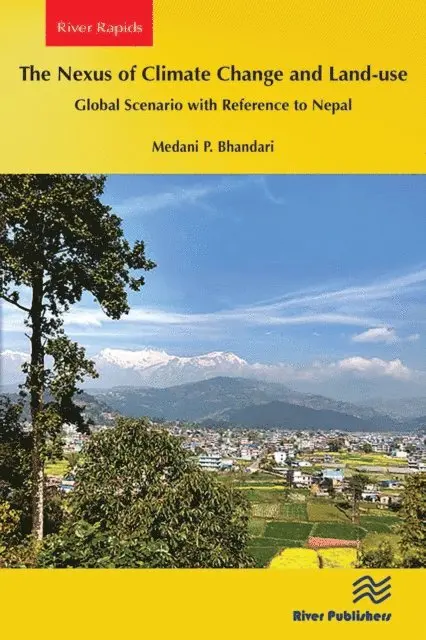
The interplay between land use and climate change is a crucial aspect of sustainable development, especially in Nepal. This book delves into the intricate connections between land-use and climate change in Nepal, shedding light on significant challenges and potential opportunities. Nepal, with its diverse topography and ecosystems, is exceptionally susceptible to the impacts of climate change. The distinctive land-use patterns, encompassing agriculture, forest cover, and urbanization, significantly influence the country''s climate resilience and carbon balance. However, rapid population growth, urban expansion, and changing land-use practices have led to environmental degradation and a surge in greenhouse gas emissions. The alarming deforestation, driven by agricultural expansion, infrastructure development, and unsustainable logging, has contributed to carbon emissions and the depletion of vital ecosystem services. Consequently, the conversion of forested land into agricultural fields has negatively affected biodiversity, soil erosion, and water resources, intensifying the vulnerability of communities to climate change. Nevertheless, embracing sustainable land-use practices like afforestation, reforestation, and agroforestry holds promise for mitigating the impacts of climate change and enhancing resilience. The promotion of climate-smart agriculture, watershed management, and community-based forestry can aid in conserving ecosystems, sequestering carbon, and improving livelihoods. This study illustrates the intricate relationship between land-use and climate change, emphasizing the importance of striking a balance in land-use practices, conserving forests, and biodiversity, and promoting sustainable agriculture. These efforts are indispensable for achieving climate resilience and sustainable development in Nepal. By addressing the nexus between land-use and climate change, Nepal can pave the way towards a more sustainable and climate-resilient future. The purpose of this book is to present the core concepts of this issue, inspire further research, and propose solutions to mitigate the problems caused by human disturbances in the Earth''s ecosystem.
1 447 kr
Läs direkt efter köp
1 934 kr
Läs direkt efter köp
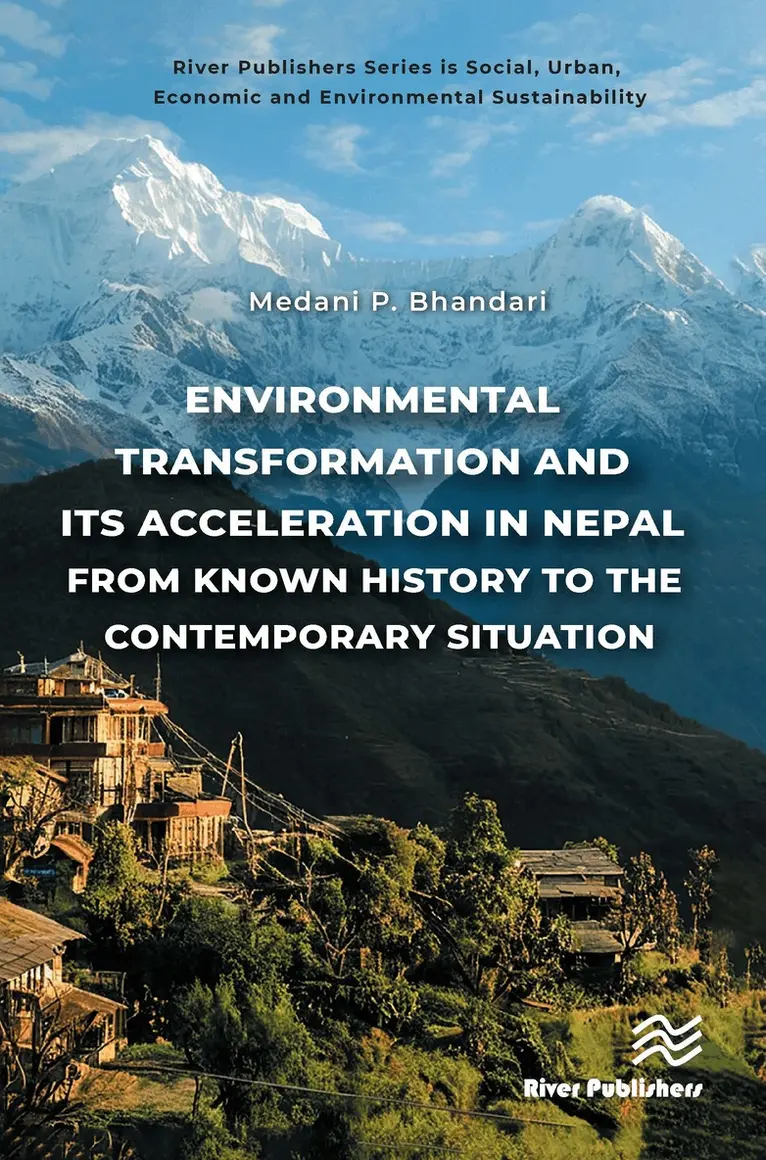
This is an in-depth exploration of Nepal’s environmental journey, tracing its transformation from ancient practices to modern sustainability challenges. Drawing from over four decades of experience as an environmentalist and humanitarian, Dr. Medani Bhandari takes readers through the historical, social, and ecological shifts that have shaped Nepal’s environmental landscape. This comprehensive work examines the complex interplay between traditional knowledge, policy development, and global environmental trends, offering valuable insights into the country’s past, present, and future.
This is a critical resource for understanding the environmental challenges faced by Nepal, a country rich in natural resources but confronted with the pressing issues of deforestation, water scarcity, and climate change. By analyzing these challenges through the lens of history, politics, and social change, this book offers a holistic understanding of the forces at play and presents actionable solutions for moving forward.
This work bridges the gap between academic research and practical, on-the-ground experience. It incorporates diverse perspectives, combining ecological science with policy analysis, and highlights the interconnectedness of environmentalism with social justice, cultural identity, and global sustainability. The book provides policymakers, researchers, NGOs, and environmental advocates with a framework for fostering sustainable practices that are both contextually relevant and globally applicable.
Readers will see a detailed examination of Nepal’s environmental transformation, a roadmap for accelerating sustainable practices, and a call to action for local and global stakeholders. This book is an invaluable resource for anyone seeking to understand Nepal’s environmental evolution and the broader implications for sustainable development in the global context.
Technical topics discussed in the book include:• Historical evolution of environmentalism in Nepal• Impact of traditional ecological knowledge on conservation practices• Deforestation and forest management strategies• Water scarcity and management challenges• Climate change impacts and adaptation in Nepal• Biodiversity conservation and protected area management• Sustainable agricultural practices and agroforestry• Environmental policy and legislation in Nepal• The role of NGOs and community-based conservation• The intersection of environmentalism, social justice, and equity
1 905 kr
Läs direkt efter köp
This pioneering work provides a comprehensive exploration of the world''s most pressing water issues. It offers a global overview of the water crisis, meticulously categorizing regions based on their water availability: from areas facing extreme water scarcity to those enjoying relative abundance. By examining diverse case studies, it presents specific examples from regions struggling with severe droughts, high to moderate water stress, moderate water security, and those blessed with ample freshwater resources.
The book delves into the underlying causes of the global water crisis, including climate change, population growth, pollution, and unsustainable water management practices. It highlights the disparities between regions, emphasizing how some communities face life-threatening shortages while others have access to surplus water. By comparing these different scenarios, the book sheds light on the complex socio-economic, environmental, and political factors contributing to water inequality.
At its core, this book carries a message of urgency and hope. It challenges readers to rethink water as a shared resource and inspires global cooperation to address water scarcity. The book advocates for innovative solutions such as sustainable water management, advanced technologies for water conservation, and policies that promote equitable access to clean water.
""Analysis of the Global Water Crisis"" is an essential read for policymakers, researchers, environmentalists, and anyone concerned about the future of our planet. It offers noble ideas for a sustainable future where water is managed wisely, ensuring the survival and prosperity of all living beings. The message is clear: water is not just a resource, but a fundamental right, and it is our collective responsibility to protect it for future generations.
Technical topics discussed in the book include:
Water availability and distribution Climate change and water resources Water stress and scarcity indicators Groundwater depletion Water pollution and contamination Integrated water resources management (IWRM) Desalination and water reuse technologies Water–energy nexus Transboundary water conflicts and cooperation Policies and governance for water security1 844 kr
Läs direkt efter köp
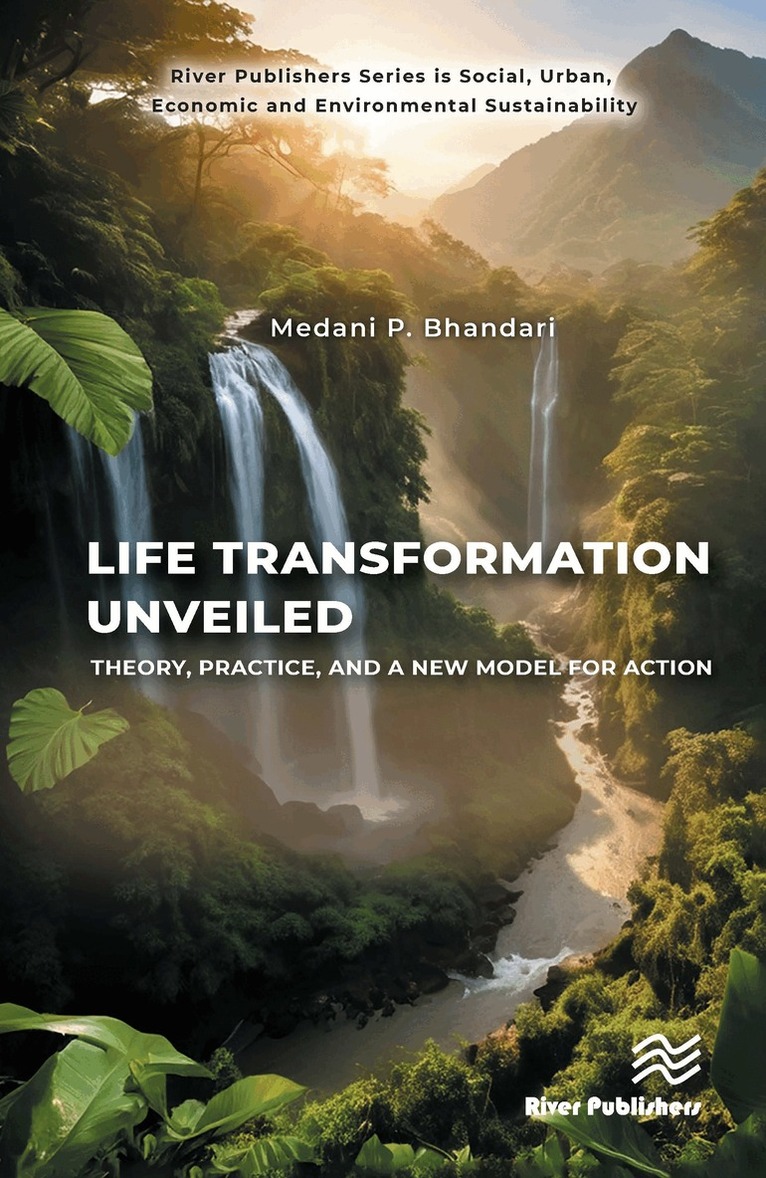
This book presents a comprehensive collection of transformative theories that delve into the practicalities of personal growth, societal change, and global improvement. It is both a guide and a philosophical roadmap, offering readers insight into the core concepts that shape human development and societal evolution. It illuminates how these f rameworks can be applied in everyday life by covering a wide range of contemporary knowledge bases and transformative theories, encouraging readers to adopt an approach rooted in equity, ethics, and giving back. It aims to foster a world where no one is left behind and to nurture a more humane, compassionate, and peaceful society.
The book draws on the insights of foundational theories—of the 20th and 21st centuries, each selected to address different aspects of human development and societal dynamics. By presenting this curated collection, the book highlights how these frameworks provide actionable tools to manage and adapt to the complexities of the modern world. Each theory is unpacked to show how it can foster resilience, adaptability, and compassionate engagement, essential qualities in a time marked by global crises and rapid change. Readers are guided to see how these theories support individual growth and have broader applications for creating equitable and inclusive communities.
This book bridges theory and practice, presenting real-world applications that extend beyond academic discourse. It provides an in-depth look at how transformative theories can inform daily actions, decisions, and interactions, fostering equitable, ethical, and inclusive environments. Whether applied to personal goals, organizational strategies, or social initiatives, these theories underscore the importance of practical wisdom and mindfulness. The book invites readers to consider the “why,†“what,†and “how†of utilizing these theories in everyday life, positioning knowledge as a powerful catalyst for personal fulfillment and positive social impact.
Technical topics discussed in the book include:
‡ Theoretical Foundations of Transformation‡ Holistic Approaches to Life Transformation‡ Interdisciplinary Models‡ Knowledge and Epistemology of Transformation‡ Human and Environmental Interaction‡ Empowerment and Agency‡ Ethical and Social Dimensions‡ A New Model for Action‡ Applications for Personal and Collective Growth‡ Global Implications
These topics serve as a foundation for connecting philosophical reflections to practical applications, shaping how individuals and societies can live with greater intention and impact.
813 kr
Läs direkt efter köp
813 kr
Läs direkt efter köp
2 515 kr
Skickas inom 10-15 vardagar
2 491 kr
Kommande
1 611 kr
Skickas inom 10-15 vardagar
1 785 kr
Läs direkt efter köp
This book presents a comprehensive collection of transformative theories that delve into the practicalities of personal growth, societal change, and global improvement. It is both a guide and a philosophical roadmap, offering readers insight into the core concepts that shape human development and societal evolution. It illuminates how these f rameworks can be applied in everyday life by covering a wide range of contemporary knowledge bases and transformative theories, encouraging readers to adopt an approach rooted in equity, ethics, and giving back. It aims to foster a world where no one is left behind and to nurture a more humane, compassionate, and peaceful society.
The book draws on the insights of foundational theories—of the 20th and 21st centuries, each selected to address different aspects of human development and societal dynamics. By presenting this curated collection, the book highlights how these frameworks provide actionable tools to manage and adapt to the complexities of the modern world. Each theory is unpacked to show how it can foster resilience, adaptability, and compassionate engagement, essential qualities in a time marked by global crises and rapid change. Readers are guided to see how these theories support individual growth and have broader applications for creating equitable and inclusive communities.
This book bridges theory and practice, presenting real-world applications that extend beyond academic discourse. It provides an in-depth look at how transformative theories can inform daily actions, decisions, and interactions, fostering equitable, ethical, and inclusive environments. Whether applied to personal goals, organizational strategies, or social initiatives, these theories underscore the importance of practical wisdom and mindfulness. The book invites readers to consider the “why,†“what,†and “how†of utilizing these theories in everyday life, positioning knowledge as a powerful catalyst for personal fulfillment and positive social impact.
Technical topics discussed in the book include:
‡ Theoretical Foundations of Transformation‡ Holistic Approaches to Life Transformation‡ Interdisciplinary Models‡ Knowledge and Epistemology of Transformation‡ Human and Environmental Interaction‡ Empowerment and Agency‡ Ethical and Social Dimensions‡ A New Model for Action‡ Applications for Personal and Collective Growth‡ Global Implications
These topics serve as a foundation for connecting philosophical reflections to practical applications, shaping how individuals and societies can live with greater intention and impact.
1 684 kr
Skickas inom 10-15 vardagar
1 978 kr
Läs direkt efter köp
This is an in-depth exploration of Nepal’s environmental journey, tracing its transformation from ancient practices to modern sustainability challenges. Drawing from over four decades of experience as an environmentalist and humanitarian, Dr. Medani Bhandari takes readers through the historical, social, and ecological shifts that have shaped Nepal’s environmental landscape. This comprehensive work examines the complex interplay between traditional knowledge, policy development, and global environmental trends, offering valuable insights into the country’s past, present, and future.
This is a critical resource for understanding the environmental challenges faced by Nepal, a country rich in natural resources but confronted with the pressing issues of deforestation, water scarcity, and climate change. By analyzing these challenges through the lens of history, politics, and social change, this book offers a holistic understanding of the forces at play and presents actionable solutions for moving forward.
This work bridges the gap between academic research and practical, on-the-ground experience. It incorporates diverse perspectives, combining ecological science with policy analysis, and highlights the interconnectedness of environmentalism with social justice, cultural identity, and global sustainability. The book provides policymakers, researchers, NGOs, and environmental advocates with a framework for fostering sustainable practices that are both contextually relevant and globally applicable.
Readers will see a detailed examination of Nepal’s environmental transformation, a roadmap for accelerating sustainable practices, and a call to action for local and global stakeholders. This book is an invaluable resource for anyone seeking to understand Nepal’s environmental evolution and the broader implications for sustainable development in the global context.
Technical topics discussed in the book include:• Historical evolution of environmentalism in Nepal• Impact of traditional ecological knowledge on conservation practices• Deforestation and forest management strategies• Water scarcity and management challenges• Climate change impacts and adaptation in Nepal• Biodiversity conservation and protected area management• Sustainable agricultural practices and agroforestry• Environmental policy and legislation in Nepal• The role of NGOs and community-based conservation• The intersection of environmentalism, social justice, and equity