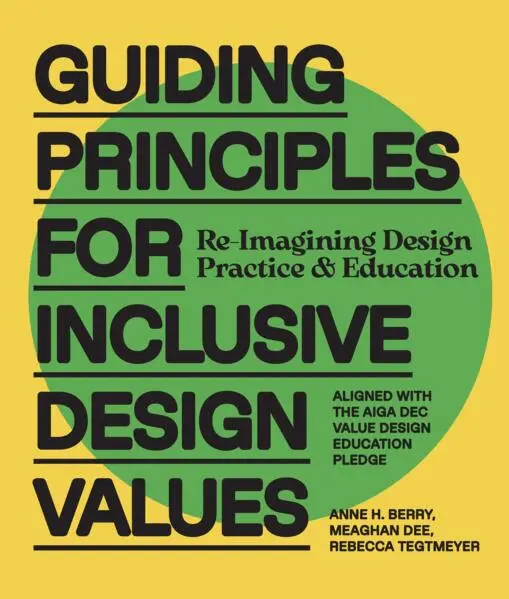
A practical, values-driven guide to inclusive design.How can designers meaningfully contribute to a more just and equitable world? Guiding Principles for Inclusive Design Values answers this question with clarity, urgency, and actionable guidance. Structured around the six official commitments of the AIGA Design Educators Community Value Design Education Pledge, this book offers designers and educators a thoughtful framework for integrating inclusion, equity, and justice into every stage of their creative process.Each chapter centers on one of the six core values—anti-racism, historical awareness, knowledge-sharing, impact, community, and wellbeing—and features contributors from across the design world. These diverse voices share tools, real-world case studies, and provocative prompts that invite reflection and inspire action. This book is a hands-on resource for individual creatives, design educators, and teams who want to align their design practice with their values.Inside, readers will find:Six chapters based on AIGA’s official values commitments, each offering actionable insightsContributions from respected designers and educators, each bringing a unique perspective and experienceCase studies and real-world applications that show inclusive design in actionGuidance for teams and studios looking to integrate values into hiring, collaboration, and client workA practical framework for inclusive creativity, rooted in the real challenges of contemporary designPerfect for designers at any career stage, Inclusive Design Values is a call to rethink how and why we create. It’s a must-have for anyone committed to using design as a force for change.

The most meaningful design often begins when no one hands you a brief. Design Unbound explores self-initiated practice as a source of experimentation and authorship, helping designers move beyond solving assigned problems to identifying questions worth pursuing.Drawing on the perspectives of three designers and educators as well as featured prominent practitioners, the book presents frameworks, methods, case studies, and project examples that guide readers from observation and curiosity through storytelling, futures thinking, material exploration, and collaboration. Readers learn how to initiate projects, define constraints, sustain momentum, and transform personal or societal concerns into purposeful work.Written for practitioners, educators, and students, Design Unbound shows how self-directed projects can become laboratories for new ideas, catalysts for professional growth, and contributions to culture. It does not tell designers what to make. It helps them decide what is worth making.The Open Access version of this book, available at http://www.taylorfrancis.com, has been made available under a Creative Commons Attribution-Non Commercial-No Derivatives (CC BY-NC-ND) 4.0 license.
Working with clients is one of the most valuable ways for students to develop their professional design practice skills. This is a practical guide to working on real-life briefs in the design studio—how to collaborate with and connect with communities, find and retain clients, and manage real-world design problems. Using tools and frameworks based on years of research and experience, the book is divided into four sections:Why (industry connections, experiential learning, personal empowerment)What (engaging with communities, client work, structure)Who (work roles, client relationships, articulating value)How (launching, logistics, planning)The final section of the book covers information for those expanding into student-led studios and includes information on strategies, financing, and how to plan for the future. Supported by case studies and interviews, this is an essential guide to working with real projects and clients, for both students and instructors alike.
Working with clients is one of the most valuable ways for students to develop theirprofessional design practice skills. This is a practical guide to working on real-life briefsin the design studio-how to collaborate with and connect with communities, find andretain clients, and manage real-world design problems. Using tools and frameworksbased on years of research and experience, the book is divided into four sections: Why (industry connections, experiential learning, personal empowerment) What (engaging with communities, client work, structure) Who (work roles, client relationships, articulating value) How (launching, logistics, planning)The final section of the book covers information for those expanding into student-ledstudios and includes information on strategies, financing, and how to plan for the future.Supported by case studies and interviews, this is an essential guide to working with realprojects and clients, for both students and instructors alike.