839 kr
Läs direkt efter köp
839 kr
Läs direkt efter köp
366 kr
Skickas inom 7-10 vardagar
1 393 kr
Skickas inom 7-10 vardagar
2 333 kr
Skickas inom 3-6 vardagar
2 571 kr
Skickas inom 10-15 vardagar
663 kr
Skickas inom 10-15 vardagar
3 175 kr
Skickas inom 10-15 vardagar
852 kr
Skickas inom 10-15 vardagar
832 kr
Skickas inom 7-10 vardagar
1 593 kr
Skickas inom 7-10 vardagar
754 kr
Skickas inom 7-10 vardagar
749 kr
Skickas inom 7-10 vardagar
696 kr
Läs direkt efter köp
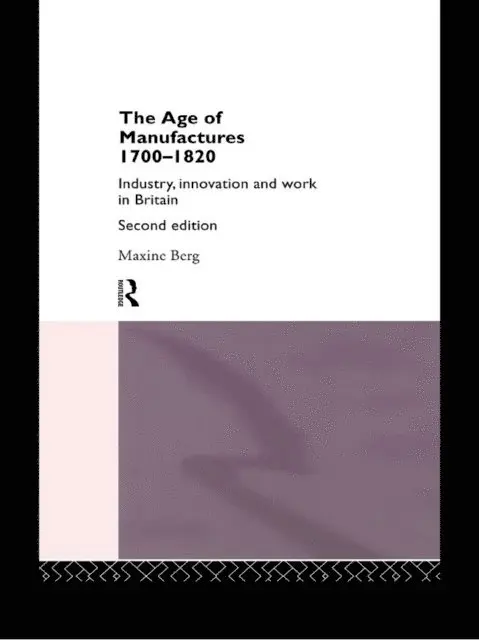
This new edition of The Age of Manufactures provides an exciting alternative overview of the eighteenth-century British economy. Recent macro-economic history has discounted many of the achievements of the Industrial Revolution. Maxine Berg argues that at the heart of the Industrial Revolution, we find many new consumer industries employing a women''s workforce, and bringing with them a rich diversity of technological and organizational change. Four new chapters explore recent perspectives on: * The Industrial Revolution * Eighteenth century industries * Machines and manual labour * The rise of the factory system Statistical summaries, and a thorough revision of the whole text have refreshed and enhanced this well-established and important contribution to British ecomonic history.
691 kr
Läs direkt efter köp
This new edition of The Age of Manufactures provides an exciting alternative overview of the eighteenth-century British economy. Recent macro-economic history has discounted many of the achievements of the Industrial Revolution. Maxine Berg argues that at the heart of the Industrial Revolution, we find many new consumer industries employing a women''s workforce, and bringing with them a rich diversity of technological and organizational change. Four new chapters explore recent perspectives on: * The Industrial Revolution * Eighteenth century industries * Machines and manual labour * The rise of the factory system Statistical summaries, and a thorough revision of the whole text have refreshed and enhanced this well-established and important contribution to British ecomonic history.
1 126 kr
Skickas inom 10-15 vardagar
1 585 kr
Läs direkt efter köp
977 kr
Läs direkt efter köp
This edited collection, first published in 1991, focuses on the commercial relations, marketing structures and development of consumption that accompanied early industrial expansion. The papers examine aspects of industrial structure and work organisation, including women’s work, and highlight the conflict and compromise between work traditions and the emergence of a market culture. With an overarching introduction providing a background to European manufacturing, this title will be of particular interest to students of social and economic history researching early industrial Europe and the concurrent emergence of a material, consumer culture.
992 kr
Läs direkt efter köp
This edited collection, first published in 1991, focuses on the commercial relations, marketing structures and development of consumption that accompanied early industrial expansion. The papers examine aspects of industrial structure and work organisation, including women’s work, and highlight the conflict and compromise between work traditions and the emergence of a market culture. With an overarching introduction providing a background to European manufacturing, this title will be of particular interest to students of social and economic history researching early industrial Europe and the concurrent emergence of a material, consumer culture.
331 kr
Skickas inom 7-10 vardagar
222 kr
Skickas inom 7-10 vardagar
247 kr
Läs direkt efter köp
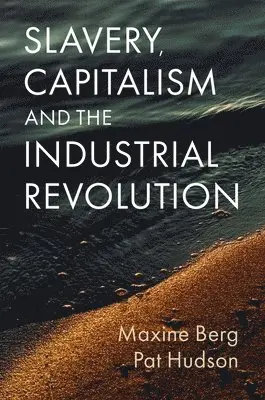
The role of slavery in driving Britain''s economic development is often debated, but seldom given a central place.
In their remarkable new book, Maxine Berg and Pat Hudson ''follow the money'' to document in revealing detail the role of slavery in the making of Britain’s industrial revolution. Slavery was not just a source of wealth for a narrow circle of slave owners who built grand country houses and filled them with luxuries. The forces set in motion by the slave and plantation trades seeped into almost every aspect of the economy and society.
In textile mills, iron and copper smelting, steam power, and financial institutions, slavery played a crucial part. Things we might think far removed from the taint of slavery, such as eighteenth-century fashions for indigo-patterned cloth, sweet tea, snuff boxes, mahogany furniture, ceramics and silverware, were intimately connected. Even London’s role as a centre for global finance was partly determined by the slave trade as insurance, financial trading and mortgage markets were developed in the City to promote distant and risky investments in enslaved people.
The result is a bold and unflinching account of how Britain became a global superpower, and how the legacy of slavery persists. Acknowledging Britain''s role in slavery is not just about toppling statues and renaming streets. We urgently need to come to terms with slavery''s inextricable links with Western capitalism, and the ways in which many of us continue to benefit from slavery to this day.
2 323 kr
Skickas inom 7-10 vardagar
775 kr
Tillfälligt slut