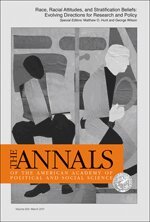
Barack Obama′s election as the forty-fourth president of the United States reinvigorated discussions of race, ideology and inequality in America. This debate occurs in an era when scholarly attention on the intersections in these key areas has been growing in tandem with the expanding racial and ethnic diversity of American society. To broaden our understanding of these complex convergences, this volume of the ANNALS continues the discussion by showcasing a set of cutting-edge papers by leading scholars of race and inequality, with special focus on racial attitudes and stratification beliefs research. Utilizing a mix of methodological and theoretical approaches, the contributors highlight four primary themes: (1) intersections of race, inequality, and ideology in specific institutional domains (e.g., crime, religion, work, immigration/national inclusion); (2) the meaning, measurement, and implications of "racial resentment"; (3) the role of social context and stereotypes in shaping racial (and non-racial) policy support; and (4) the operation of racial prejudice and stratification ideology in the context of Obama′s presidency. This volume will appeal to a multidisciplinary scholarly audience, including policy-makers interested in current public opinion regarding the American occupational structure and its associated inequalities.
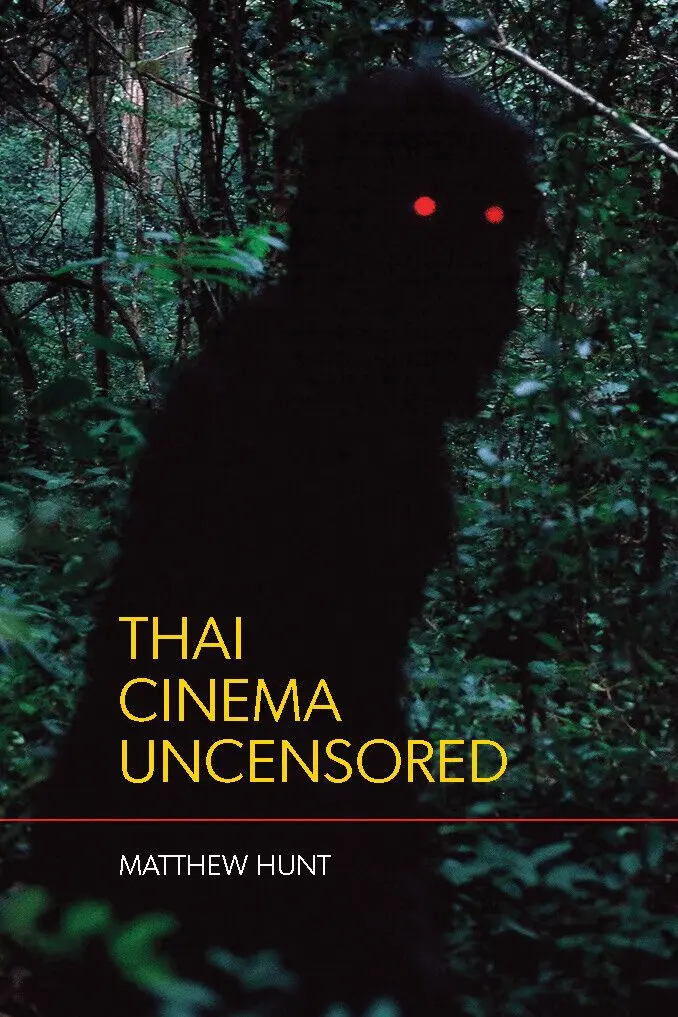
In this first full-length study on the topic, Matthew Hunt—with access to rare and controversial films—provides a history of film censorship in Thailand. Hunt outlines its beginnings in the country, when films were censored by the police for political and ideological reasons, rather than on the basis of taste and decency, to the present when issues such as politics, religion, and sex are the main reasons films are banned. He also examines how Thai filmmakers approach culturally sensitive subjects and how their films have been censored as a result. Hunt presents interviews with ten leading directors, including conversations with Thai New Wave veterans Apichatpong Weerasethakul and Pen-ek Ratanaruang. In these interviews, the directors discuss their most controversial films, which range from mainstream studio movies to independent arthouse releases, and explain their responses to censorship.