During a time of significant demographic, geographic, and social transition, many women in early nineteenth-century Montreal turned to prostitution and brothel-keeping to feed, clothe, protect, and house themselves and their families. Beyond Brutal Passions is a close study of the women who were accused of marketing sex, their economic and social susceptibilities, and the strategies they employed to resist authority and assert their own agency. Referencing newspapers, parish registers, census returns, coroners' reports, city directories, documents of Catholic and Protestant institutions, police books, and court records, Mary Anne Poutanen reveals how these women confronted limited alternatives and how they fought against established authority in the pursuit of their livelihoods. She details these women's lives not only as prostitutes but also as wives, mothers, sisters, and daughters who reconstructed the bonds of kinship and solidarity. An insightful history of prostitution, Beyond Brutal Passions explores the complicated relationships between women accused of prostitution and the society in which they lived and worked.
In A Meeting of the People Roderick MacLeod and Mary Anne Poutanen look at the Protestant public education system and the communities that established, and were served by, its schools, from the origins of public education in 1801 to the dissolution of confessional school boards in 1998. They focus on key issues such as class, ethnicity, religion, gender, health and welfare, patriotism, and the nature of local administration, bringing to life the people who attempted to establish and maintain schools and considering relationships between school trustees, parents, teachers, and the wider public. Their analysis shows that communities recognized the importance of providing schooling, despite what were often bleak circumstances. The authors show that Protestant families often had to make a difficult choice between supporting better educational facilities in a central place far away or encouraging the survival of the local community through maintaining one of its key institutions, the local school. They explore the ambiguous nature of Protestant education, at times understood as schooling reserved for a religious minority and at others as a liberal approach similar to public schooling across North America. The Protestant community, begun as a British element within a small colony, has developed into a diverse array of people from across the religious spectrum, periodically redefining itself to meet the needs of a changing Quebec society.
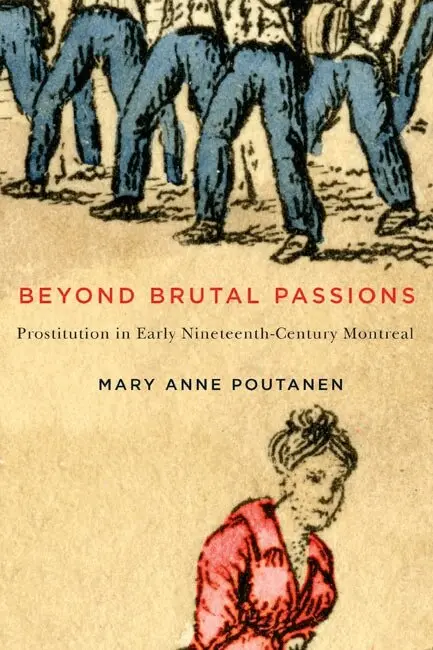
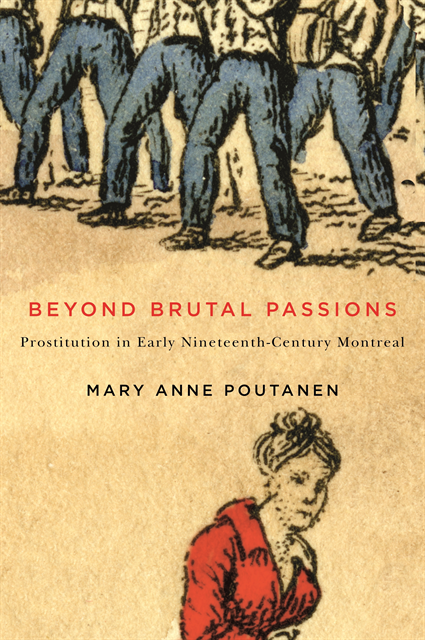
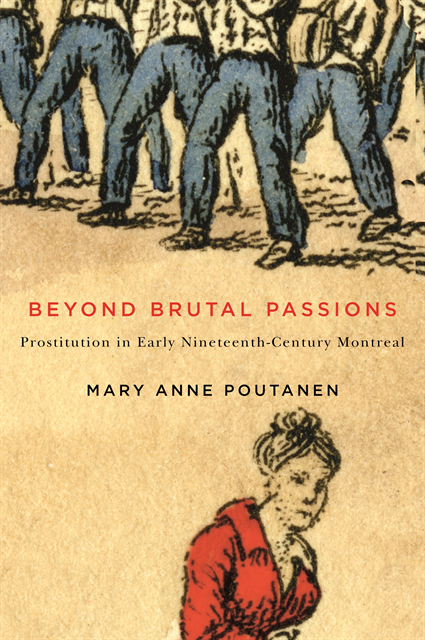
During a time of significant demographic, geographic, and social transition, many women in early nineteenth-century Montreal turned to prostitution and brothel-keeping to feed, clothe, protect, and house themselves and their families. Beyond Brutal Passions is a close study of the women who were accused of marketing sex, their economic and social susceptibilities, and the strategies they employed to resist authority and assert their own agency. Referencing newspapers, parish registers, census returns, coroners'' reports, city directories, documents of Catholic and Protestant institutions, police books, and court records, Mary Anne Poutanen reveals how these women confronted limited alternatives and how they fought against established authority in the pursuit of their livelihoods. She details these women’s lives not only as prostitutes but also as wives, mothers, sisters, and daughters who reconstructed the bonds of kinship and solidarity. An insightful history of prostitution, Beyond Brutal Passions explores the complicated relationships between women accused of prostitution and the society in which they lived and worked.
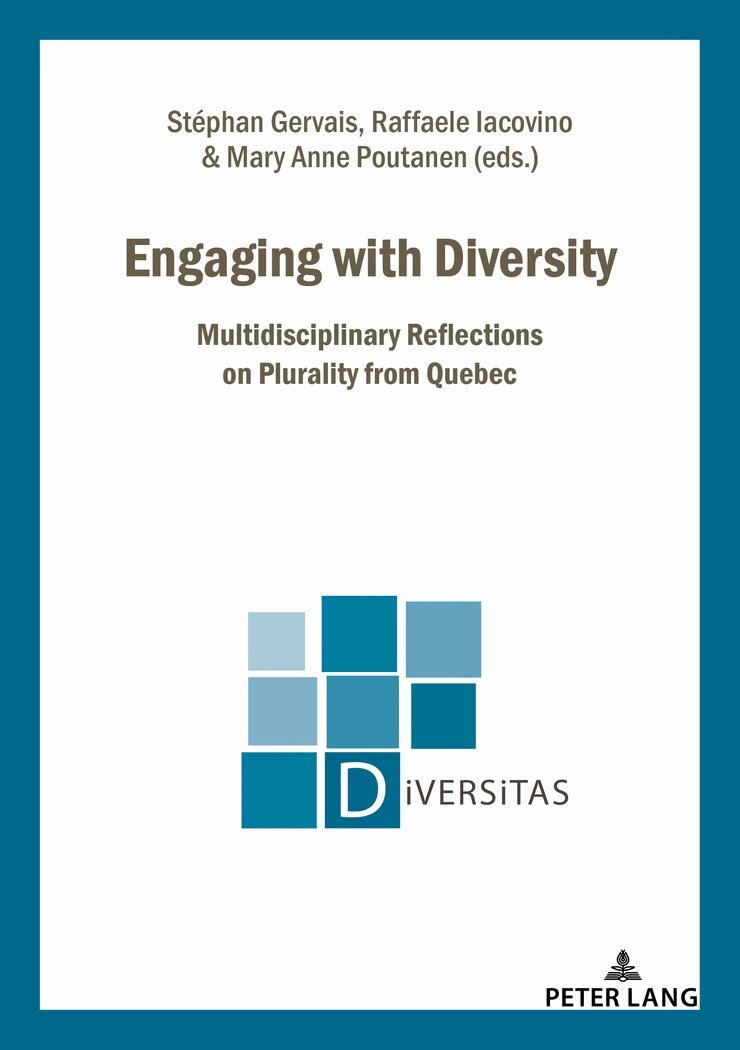
Contributed by leading scholars of Quebec Studies, both emerging and established, the 30 essays of this comprehensive collection offer a multidisciplinary survey of the study of diversity in Quebec over space and time. The volume is organized around a variety of themes through which Quebec’s plural reality is expressed, including conceptual, historical and contemporary approaches, covering a wide range of social and economic cleavages, identity markers, political contestation and, broadly, the lived experiences of Quebecers negotiating difference over time. In an environment increasingly demarcated by conflicts around values and cultural and social practices, this collection hopes to contribute to broadening the spectrum of voices to the current debate, adding an inclusive reflection to a conversation that has only intensified over the last decade. Quebec as a pluri-national and multi-ethnic society has been and remains a great laboratory to study and to test public policies on ethnic diversity. It allows us to identify the tensions and to evaluate the balance between the majority and the minority; and between settler society and indigenous nations, in conceptualizing and finding a normative consensus around the configuration of collective rights. In short, the contributions in this volume seek to illustrate how pluralism has and continues to constitute the lifeblood of belonging in Quebec.
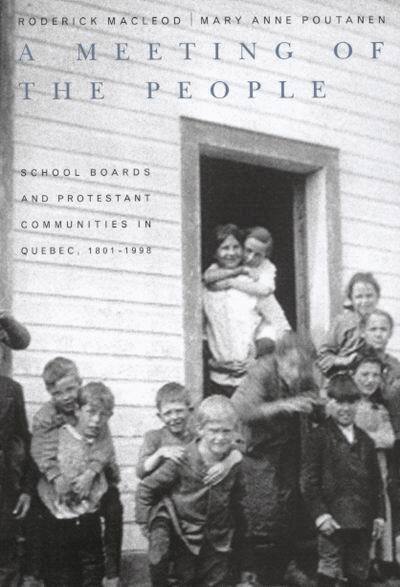
In A Meeting of the People Roderick MacLeod and Mary Anne Poutanen look at the Protestant public education system and the communities that established, and were served by, its schools, from the origins of public education in 1801 to the dissolution of confessional school boards in 1998. They focus on key issues such as class, ethnicity, religion, gender, health and welfare, patriotism, and the nature of local administration, bringing to life the people who attempted to establish and maintain schools and considering relationships between school trustees, parents, teachers, and the wider public. Their analysis shows that communities recognized the importance of providing schooling, despite what were often bleak circumstances. The authors show that Protestant families often had to make a difficult choice between supporting better educational facilities in a central place far away or encouraging the survival of the local community through maintaining one of its key institutions, the local school. They explore the ambiguous nature of Protestant education, at times understood as schooling reserved for a religious minority and at others as a liberal approach similar to public schooling across North America. The Protestant community, begun as a British element within a small colony, has developed into a diverse array of people from across the religious spectrum, periodically redefining itself to meet the needs of a changing Quebec society.