400 kr
400 kr
130 kr
Skickas inom 7-10 vardagar
273 kr
Skickas
375 kr
Skickas
375 kr
Skickas inom 3-6 vardagar
172 kr
Tillfälligt slut
539 kr
Skickas inom 3-6 vardagar
176 kr
Skickas
300 kr
Skickas inom 3-6 vardagar
387 kr
Skickas inom 3-6 vardagar
781 kr
Skickas inom 7-10 vardagar
250 kr
Skickas
221 kr
Läs direkt efter köp
224 kr
Skickas inom 7-10 vardagar
177 kr
Skickas inom 7-10 vardagar
166 kr
Skickas inom 7-10 vardagar
157 kr
Läs direkt efter köp
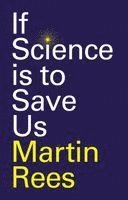
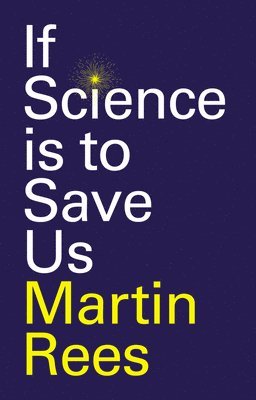
A provocative and inspiring look at the future of humanity and science from world-renowned scientist and bestselling author Martin ReesHumanity has reached a critical moment. Our world is unsettled and rapidly changing, and we face existential risks over the next century. Various outcomes—good and bad—are possible. Yet our approach to the future is characterized by short-term thinking, polarizing debates, alarmist rhetoric, and pessimism. In this short, exhilarating book, renowned scientist and bestselling author Martin Rees argues that humanity’s prospects depend on our taking a very different approach to planning for tomorrow.The future of humanity is bound to the future of science and hinges on how successfully we harness technological advances to address our challenges. If we are to use science to solve our problems while avoiding its dystopian risks, we must think rationally, globally, collectively, and optimistically about the long term. Advances in biotechnology, cybertechnology, robotics, and artificial intelligence—if pursued and applied wisely—could empower us to boost the developing and developed world and overcome the threats humanity faces on Earth, from climate change to nuclear war. At the same time, further advances in space science will allow humans to explore the solar system and beyond with robots and AI. But there is no “Plan B” for Earth—no viable alternative within reach if we do not care for our home planet.Rich with fascinating insights into cutting-edge science and technology, this accessible book will captivate anyone who wants to understand the critical issues that will define the future of humanity on Earth and beyond.
116 kr
Skickas inom 7-10 vardagar
219 kr
Kommande
412 kr
Skickas inom 3-6 vardagar
388 kr
Skickas
473 kr
Läs direkt efter köp
214 kr
Läs direkt efter köp
Our universe seems strangely ''''biophilic,'''' or hospitable to life. Is this happenstance, providence, or coincidence? According to cosmologist Martin Rees, the answer depends on the answer to another question, the one posed by Einstein''s famous remark: ''''What interests me most is whether God could have made the world differently.'''' This highly engaging book explores the fascinating consequences of the answer being ''''yes.'''' Rees explores the notion that our universe is just a part of a vast ''''multiverse,'''' or ensemble of universes, in which most of the other universes are lifeless. What we call the laws of nature would then be no more than local bylaws, imposed in the aftermath of our own Big Bang. In this scenario, our cosmic habitat would be a special, possibly unique universe where the prevailing laws of physics allowed life to emerge. Rees begins by exploring the nature of our solar system and examining a range of related issues such as whether our universe is or isn''t infinite. He asks, for example: How likely is life? How credible is the Big Bang theory? Rees then peers into the long-range cosmic future before tracing the causal chain backward to the beginning. He concludes by trying to untangle the paradoxical notion that our entire universe, stretching 10 billion light-years in all directions, emerged from an infinitesimal speck. As Rees argues, we may already have intimations of other universes. But the fate of the multiverse concept depends on the still-unknown bedrock nature of space and time on scales a trillion trillion times smaller than atoms, in the realm governed by the quantum physics of gravity. Expanding our comprehension of the cosmos, Our Cosmic Habitat will be read and enjoyed by all those--scientists and nonscientists alike--who are as fascinated by the universe we inhabit as is the author himself.
113 kr
Skickas inom 7-10 vardagar
200 kr
Läs direkt efter köp
There has never been a time when ‘following the science’ has been more important for humanity. At no other point in history have we had such advanced knowledge and technology at our fingertips, nor had such astonishing capacity to determine the future of our planet.
But the decisions we must make on how science is applied belong outside the lab and should be the outcome of wide public debate. For that to happen, science needs to become part of our common culture. Science is not just for scientists: if it were, it could never save us from the multiple crises we face. For science can save us, if its innovations mesh carefully into society and its applications are channelled for the common good.
As Martin Rees argues in this expert and personal analysis of the scientific endeavour on which we all depend, we need to think globally, we need to think rationally and we need to think long-term, empowered by twenty-first-century technology but guided by values that science alone cannot provide.Also available as an audiobook.
45 kr
Läs direkt efter köp
Astronomer Royal Martin Rees shows how the behaviour and origins of the universe can be explained by just six numbers.
How did a single genesis event create billions of galaxies, black holes, stars and planets? How did atoms assemble - here on Earth, and perhaps on other worlds - into living beings intricate enough to ponder their origins? This book describes the recent avalanche of discoveries about the universe''s fundamental laws, and the deep connections that exist between stars and atoms - the cosmos and the microscopic world. Just six numbers, imprinted in the big bang, determine the essence of our world, and this book devotes one chapter to explaining each.
343 kr
Skickas inom 7-10 vardagar
554 kr
Skickas inom 7-10 vardagar
129 kr
Läs direkt efter köp
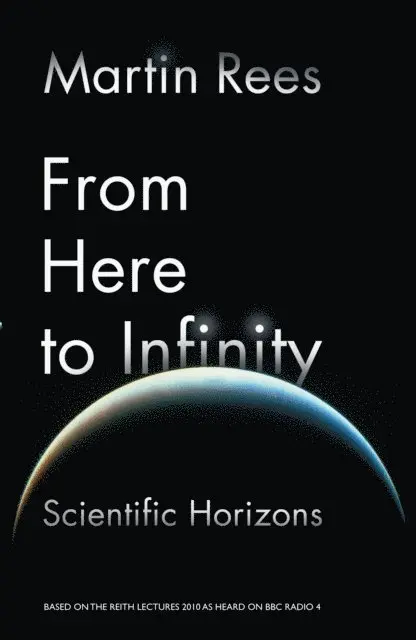
The BBC Radio 4 Reith Lectures were given in 2010 by the Astronomer Royal, Professor Martin Rees. In this expanded version of the lectures (doubled in length with new material) Martin Rees shows how important science will be to the global economies of the 21st century, to solving some of our apparently intractable problems and to understanding the risks that the world faces.Science is often seen as difficult or obscure, but some great scientists (like the author) are so clear that we can all understand it and participate in the great debates that should concern us all whether they are about swine flu, global warming, oil running out, or even space travel.In four dazzling chapters (plus introduction and conclusion) Martin Rees shows the pleasures and importance of science, warns all of us (including governments intent on cutting funding) why we must take science deadly seriously and why it apart from everything else it is so satisfying - one of humankind''s greatest achievements.
198 kr
Skickas inom 7-10 vardagar