1 662 kr
Läs direkt efter köp
1 662 kr
Läs direkt efter köp
2 658 kr
Skickas inom 7-10 vardagar
1 136 kr
Skickas inom 3-6 vardagar
2 526 kr
Skickas inom 10-15 vardagar
695 kr
Skickas inom 10-15 vardagar
273 kr
Skickas inom 3-6 vardagar
808 kr
Läs direkt efter köp
808 kr
Läs direkt efter köp
939 kr
Läs direkt efter köp
981 kr
Läs direkt efter köp
858 kr
Läs direkt efter köp
877 kr
Läs direkt efter köp
2 590 kr
Skickas inom 10-15 vardagar
833 kr
Skickas inom 10-15 vardagar
181 kr
Läs direkt efter köp
2 093 kr
Läs direkt efter köp
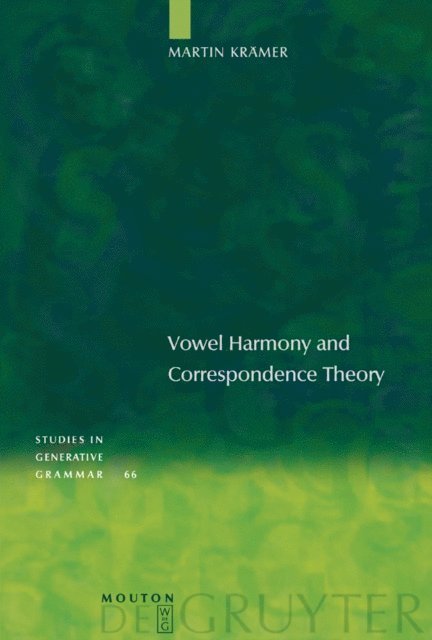
Vowel Harmony and Correspondence Theory covers the major issues in the generative analysis of vowel harmony and vowel harmony typology. The book offers an economical account of the most prominent features of vowel harmony systems (root control, affix control, dominance, vowel opacity, and neutrality) within the framework of optimality theory, extending the notion of correspondence to the syntagmatic dimension.The book contains a typological overview of vowel harmony patterns, an introduction to the basics of optimality theory including some of its most recent extensions and detailed studies of harmony systems in 10 languages from a variety of language families.
2 416 kr
Läs direkt efter köp
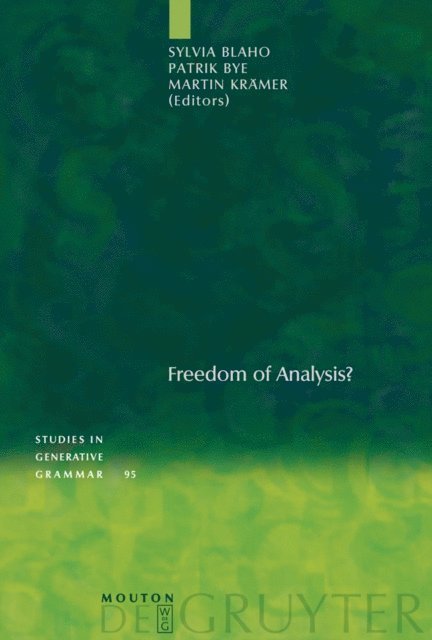
This volume draws together papers that argue for a renewed focus on the role of hard constraints on phonological representations as well as the processes that operate on them. These are issues that have been sidelined since the shift in emphasis in phonological research to functionally grounded output-oriented constraints. Taking Optimality Theory as their starting point, the articles attack the question to what degree the Generator function Gen should be given freedom of analysis on three fronts.
(1) What is the nature of the representations that Gen manipulates? Is a return to more articulated theories of segmental and prosodic representation desirable?
(2) What restrictions might there be on the operations that Gen carries out on representations? Should Gen be endowed with structure-changing potential, as assumed in work couched within Correspondence Theory, or is a return to the principle of Containment preferable? Should Gen be restricted in the number of edits it can carry out at any one time? Should Gen be restricted to generating phonetically interpretable candidates?
(3) What is the relationship between Gen and functionally arbitrary or opaque phonological patterns? Should Gen''s freedom be restricted in order to account for language-specific phonology?
The solutions offered to these questions bear significantly on current issues that are of fundamental concern in linguistic theory, including representations, parallelism vs. serialism, and the division of labour between linguistic modules. The authors scrutinize these issues using data from a variety of unrelated languages, including Czech, English, Greek, Haitian Creole, Hawaiian, Lardil, Spanish, Turkish, and Yowlumne.
1 583 kr
Skickas inom 3-6 vardagar
389 kr
Skickas inom 3-6 vardagar
355 kr
Skickas inom 3-6 vardagar
198 kr
Läs direkt efter köp
336 kr
Skickas inom 3-6 vardagar
272 kr
Läs direkt efter köp
357 kr
Skickas inom 3-6 vardagar
346 kr
Skickas inom 3-6 vardagar
333 kr
Skickas inom 3-6 vardagar
278 kr
Skickas inom 3-6 vardagar
440 kr
Skickas inom 3-6 vardagar
243 kr
Skickas inom 3-6 vardagar
396 kr
Skickas inom 3-6 vardagar