1 430 kr
Läs direkt efter köp
1 430 kr
Läs direkt efter köp
2 265 kr
Skickas inom 3-6 vardagar
517 kr
Skickas inom 7-10 vardagar
541 kr
Skickas inom 7-10 vardagar
1 204 kr
Skickas inom 7-10 vardagar
326 kr
Skickas inom 7-10 vardagar
848 kr
Skickas inom 7-10 vardagar
322 kr
Skickas inom 7-10 vardagar
339 kr
Läs direkt efter köp
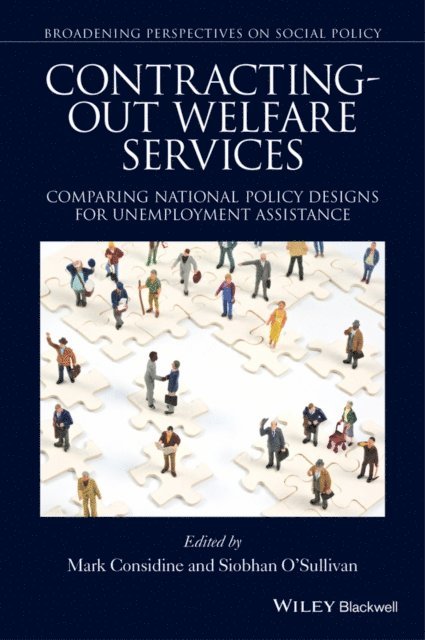
Contracting-out Welfare Services focuses on the design and overhaul of welfare-to-work systems around the world in the light of the radical re-design of the welfare system; internationally based authors utilise a national/program case study, considering employment services policy and activation practices.
International contributors bring a global comparative perspective to the subject Contributors are all experts in their field, who also draw on a much longer intellectual legacy Uses employment services as a case study to advance understanding in relation to a host of broader principles and concepts Each paper included within the text uses a national/program case study, and each considers employment services policy in general, and activation practices in particular339 kr
Läs direkt efter köp
Contracting-out Welfare Services focuses on the design and overhaul of welfare-to-work systems around the world in the light of the radical re-design of the welfare system; internationally based authors utilise a national/program case study, considering employment services policy and activation practices.
International contributors bring a global comparative perspective to the subject Contributors are all experts in their field, who also draw on a much longer intellectual legacy Uses employment services as a case study to advance understanding in relation to a host of broader principles and concepts Each paper included within the text uses a national/program case study, and each considers employment services policy in general, and activation practices in particular714 kr
Skickas inom 10-15 vardagar
2 489 kr
Skickas inom 10-15 vardagar
849 kr
Läs direkt efter köp
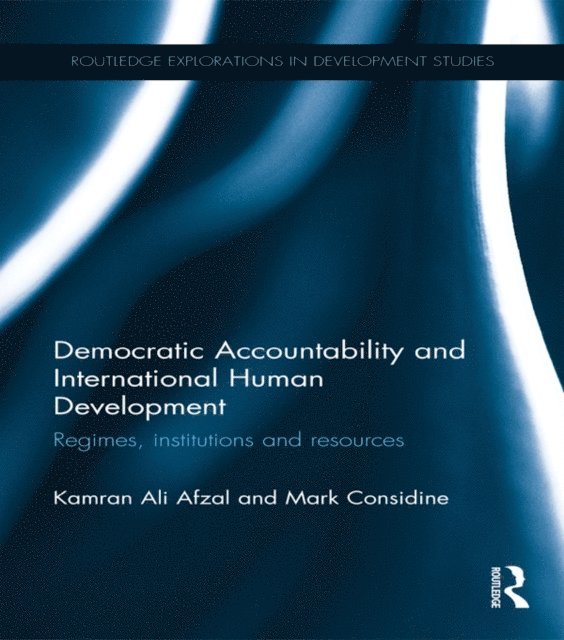
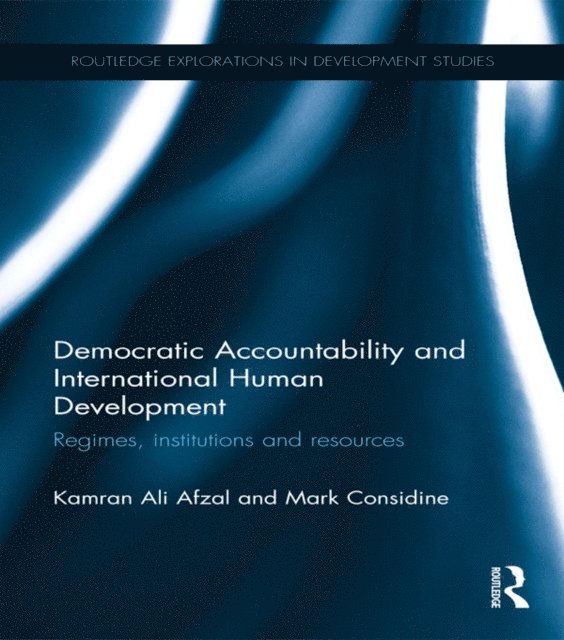
Scholars and policymakers have long known that there is a strong link between human development and spending on key areas such as education and health. However, many states still neglect these considerations in favour of competing priorities, such as expanding their armies. This book examines how states arrive at these decisions, analysing how democratic accountability influences public spending and impacts on human development.
The book shows how the broader paradigm of democratic accountability – extending beyond political democracy to also include bureaucratic and judicial institutions as well as taxation and other modes of resource mobilisation – can best explain how states allocate public resources for human development. Combining cross-country regression analysis with exemplary case studies from Pakistan, India, Botswana and Argentina, the book demonstrates that enhancing human capabilities requires not only effective party competition and fair elections, but also a particular nesting of public organisational structures that are tied to taxpaying citizens in an undisturbed chain of accountability. It draws out vital lessons for institutional design and our approach to the question of human development, particularly in the less developed states.
This book will be of great interest to postgraduate students and researchers in the fields of political economy, public policy, governance, and development. It also provides valuable insights for those working in the international relations field, including inside major aid and investment organisations.
298 kr
Skickas inom 7-10 vardagar
464 kr
Skickas inom 7-10 vardagar
247 kr
Tillfälligt slut