
Häftad, Engelska, 2003
268 kr
Skickas inom 3-6 vardagar
268 kr
Skickas inom 3-6 vardagar
192 kr
Läs direkt efter köp
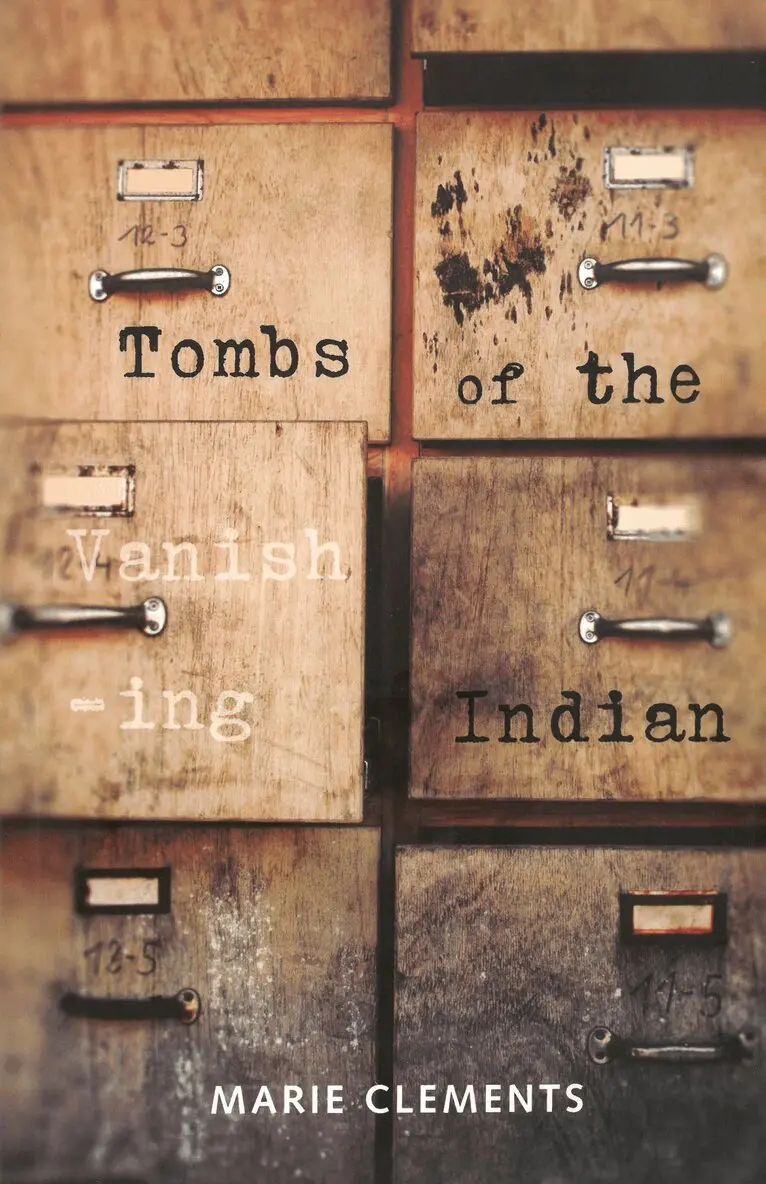
Three Young Native American sisters and their mother board a bus bound for Los Angeles, leaving home as part of a 1950s government mandate to relocate reserve Indians to urban centres. This assimilationist policy was one focus of Métis playwright Marie Clements’s research when she was commissioned to create a new play for the tenth anniversary of the Native Voices series at the Autry National Center, Los Angeles. Clements dramatizes the emotional, psychological and social repercussions of this, and subsequent, bureaucratic incursions into the girls’ lives. Their arrival in California takes a tragic turn when their mother is suddenly killed and the girls are arbitrarily placed in different foster homes, never to see each other again. We follow Janey, Miranda and Jessie as they lead very disparate adult lives: Janey, a troubled vagrant; Miranda, a burgeoning actress fighting typecasting in Hollywood; Jessie, an idealist physician who’s married to a medical colleague. As it was bureaucratic policy that had dismantled their secure family unit and sent each girl into the unknown, so too did a government paper ultimately bring them together, if only symbolically. Clements casts the sisters’ narrative against the backdrop of another historical injustice: the forced sterilization of thousands of Native women in the 1970s, a practice that was only abolished in 1981.Clements’s play is a compelling, and poetic, investigation of the coldly bureaucratic machinations that have, throughout history, attempted to facilitate the disappearance of Native people. Though Tombs of the Vanishing Indian focuses on specific policies and locations, it speaks eloquently to broader themes of Aboriginal displacement. There are, indeed, echoes of Canadian policy aimed at the dissolution of First Nations families and culture: the potlatch ban, residential schools and the ban on Native language, whose profoundly damaging ramifications are our shared legacy. Cast of 4 women and 3 men.

198 kr
Läs direkt efter köp
The Unnatural and Accidental Women is a surrealist dramatization of a thirty-year murder case involving many mysterious deaths in the “Skid Row” area of Vancouver. All the victims were found dead with a blood-alcohol reading far beyond safe levels, and all were last seen in the company of Gilbert Paul Jordan, who frequented the city’s bars preying on primarily middle-aged Native women. The coroner’s reports listed the cause of death of many of these women as “unnatural and accidental.”Marie Clements reconstructs the lives of these women as shaped by lost connections—to loved ones, to the land, to a way of life—lives of at times desperate, at times tender yearning for ties of communication, belonging and shelter gone dead. These are precariously vulnerable lives, so easily drawn to their end by the heat and light of a flame, lives that thirst for an end of searching in forgetfulness.
274 kr
Läs direkt efter köp
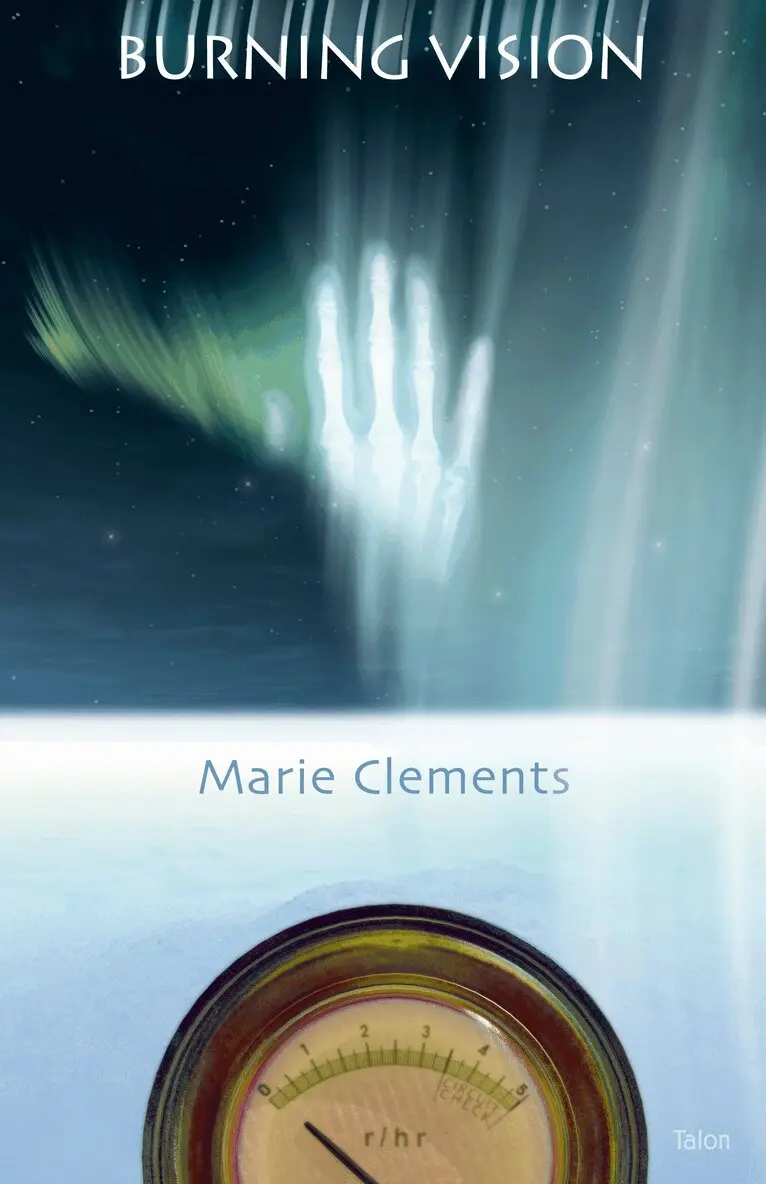
Marie Clements’s acclaimed play sears a dramatic swath through the reactionary identity politics of race, gender and class, using the penetrating yellow-white light, the false sun of uranium and radium, derived from a coal black rock known as pitchblende, as a metaphor for the invisible, malignant evils everywhere poisoning our relationship to the earth and to each other.Burning Vision unmasks both the great lies of the imperialist power-elite (telling the miners they are digging for a substance to “cure cancer” while secretly using it to build the atomic bombs that devastated Hiroshima and Nagasaki); and the seemingly small rationalizations and accommodations people of all cultures construct to make their personal circumstances yield the greatest benefit to themselves for the least amount of effort or change on their part. It is also a scathing attack on the “public apology” as yet another mask, as a manipulative device, which always seeks to conceal the maintenance and furtherance of the self-interest of its wearer.Clements’s powerful visual sets and soundscapes contain curtains of flames which at times assume the bodies of a chorus passing its remote judgment, devoid of both pity and fear, on the action: a merciless indictment of the cross-cultural, buried worm of avarice and self-interest hidden within the terrorism of the push to “go with the times,” to accept the iconography of a reality defined, contextualized and illuminated by others.Marie Clements writes, or, perhaps more accurately, composes, with an urbane, incisive and sophisticated intellect deeply rooted in the particulars of her place, time and history.Cast of five women and 12 men.

196 kr
Skickas inom 7-10 vardagar
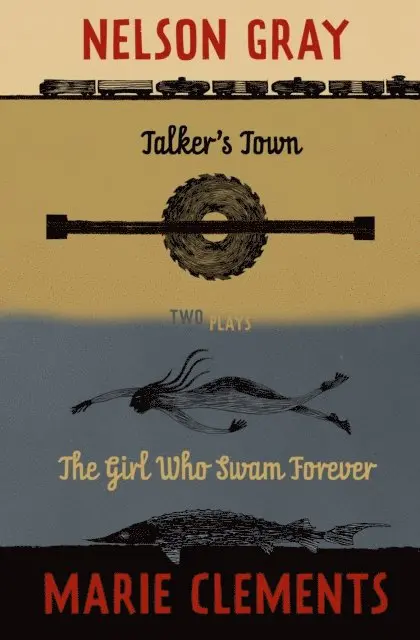
The two one-act plays in Talker’s Town and The Girl Who Swam Forever are set in a small northern B.C. mill town in the 1960s. They portray identical characters and action from entirely different gender and cultural perspectives. In many ways, the two separate works are inter-related coming-of-age stories, with transformation as a key theme.The central action in both plays involves an Aboriginal girl, Roberta Bob, who escapes from a residential school and hides out by the river. In Nelson Gray’s Talker’s Town, the story is conveyed by a teenage non-Indigenous boy whose friend has had a relationship with the girl and whose attempts to hush up the affair lead to disastrous consequences. In Marie Clements’s The Girl Who Swam Forever, the action unfolds from the perspective of the girl, who – to claim her past and secure her future – must undergo a shape-shifting transformation and meet her grandmother’s ancestral spirit in the form of a hundred-year-old sturgeon.Employing a single setting and working with the same set of characters, the playwrights have created two radically different fictional worlds, one Aboriginal and one non-Aboriginal. Published together, the plays form a fascinating diptych that reveals rifts between Indigenous and colonial/settler histories and provides a vehicle for cultural exchange. As a starting point for trans-cultural dialogue, this set of plays will be of interest to educators, theatre directors, and the general reader interested in the current discourse arising from Canada’s Truth and Reconciliation Commission, Idle No More, and the Indigenous Rights Movement happening throughout North America. Read as a set, these two plays also invite conversations about negotiating creative boundaries, particularly with respect to eco-centric politics and cultural appropriation.Talker’s Town: cast of 5 men and 1 woman. The Girl Who Swam Forever: cast of 2 women and 2 men.
175 kr
Skickas inom 7-10 vardagar
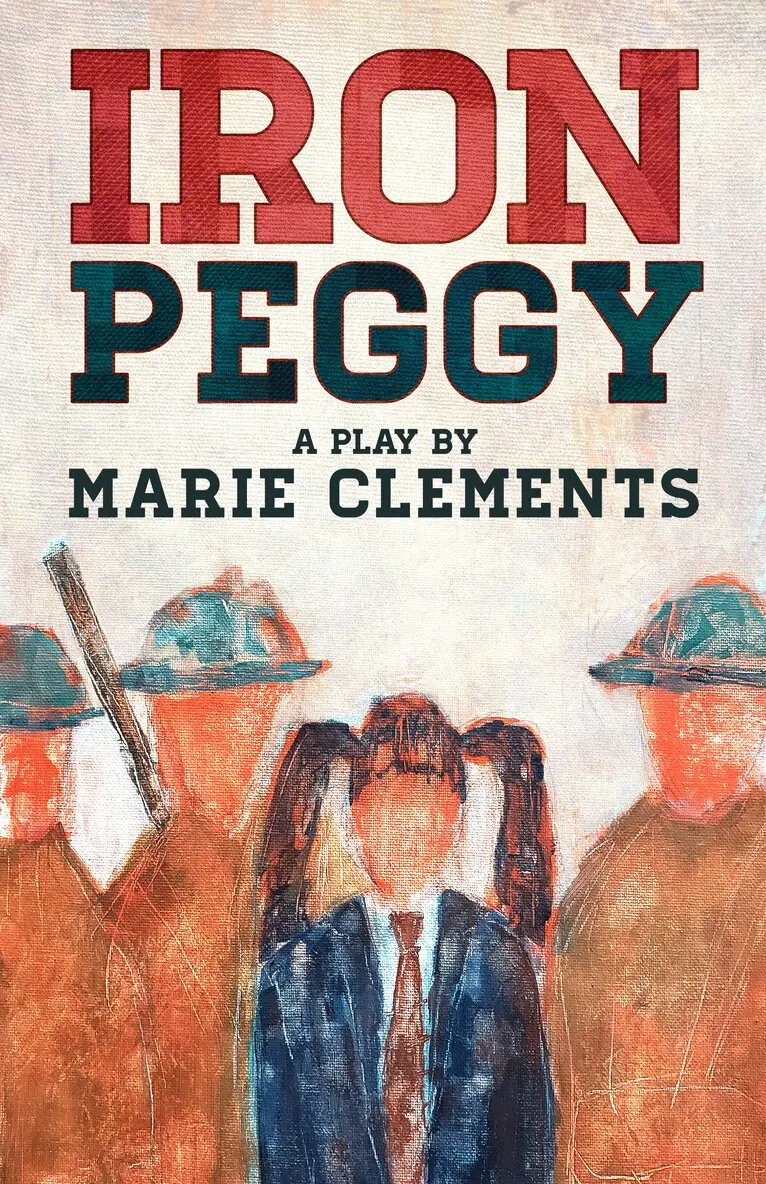
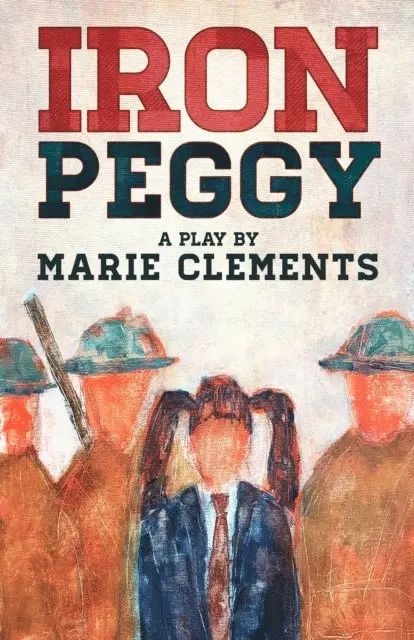
Peg is struggling for survival at her boarding school. Three über-cool “it” girls take aim at Peg and make her life utterly miserable. When her beloved Grandmother dies she just wants to disappear. Then an unexpected gift arrives; inside it, Peg finds three cast-iron Canadian soldiers. In despair, she throws them against the floor. How can they help her? They are so small, and the girls’ shadow is so big. But, miraculously, the toys come to life as Indigenous snipers from World War I, just in time to wage an epic battle against the girls. A powerful play that will appeal to audiences both young and old, Iron Peggy uses a creative and ever-surprising blend of voices and sceneries to tell this moving story. With 2018 marking the 100th-year anniversary of WWI, Iron Peggy is an excellent introduction to its history and a touching testimony that not only celebrates the First Nation participation in the war effort but also a young girl’s personal victory. Iron Peggy, by award-winning, international Métis performer and playwright Marie Clements, was commissioned by the Vancouver International Children’s Festival and premiered at Vancouver’s Waterfront Theatre in 2019. (Adapted from Vancouver International Children’s Festival online presentation.)
198 kr
Läs direkt efter köp
Peg is struggling for survival at her boarding school. Three über-cool “it” girls take aim at Peg and make her life utterly miserable. When her beloved Grandmother dies she just wants to disappear. Then an unexpected gift arrives; inside it, Peg finds three cast-iron Canadian soldiers. In despair, she throws them against the floor. How can they help her? They are so small, and the girls’ shadow is so big. But, miraculously, the toys come to life as Indigenous snipers from World War I, just in time to wage an epic battle against the girls. A powerful play that will appeal to audiences both young and old, Iron Peggy uses a creative and ever-surprising blend of voices and sceneries to tell this moving story. With 2018 marking the 100th-year anniversary of WWI, Iron Peggy is an excellent introduction to its history and a touching testimony that not only celebrates the First Nation participation in the war effort but also a young girl’s personal victory. Iron Peggy, by award-winning, international Métis performer and playwright Marie Clements, was commissioned by the Vancouver International Children’s Festival and premiered at Vancouver’s Waterfront Theatre in 2019. (Adapted from Vancouver International Children’s Festival online presentation.)
229 kr
Läs direkt efter köp
The two one-act plays in Talker’s Town and The Girl Who Swam Forever are set in a small northern B.C. mill town in the 1960s. They portray identical characters and action from entirely different gender and cultural perspectives. In many ways, the two separate works are inter-related coming-of-age stories, with transformation as a key theme.The central action in both plays involves an Aboriginal girl, Roberta Bob, who escapes from a residential school and hides out by the river. In Nelson Gray’s Talker’s Town, the story is conveyed by a teenage non-Indigenous boy whose friend has had a relationship with the girl and whose attempts to hush up the affair lead to disastrous consequences. In Marie Clements’s The Girl Who Swam Forever, the action unfolds from the perspective of the girl, who – to claim her past and secure her future – must undergo a shape-shifting transformation and meet her grandmother’s ancestral spirit in the form of a hundred-year-old sturgeon.Employing a single setting and working with the same set of characters, the playwrights have created two radically different fictional worlds, one Aboriginal and one non-Aboriginal. Published together, the plays form a fascinating diptych that reveals rifts between Indigenous and colonial/settler histories and provides a vehicle for cultural exchange. As a starting point for trans-cultural dialogue, this set of plays will be of interest to educators, theatre directors, and the general reader interested in the current discourse arising from Canada’s Truth and Reconciliation Commission, Idle No More, and the Indigenous Rights Movement happening throughout North America. Read as a set, these two plays also invite conversations about negotiating creative boundaries, particularly with respect to eco-centric politics and cultural appropriation.Talker’s Town: cast of 5 men and 1 woman. The Girl Who Swam Forever: cast of 2 women and 2 men.
197 kr
Läs direkt efter köp
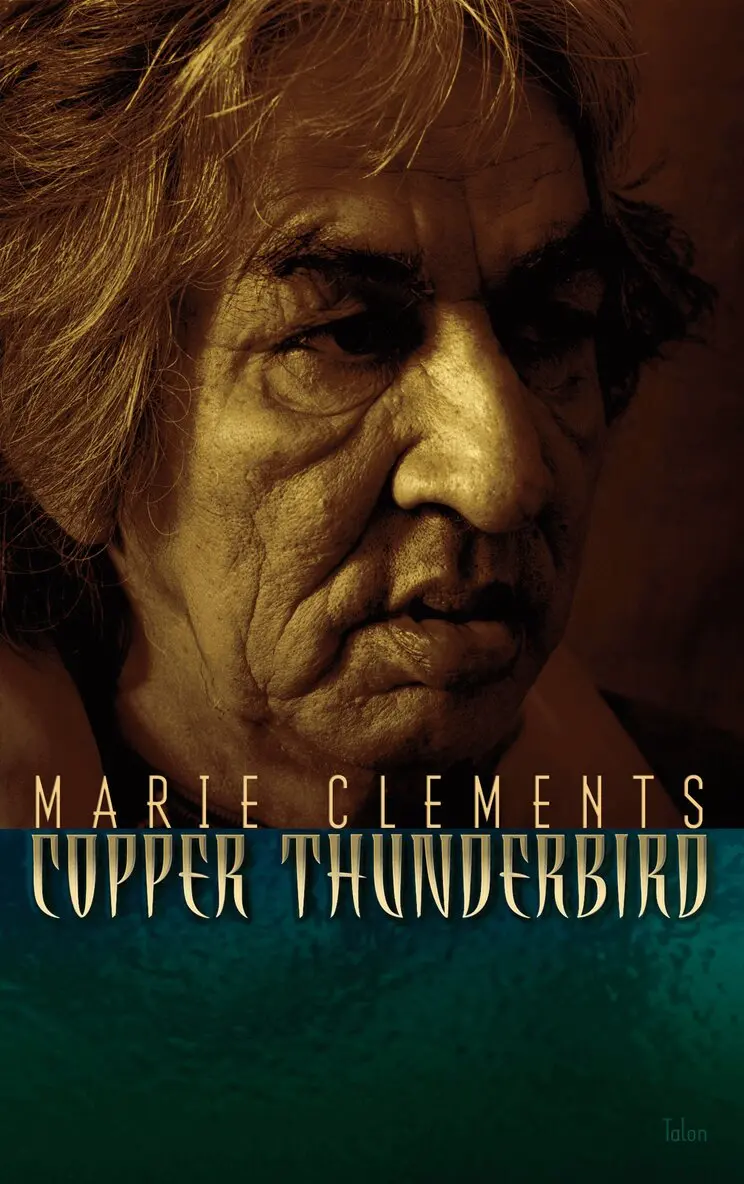
Copper Thunderbird is a play on canvases based on the life of Norval Morrisseau. Inside the power-lines which Morrisseau boldly defined in his art were the colours he experienced between his Ojibwa cosmology, his life on the street, and his spiritual and philosophical transformations to become the Father of Contemporary Native Art and a Grand Shaman. Appearing simultaneously in this multi-layered drama as a small boy, a young warrior and an old man, Morrisseau confronts his many selves over the Faustian destiny he encountered during his vision quest—a momentary terror that led to a life wracked by both triumph and ordeal, drawing his vibrant colours, both luminous and dark, from the life-force within him.Norval Morrisseau is notorious for the life he has led, the company he has kept, the wives, lovers, parasitic drinking buddies and abusive family members he has had and passed through as if they were merely insubstantial phantoms. The paintings he has sold to buy another bottle of alcohol, to get through another brutal day, hang in galleries around the world, a phenomenon Morrisseau himself simply took for granted. Framed variously with the identities of Indian, Artist and Shaman, Copper Thunderbird interrogates both the stereotypes and the politically correct judgments that have manufactured Morrisseau’s public personae, creating a power-figure that transcends culture and morality, earth and water, fire and air.

183 kr
Tillfälligt slut
184 kr
Tillfälligt slut
307 kr
Tillfälligt slut
183 kr
Tillfälligt slut