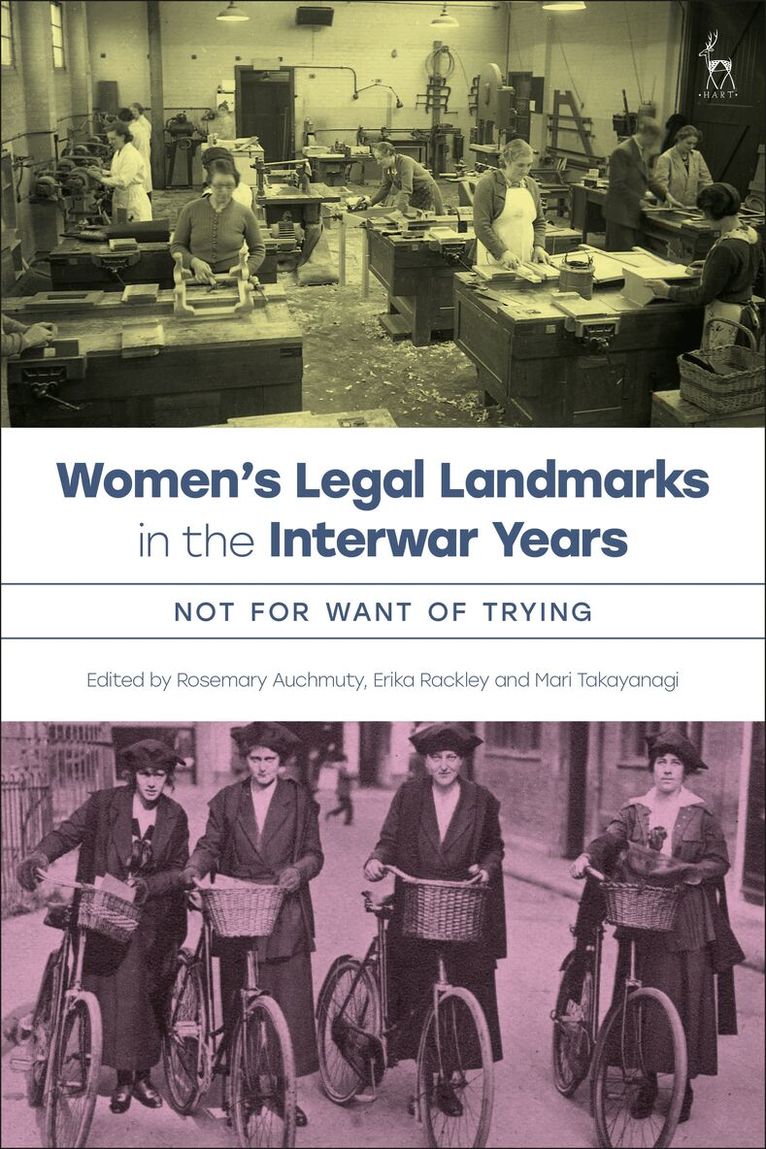
Women’s Legal Landmarks in the Interwar Years shines new light on 33 legal landmarks, many forgotten today, that affected women in England and Wales between 1918 and 1939. It considers the work of feminist activists to bring about legal change which benefited – or aimed to benefit – women. Areas explored include property, inheritance, adoption, marriage, access to health care, criminal law, employment opportunities, pay, pensions and political representation. It also examines campaigns by key women’s organisations, and assesses the impact of early women lawyers and politicians. While some of the landmarks effected change during this period, others provided the foundation for measures in later decades. Together the landmarks demonstrate that far from being a relatively quiet period of British feminism, the interwar period played a key role in ongoing fights for recognition, representation and justice.
Women''s Legal Landmarks in the Interwar Years shines new light on 33 legal landmarks, many forgotten today, that affected women in England and Wales between 1918 and 1939. It considers the work of feminist activists to bring about legal change which benefited – or aimed to benefit – women. Areas explored include property, inheritance, adoption, marriage, access to health care, criminal law, employment opportunities, pay, pensions and political representation. It also examines campaigns by key women''s organisations, and assesses the impact of early women lawyers and politicians. While some of the landmarks effected change during this period, others provided the foundation for measures in later decades. Together the landmarks demonstrate that far from being a relatively quiet period of British feminism, the interwar period played a key role in ongoing fights for recognition, representation and justice.
Women’s Legal Landmarks in the Interwar Years shines new light on 33 legal landmarks, many forgotten today, that affected women in England and Wales between 1918 and 1939. It considers the work of feminist activists to bring about legal change which benefited – or aimed to benefit – women. Areas explored include property, inheritance, adoption, marriage, access to health care, criminal law, employment opportunities, pay, pensions and political representation. It also examines campaigns by key women’s organisations, and assesses the impact of early women lawyers and politicians. While some of the landmarks effected change during this period, others provided the foundation for measures in later decades. Together the landmarks demonstrate that far from being a relatively quiet period of British feminism, the interwar period played a key role in ongoing fights for recognition, representation and justice.

This book presents 27 legal advances for British women between 1946 and 1970. It challenges the traditional view that little positive happened for women between the granting of the vote and the rise of the Women’s Liberation Movement, as well as the assumption that feminism was largely inactive in this period. The landmarks considered include women's admission to the foreign and diplomatic service, equal pay in the civil service, the appointment of women as KCs and coroners, and the protest at the Miss World contest as well as cases and statutes touching on a wide range of areas including property, family and criminal law. Each landmark is located in its social and legal context, linked to other movements in the period, and assessed in terms of its later history and significance. Together they demonstrate that campaigns for women’s rights were vigorously pursued by feminists both inside and outside Parliament during this period. While some landmarks achieved positive results, many were limited or thwarted by patriarchal opposition but still stand as ‘steps on the way’ to later reforms.
When suffragette Emily Wilding Davison hid overnight in the Houses of Parliament in 1911 to have her name recorded in the census there, she may not have known that there were sixty-seven other women also resident in Parliament that night: housekeepers, kitchen maids, and wives and daughters living in households. This book is their story.Women have touched just about every aspect of life in Parliament. From ‘Jane’, dispenser of beer, pies and chops in Bellamy’s legendary refreshment rooms; to May Ashworth, Official Typist to Parliament for thirty years through marriage, war and divorce; and Jean Winder, the first female Hansard reporter, who fought for years for equal pay; the lives of these women have been largely unacknowledged – until now.Drawing on new research from the Parliamentary Archives, government records and family history sources, historians and parliamentary insiders Mari Takayanagi and Elizabeth Hallam Smith bring these unsung heroes to life. They chart the changing context for working women within and beyond the Palace of Westminster, uncovering women left out of the history books – including Mary Jane Anderson, a previously unknown suffragette.