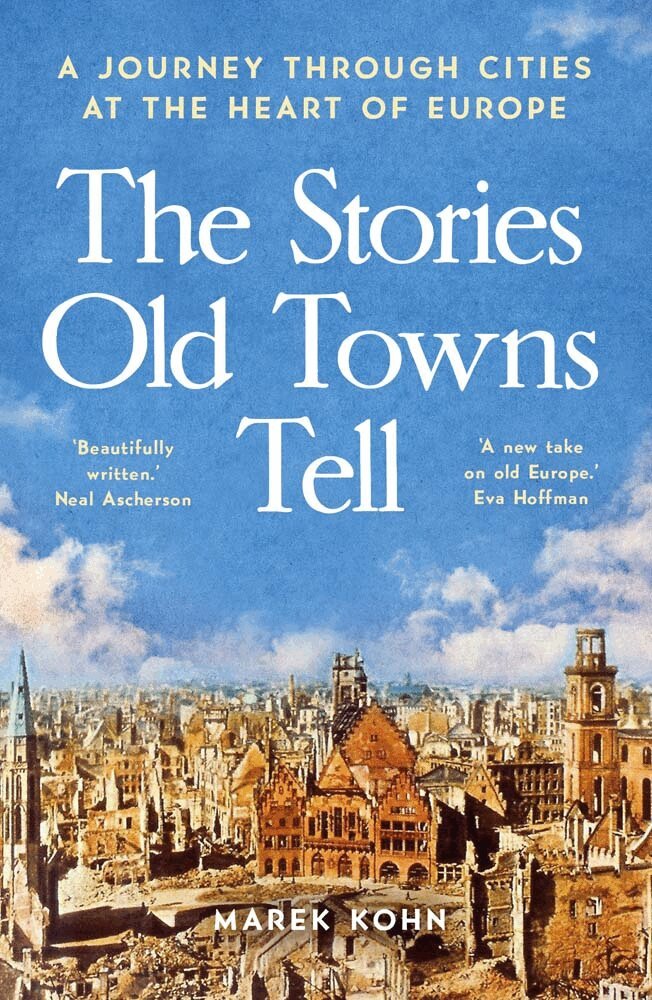
“An original take on 20th-century European history" —Alastair Bailey, Financial Times“[A] fascinating chronicle.”—Benjamin Balint, Wall Street JournalA journey through Europe’s old towns, exploring why we treasure them—but also what they hide about a continent’s fraught history Historic quarters in cities and towns across the middle of Europe were devastated during the Second World War—some, like those of Warsaw and Frankfurt, had to be rebuilt almost completely. They are now centers of peace and civility that attract millions of tourists, but the stories they tell about places, peoples, and nations are selective. They are never the whole story. These old towns and their turbulent histories have been key sites in Europe’s ongoing theater of politics and war. Exploring seven old towns, from Frankfurt and Prague to Vilnius in Lithuania, the acclaimed writer Marek Kohn examines how they have been used since the Second World War to conceal political tensions and reinforce certain versions of history. Uncovering hidden stories behind these old and old-seeming façades, Kohn offers us a new understanding of the politics of European history-making—showing how our visits to old towns could promote belonging over exclusion, and empathy over indifference.
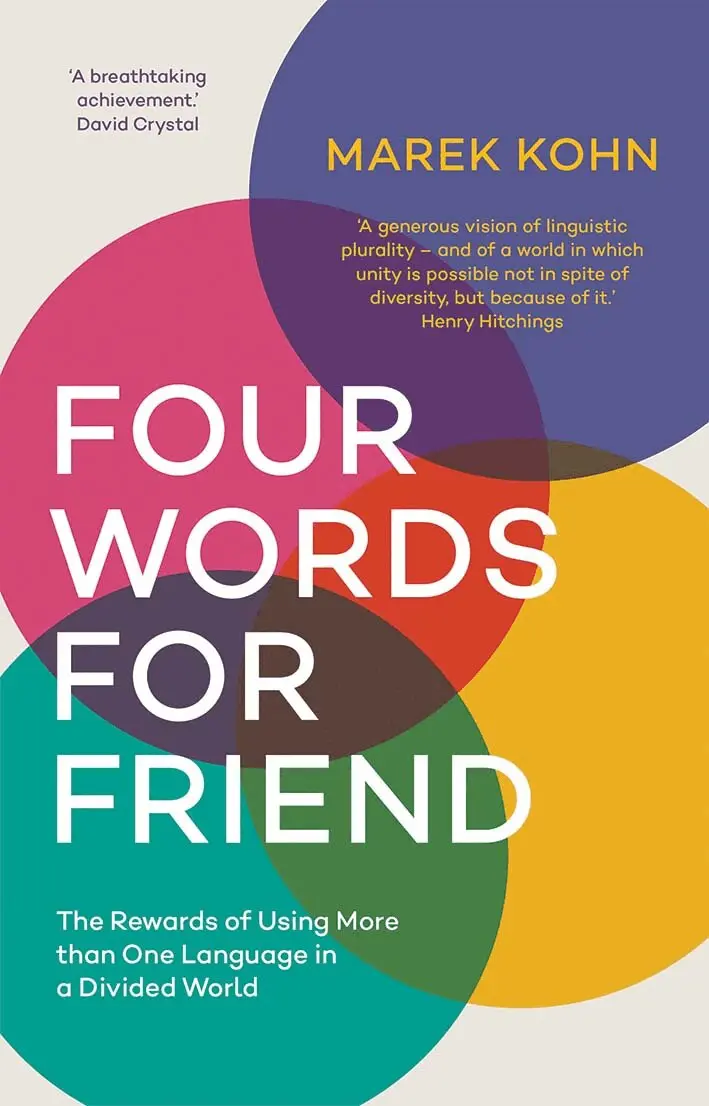
A compelling argument about the importance of using more than one language in today’s world In a world that has English as its global language and rapidly advancing translation technology, it’s easy to assume that the need to use more than one language will diminish—but Marek Kohn argues that plural language use is more important than ever. In a divided world, it helps us to understand ourselves and others better, to live together better, and to make the most of our various cultures. Kohn, whom the Guardian has called “one of the best science writers we have,” brings together perspectives from psychology, evolutionary thought, politics, literature, and everyday experience. He explores how people acquire languages; how they lose them; how they can regain them; how different languages may affect people’s perceptions, their senses of self, and their relationships with each other; and how to resolve the fundamental contradiction of languages, that they exist as much to prevent communication as to make it happen.
A compelling argument about the importance of using more than one language in today’s worldIn a world that has English as its global language and rapidly advancing translation technology, it’s easy to assume that the need to use more than one language will diminish—but Marek Kohn argues that plural language use is more important than ever. In a divided world, it helps us to understand ourselves and others better, to live together better, and to make the most of our various cultures. Kohn, whom the Guardian has called “one of the best science writers we have,” brings together perspectives from psychology, evolutionary thought, politics, literature, and everyday experience. He explores how people acquire languages; how they lose them; how they can regain them; how different languages may affect people’s perceptions, their senses of self, and their relationships with each other; and how to resolve the fundamental contradiction of languages, that they exist as much to prevent communication as to make it happen.
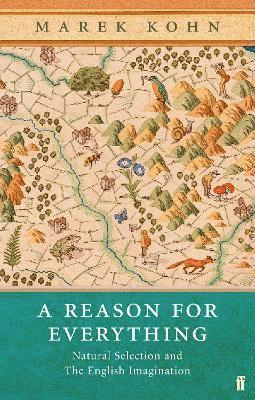
'A marvellous book.' New Scientist. 'A real triumph.' GuardianMarek Kohn's A Reason for Everything is a brilliant and surprising fusion of science and biography. It is a very human book about the Englishness of evolutionary theory and the lives and personalities - often eccentric and controversial - of those who made it. With portraits of Richard Dawkins and Alfred Russel Wallace, amongst others, it moves beyond Charles Darwin to produce a gripping account of the men and scientists behind one of the most important ideas humanity has yet produced.'Marek Kohn has written yet another brilliant book about great debates in science.' Neal Ascherson, Observer'A well-written and carefully researched account of some of the main British players in the world of evolution. Every evolutionist should read it.' Steve Jones, Nature'An educative and fascinating tale . . . Kohn is a wonderful writer.' A. C. Grayling, Literary Review
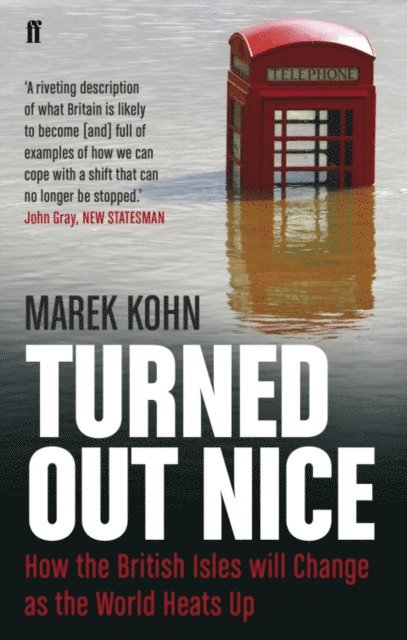
Marek Kohn - 'one of the best science writers we have' (AC Grayling) - paints an important and eye-opening portrait of Britain and Ireland after a century of global warming.Author of A Reason for Everything and Four Words for Friend Marek Kohn projects one hundred years into the future when, based on the climate change evidence we have now, some parts of Britain will be like regions of today's Mediterranean. But, more disturbingly, our parks will be arid brown fields; private automobile use will probably be unheard of; water will be severely rationed; significant stretches of our beloved coastline will have been sacrificed to the sea. Floods on these coasts and in certain river valleys will make them uninhabitable. Some of our flora and fauna will have vanished; exotic animals and pests will flourish. Human climate migration will have become a significant fact of life as other continents become harsher places to survive in. Surveillance and restriction of our movements will be taken for granted. Walking in what is left of 'nature' will be nearly impossible.As climate activism - including Greta Thunberg's school strikes and Extinction Rebellion's mass protests - gathers pace worldwide in the light of a growing climate emergency, Turned Out Nice is more relevant than ever: an urgent report from the near-future that we cannot afford to ignore. It will change the way you think about the climate and global warming.'An imaginative journey through different parts of the British Isles, crammed with detail . . . A good primer for anyone who wants to think about the British future without being suicidal or consciously blinkered.' Andrew Marr, Financial Times'Graphic, gripping . . . [Kohn] warns against the current complacency of short-term thinking and temporising inactivity.' The Times
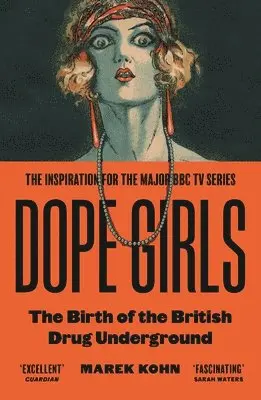
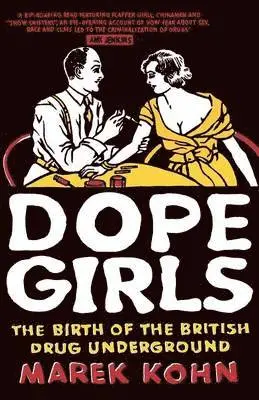
THE INSPIRATION BEHIND THE HIT TV SERIES STARRING ELIZA SCANLEN AND JULIANNE NICHOLSON27 November 1918, London. Just days after the end of the Great War, rising star Billie Carleton took to the stage for the last time. She was found dead the next day; the cause of death ruled to be a cocaine overdose. Within a few years, the story snowballed into a cautionary tale of the relationship between young women, dope and predatory men, drawing from pernicious racist myths and transforming drug use into a social menace.This is the story of the moral panic that led to the demonisation of drugs in the UK, and an exploration of how narcotics have been used as a means of speaking about gender, race and the nation's place in the world since the turn of the century.
This is a discussion of the transformation of drug use (especially morphine and cocaine, which was once commonly available in any chemist's shop) into a national menace. It revolves around the death of Billie Carleton, a West End musical actress, in 1918. Its cast of characters includes Brilliant Chang, a Chinese restaurant proprietor and Edgar Manning, a jazz drummer from Jamaica. They were eventually identified as the villains of the affair and invested with a highly charged sexual menace. Around them, in the streets off Shaftesbury Avenue, there swirled a raffish group of seedy and entitled hedonists. Britain was horrified and fascinated, and so the drug problem was born amid a gush of exotic tabloid detail.