184 kr
Läs direkt efter köp
184 kr
Läs direkt efter köp
198 kr
Läs direkt efter köp
Luther''s transformational idea of justification by faith alone was often misunderstood and misrepresented in the early years of the Reformation. In 1520, with his Wittenberg congregation in mind, Luther set out to clarify the biblical foundation of good works. In doing so he recast the very definitions of "sacred" and "secular" both for his own generation and ours.
Treatise on Good Works is the second of an occasional series of guides to key Reformation treatises by Martin Luther. Aimed at increasing understanding and interest among contemporary readers, these slim, affordable volumes feature new translations and a range of helpful features.
138 kr
Läs direkt efter köp
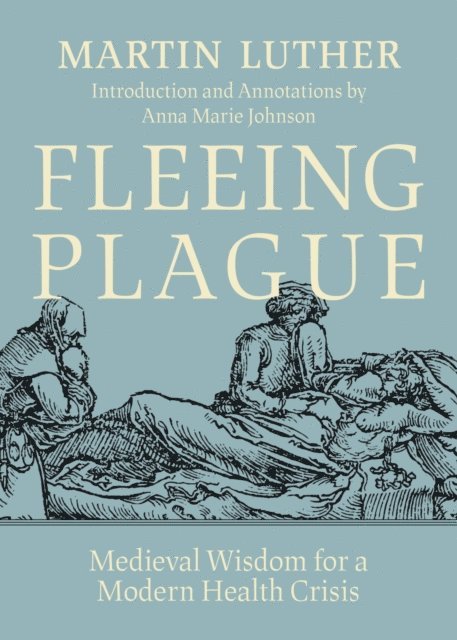
Bubonic Plague was an ongoing epidemic that sickened and killed many in Europe and beyond beginning in the mid-fourteenth century and continuing in the days of Martin Luther''s sixteenth-century Germany. The pneumonic form of the disease was particularly dangerous because it entered the lungs and was spread by coughing. When this happened the fatality rate was nearly 100%.
Martin Luther''s treatise on whether one may flee when plague strikes was prompted by a request from the clergy of Breslau, who wondered whether a Christian could flee home and labors on account of the plague. Luther''s pragmatic response focused on a Christian''s responsibility to care for the sick and to use the means God gives to limit the plague''s destruction. He lauded those who can face the plague without fear of death, but he emphasized that those with "weak faith" can flee in good conscience as long as they are not needed to care for someone or to maintain a public service. Luther used the occasion for the treatise to talk about the need for hospitals and public cemeteries outside the city center.
Anna Marie Johnson introduces Luther''s treatise and provides insightful annotations to help the reader understand Luther''s text and his sixteenth century context. The parallels to the recent Covid pandemic and other epidemic diseases are striking. Though science and medicine have advanced greatly today, questions of ethical responsibilities are still with us, and Christians continue to wonder what faithful responses to pandemic should be.
198 kr
Läs direkt efter köp
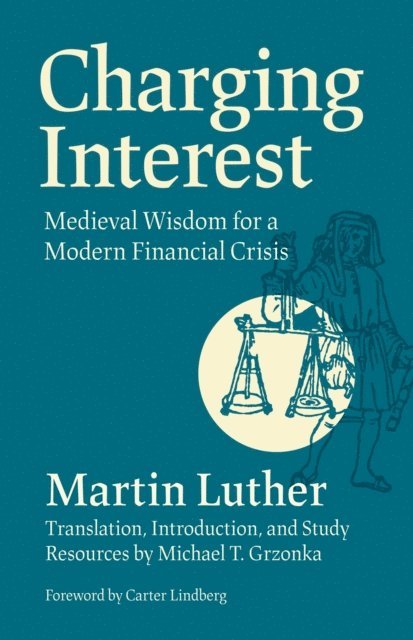
Charging Interest explores current exploitative financial practices through the lens of Martin Luther''s explosive treatise called "Exhortation to the Clergy to Preach Against Usury." Written in 1540 and translated anew by Michael T. Grzonka, this treatise tackles the growing problem of usury (money lending) in Luther''s time and context. Wittenberg authorities claimed powerlessness in the face of poverty, famine, egregious hoarding, and price-gouging. Luther urged pastors to confront lenders who were charging exploitive interest rates, dooming many to a life of continual poverty and starvation.
Luther went so far as to ask exploitive lenders to repent of their practices, and if they refused to excommunicate them from worship, from participating in the sacraments, and refuse to provide burial services. Clergy who did not condemn these practices would risk facing God''s judgment.
Michael Grzonka provides a detailed introduction and new translation of Luther''s treatise as well as reflections on faithful and ethical responses to unfair financial practices in our own day. A detailed study guide raises key questions for review and helps readers reflect on how Luther''s text still may address issues in the contemporary world. Renowned historian and Reformation scholar Carter Lindberg provides a forward to this topic, which Martin Luther addressed on more than one occasion.

75 kr
Läs direkt efter köp
A translation of Luther''s explanations along with other catechetical study helps, such as prayers, worship rites, and Luther''s introduction. NRSV and Evangelical Lutheran Worship texts are used for the wording of the Ten Commandments, Lord''s Prayer, Apostles'' Creed, and the included worship rites. The Study Edition includes a revised introduction by Timothy Wengert and features new illustrations by Roman Catholic artist Gertrud Mueller Nelson.
The content of the Study Edition is also available as an in-app purchase in the Luther''s Small Catechism app.