Les deux décennies de croissance économique sans précédent qu a connues l'Afrique ont-elles amélioré sensiblement le bien-être des opulations? Poverty in a Rising Africa décrit les problèmes de données et analyse systématiquement les informations disponibles sur les niveaux et les tendances en matière de pauvr.
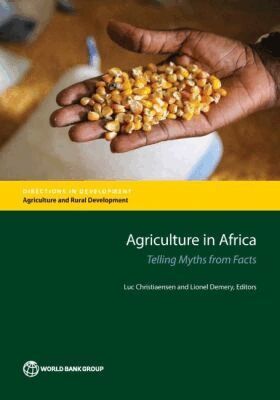
Do current stylized facts about African agriculture and rural livelihoods reflect reality? In rapidly-changing and data-scarce environments they risk being outdated and misleading. This report re-examines conventional wisdom about African farmers, from the bottom up and recognising the complexities involved.
This report explores critical entry points and areas of policy focus to accelerate poverty reduction in Africa. A pro-poor policy agenda requires growth where the poor work and live, while also addressing the many risks to which households are exposed and working to finance the poverty reduction and development agenda.
In a rapidly urbanizing world, mayors often see migrants as a burden to their cities' labor markets and a threat to their development. Drawing on national household surveys and four secondary city case studies in Africa, this report finds that migrants can strengthen the urban labor force.
La présente étude s'appuie sur des données démographiques, des travaux de recherche, des entretiens avec des informateurs clés, ainsi que des études empiriques pour mieux comprendre comment les migrants qui rejoignent les villes secondaires d'Afrique s'intègrent aux marchés du travail urbain.
Perceptions of Africa have changed dramatically. The continent that was viewed as one of wars, famines, and entrenched poverty in the late 1990s, is now seen as "Africa rising" and an "African 21st century". Africa's strong economicgrowth has contributed to improved health and education in the past 20 years as well as major reductions in poverty in several countries, but a rapid rise in population has led to increases in the overall number of extreme poor. Poverty in a Rising Africa is the first of two reports aimed at improving the understanding about progress in poverty reduction in Africa and at articulating a policy agenda to accelerate it. This report documents the data challenges and revisits the key facts about poverty in Africa; the second report will explore ways to accelerate poverty reduction.
Sub-Saharan Africa's turnaround over the past couple of decades has been dramatic. After many years in decline, the continent's economy picked up in the mid-l 990s. Along with this macroeconomic growth, people became healthier, youngsters attended schools in much greater numbers, and the rate of extreme poverty declined from 54 percent in 1990 to 41 percent in 2015. The region had less conflict ( although simmering in some countries and notwithstanding pressing numbers of displaced persons), an expansion of political and social freedoms, and progress towards gender equality. Yet, despite these accomplishments, the challenges are daunting. Economic growth has slowed in recent years. Poverty rates in many countries are the highest in the world. And notably, the number of poor in Africa is rising due to population growth. From a global perspective, there is a shifting concentration of poverty from South Asia to Africa.Macroeconomic stability and growth are critical components for reducing poverty and improving wellbeing, but they are not sufficient. This report explores critical entry points and areas of policy focus to accelerate poverty reduction in Africa. It looks beyond macroeconomic stability and growth to ask what more could be done and where should policy makers focus to speed up poverty reduction. A pro-poor policy agenda requires growth where the poor work and live, while also addressing the many risks to which households are exposed. As such, this report takes a "jobs" lens to its task. It focuses squarely on the productivity and livelihoods of the poor and vulnerable, i.e. what it will take to increase their earnings. And finally, how to finance the poverty and development agenda.