From the late colonial period through the Civil War, slavery developed as the most powerful obstacle to the triumph of liberal values in America. In the second quarter of the nineteenth century, the ambiguities of the revolutionary generation's accomodation of slavery gave way to a direct and violent conflict between northern liberalism and southern slavery. The character of the antislavery movement -- its relationship to broader discussions of morality, law, political economy, and mass politics -- and the expectations it raised for the postemancipation South are central themes of this work.In the past, historians of antislavery reform have distinguished between moral reform and political reform, between the uncompromising zeal of antislavery radicals and temporizing character of mass politics in the mid-nineteenth century. Louis Gerteis focuses on the evolution in antislavery reform of a liberal vision of progress and explores the manner in which moral sentiments against slavery advanced the utilitarian values of American capitalism.A UNC Press Enduring Edition -- UNC Press Enduring Editions use the latest in digital technology to make available again books from our distinguished backlist that were previously out of print. These editions are published unaltered from the original, and are presented in affordable paperback formats, bringing readers both historical and cultural value.
From the late colonial period through the Civil War, slavery developed as the most powerful obstacle to the triumph of liberal values in America. In the second quarter of the nineteenth century, the ambiguities of the revolutionary generation''s accomodation of slavery gave way to a direct and violent conflict between northern liberalism and southern slavery. The character of the antislavery movement -- its relationship to broader discussions of morality, law, political economy, and mass politics -- and the expectations it raised for the postemancipation South are central themes of this work.In the past, historians of antislavery reform have distinguished between moral reform and political reform, between the uncompromising zeal of antislavery radicals and temporizing character of mass politics in the mid-nineteenth century. Louis Gerteis focuses on the evolution in antislavery reform of a liberal vision of progress and explores the manner in which moral sentiments against slavery advanced the utilitarian values of American capitalism.Originally published in 1987.A UNC Press Enduring Edition -- UNC Press Enduring Editions use the latest in digital technology to make available again books from our distinguished backlist that were previously out of print. These editions are published unaltered from the original, and are presented in affordable paperback formats, bringing readers both historical and cultural value.
From the late colonial period through the Civil War, slavery developed as the most powerful obstacle to the triumph of liberal values in America. In the second quarter of the nineteenth century, the ambiguities of the revolutionary generation''s accomodation of slavery gave way to a direct and violent conflict between northern liberalism and southern slavery. The character of the antislavery movement -- its relationship to broader discussions of morality, law, political economy, and mass politics -- and the expectations it raised for the postemancipation South are central themes of this work.In the past, historians of antislavery reform have distinguished between moral reform and political reform, between the uncompromising zeal of antislavery radicals and temporizing character of mass politics in the mid-nineteenth century. Louis Gerteis focuses on the evolution in antislavery reform of a liberal vision of progress and explores the manner in which moral sentiments against slavery advanced the utilitarian values of American capitalism.Originally published in 1987.A UNC Press Enduring Edition -- UNC Press Enduring Editions use the latest in digital technology to make available again books from our distinguished backlist that were previously out of print. These editions are published unaltered from the original, and are presented in affordable paperback formats, bringing readers both historical and cultural value.
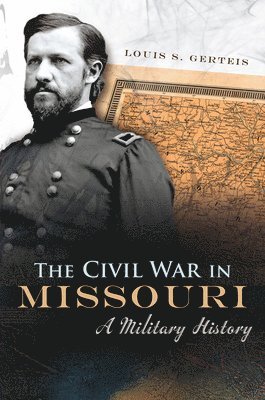
Guerrilla warfare, border fights, and unorganized skirmishes are all too often the only battles associated with Missouri during the Civil War. Combined with the state's distance from both sides capitals, this misguided impression paints Missouri as an insignificant player in the nation s struggle to define itself. Such notions, however, are far from an accurate picture of the Midwest state's contributions to the war's outcome. Though traditionally cast in a peripheral role, the conventional warfare of Missouri was integral in the Civil War's development and ultimate conclusion. The strategic battles fought by organized armies are often lost amidst the stories of guerrilla tactics and bloody combat, but in The Civil War in Missouri, Louis S. Gerteis explores the state's conventional warfare and its effects on the unfolding of national history.Both the Union and the Confederacy had a vested interest in Missouri throughout the war. The state offered control of both the lower Mississippi valley and the Missouri River, strategic areas that could greatly factor into either side's success or failure. Control of St. Louis and mid-Missouri were vital for controlling the West, and rail lines leading across the state offered an important connection between eastern states and the communities out west. The Confederacy sought to maintain the Ozark Mountains as a northern border, which allowed concentrations of rebel troops to build in the Mississippi valley. With such valuable stock at risk, Lincoln registered the importance of keeping rebel troops out of Missouri, and so began the conventional battles investigated by Gerteis.The first book-length examination of its kind, The Civil War in Missouri: A Military History dares to challenge the prevailing opinion that Missouri battles made only minor contributions to the war. Gerteis specifically focuses not only on the principal conventional battles in the state but also on the effects these battles had on both sides national aspirations. This work broadens the scope of traditional Civil War studies to include the losses and wins of Missouri, in turn creating a more accurate and encompassing narrative of the nation's history.