790 kr
Skickas inom 10-15 vardagar
790 kr
Skickas inom 10-15 vardagar
989 kr
Skickas inom 3-6 vardagar
1 221 kr
Skickas inom 3-6 vardagar
619 kr
Skickas inom 3-6 vardagar
2 444 kr
Skickas inom 10-15 vardagar
871 kr
Skickas inom 10-15 vardagar
719 kr
Skickas inom 10-15 vardagar
926 kr
Läs direkt efter köp
Inquiry, Data, and Understanding is a reflective collection of papers in which Lorin Anderson offers his personal perspective on developments in educational research over thirty years. Following an introductory chapter, in which educational research is defined as disciplined inquiry, the remaining chapters are divided into four sections: time and learning, factors influencing educational effectiveness, international perspectives, and the nature and purpose of educational research. Each section contains an introduction that places the chapters in that section in a historical and personal context. The fourth section, which concludes the book, summarises four lessons that were learned about becoming a researcher. Based on these lessons, the final chapter describes four needs that must be met if school and classroom research is to move forward: * The need for concept-based research* The need to put students back into the equation* The need to stop focusing on correlates of student achievement* The need for research on alterable variables.

906 kr
Läs direkt efter köp
Inquiry, Data, and Understanding is a reflective collection of papers in which Lorin Anderson offers his personal perspective on developments in educational research over thirty years. Following an introductory chapter, in which educational research is defined as disciplined inquiry, the remaining chapters are divided into four sections: time and learning, factors influencing educational effectiveness, international perspectives, and the nature and purpose of educational research. Each section contains an introduction that places the chapters in that section in a historical and personal context. The fourth section, which concludes the book, summarises four lessons that were learned about becoming a researcher. Based on these lessons, the final chapter describes four needs that must be met if school and classroom research is to move forward: * The need for concept-based research* The need to put students back into the equation* The need to stop focusing on correlates of student achievement* The need for research on alterable variables.

842 kr
Läs direkt efter köp
This book is based on the belief that decision making is perhaps the most critical of all teaching skills and that good assessments lie at the core of good decision making. To become better teachers then, teachers must learn to make informed decisions about both individual students (learning decisions) and about groups of students (teaching decisions). This book gives equal status to both types of decisions and shows how assessment is integral to both. The organization of the book is sequential, mirroring the way in which information should be used to make decisions. It begins with a conceptual framework linking information to decision making, then moves to the design of assessment instruments and the collection of assessment information, then to the interpretation of assessment information and, finally, to reporting the results of both the assessment and the decision-making process. There is an emphasis throughout on linking why teachers assess with what and how they assess. Other key features include: * Practical Framework -- The book''s framework corresponds to the framework that teachers use to grade their students: conduct (classroom behavior), effort (student motivation), and achievement (student learning). * Unique Chapters -- There are separate chapters on interpreting assessment information prior to decision making and on reporting assessment information to parents, teachers, and administrators. * Flexibility -- Because of its modest length and price, and its practical focus on the links between assessment and everyday teacher decision making, this text can be used either in full-length assessment courses for teachers or to teach the assessment units in educational psychology or integrated methods courses.
836 kr
Läs direkt efter köp
This book is based on the belief that decision making is perhaps the most critical of all teaching skills and that good assessments lie at the core of good decision making. To become better teachers then, teachers must learn to make informed decisions about both individual students (learning decisions) and about groups of students (teaching decisions). This book gives equal status to both types of decisions and shows how assessment is integral to both. The organization of the book is sequential, mirroring the way in which information should be used to make decisions. It begins with a conceptual framework linking information to decision making, then moves to the design of assessment instruments and the collection of assessment information, then to the interpretation of assessment information and, finally, to reporting the results of both the assessment and the decision-making process. There is an emphasis throughout on linking why teachers assess with what and how they assess. Other key features include: * Practical Framework -- The book''s framework corresponds to the framework that teachers use to grade their students: conduct (classroom behavior), effort (student motivation), and achievement (student learning). * Unique Chapters -- There are separate chapters on interpreting assessment information prior to decision making and on reporting assessment information to parents, teachers, and administrators. * Flexibility -- Because of its modest length and price, and its practical focus on the links between assessment and everyday teacher decision making, this text can be used either in full-length assessment courses for teachers or to teach the assessment units in educational psychology or integrated methods courses.
1 020 kr
Läs direkt efter köp
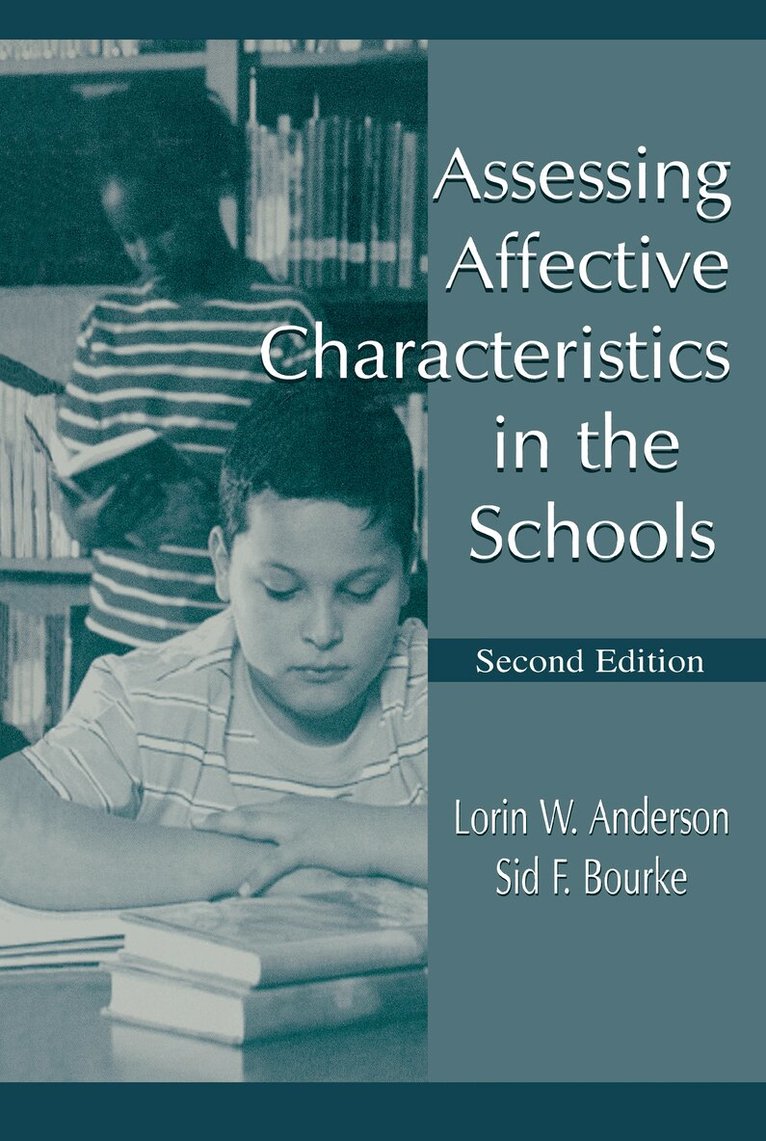
The affective realm is a critical, but often forgotten, aspect of schooling. The development of character and the formation of appropriate learning environments rely to a large extent on understanding the affective nature of students. Even when the focus is on cognitive achievement, affect has a role to play. Teachers frequently mention a lack of motivation as a primary reason for students not achieving as well as they should or as well as their teachers would like. Despite the importance of affect, educators rarely make an effort to systematically collect and use information about students'' affective characteristics to better understand students and to substantially improve the quality of education they receive. This book''s purpose is to provide educators with the knowledge and skills they need to design and select instruments that can be used to gather information about students'' affective characteristics. Once valid and reliable information has been gathered, it can be used to aid in understanding and to improve educational quality. The second edition features: * an updated list of affective characteristics (i.e., attitudes, values, interests, self-esteem, self-efficacy, locus of control) * a dual emphasis on selecting and designing affective assessment instruments * an emphasis on multi-scale instruments (i.e., a single instrument with multiple affective scales) * the use of a single small data set to illustrate and foster understanding of key concepts and procedures * a dual emphasis on data about individual students and groups of students * a dual focus on the instrumental value of affective data and the inherent value of affective data (i.e., affect is valuable in and of itself)
1 004 kr
Läs direkt efter köp
The affective realm is a critical, but often forgotten, aspect of schooling. The development of character and the formation of appropriate learning environments rely to a large extent on understanding the affective nature of students. Even when the focus is on cognitive achievement, affect has a role to play. Teachers frequently mention a lack of motivation as a primary reason for students not achieving as well as they should or as well as their teachers would like. Despite the importance of affect, educators rarely make an effort to systematically collect and use information about students'' affective characteristics to better understand students and to substantially improve the quality of education they receive. This book''s purpose is to provide educators with the knowledge and skills they need to design and select instruments that can be used to gather information about students'' affective characteristics. Once valid and reliable information has been gathered, it can be used to aid in understanding and to improve educational quality. The second edition features: * an updated list of affective characteristics (i.e., attitudes, values, interests, self-esteem, self-efficacy, locus of control) * a dual emphasis on selecting and designing affective assessment instruments * an emphasis on multi-scale instruments (i.e., a single instrument with multiple affective scales) * the use of a single small data set to illustrate and foster understanding of key concepts and procedures * a dual emphasis on data about individual students and groups of students * a dual focus on the instrumental value of affective data and the inherent value of affective data (i.e., affect is valuable in and of itself)
1 995 kr
Tillfälligt slut