The second volume of The Oxford History of British & Irish Catholicism traces the fortunes of Catholic communities in England, Wales, Scotland, and Ireland across a period of great uncertainty and change. From the outset of the Civil Wars in 1641 to the Jacobite rising of 1745, Catholics in the three kingdoms were varied in their responses to tumultuous events and tantalising opportunities. The competing forces of dynamism and conservatism within these communities saw them constantly seeking to re-situate or re-imagine themselves as their relationship to the state, to Protestantism, to continental Europe, as well as the wider world beyond, changed and evolved. Consciously transnational, the volume moves away from insular conceptualisations of Catholicism and instead stresses connections with the European continent and beyond. Early chapters give broad overviews of the experience of Catholics in the period, tracking key events and important developments from 1641 to 1745. Chapters then address specific aspects of Catholicism, including empire and overseas missions, missionary activity, devotion, spirituality, trade, material culture, music, and architecture, among others, revealing a complex, rich and varied history of Catholicism in the period.

The French Capuchin Mission into Britain recovers, for the first time, the outlook and activities of the friars who were in Britain between 1630 and 1669. It reassesses the missionaries and their patroness Henrietta Maria, the Catholic wife of Charles I, by positioning them as active agents of the Catholic Reformation working towards the conversion of Britain to Catholicism. Establishing that the Capuchins were vital to the reform and renewal of French Catholicism after the Wars of Religion, it explores how the spread of the global missionary endeavours of the friars in the early seventeenth century aligned with efforts to revive French economic, political, and religious influence on the global stage. The alliance between friar Joseph du Tremblay and Cardinal Richelieu saw the Capuchins work towards the weakening of the French Huguenots, and thus the strengthening of the Catholic monarchy, by sustained missionary campaigns within their own country, complementing those further afield. The book thus reveals that the friars sent to Henrietta at Somerset House were not merely chaplains to the queen, but rather highly trained and ambitious missionaries. Viewing Britain as a mission territory like any other within their global reach, the Capuchins imported elements of the Catholic Reformation that had already proved effective against Huguenots in France to aid in the conversion of Britain. Viewed in this light, the book recovers the impact of these missionaries in Britain, both on Catholics and Protestants. Importing devotional and spiritual trends which had not been seen in Britain before was controversial, not only to many Protestant observers, especially horrified Puritans, but also to some Catholics who feared that the influence of the friars might challenge delicate balances of authority within their own community. The book also argues that the public ministries of the Capuchins played a larger role in the descent into civil war in the 1640s than previously acknowledged, as their actions fuelled paranoia of a Catholic plot around Charles I. It ends by tracing the experiences of the friars and Henrietta Maria during the Civil Wars, Interregnum, and Restoration periods up to the conclusion of the mission in 1669.
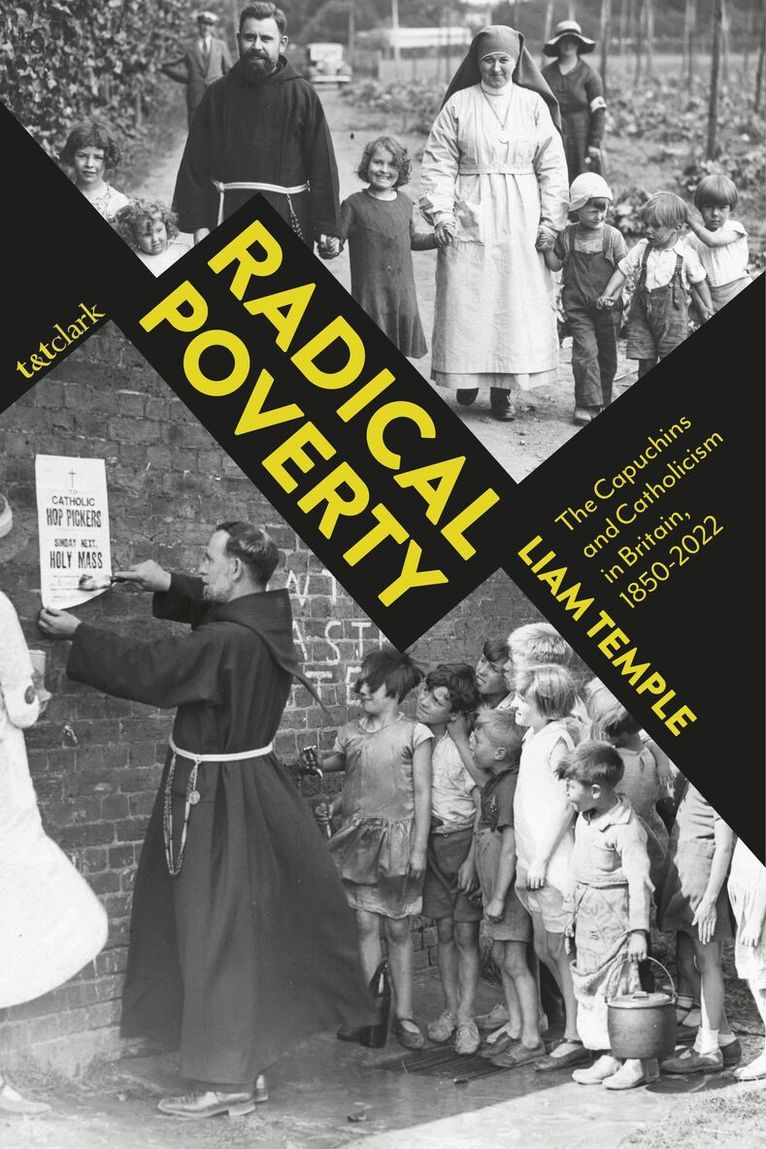
This incisive work offers the first comprehensive analysis of the history of the Order of Friars Minor Capuchin in Britain. Drawing on previously closed archives, this book dives into their origins and their presence in Britain as missionaries between the Reformation and the French Revolution. It then explores the establishment of a permanent province from the 1850s onward. Using manuscripts, letters, diaries, logbooks, mission reports, and unpublished accounts, this book explores how the Capuchin archives bring new perspective on a range of important historical moments, including nineteenth century anti-Catholicism, Catholic emancipation and the rebuilding of Catholicism in Britain, both World Wars, the impact of Vatican II, and the decline of the religious orders in Britain in recent decades.