406 kr
Skickas inom 10-15 vardagar
406 kr
Skickas inom 10-15 vardagar
558 kr
Läs direkt efter köp
“Following in the footsteps of Stephen Hawking''s ‘A brief history of time’ and Simon Singh''s ‘Fermat’s Last Theorem’ this exceptionally accessible book will you leave marveling at the wonders of the world and, if you didn''t listen to your science teachers, wishing you had. Graham writes with the mind of a physicist and the soul of a poet.”
Nicki Hayes, CCO, The Communications Practice, author of First Aid for Feelings.
“Only a few writers have managed to turn the highly technical jargon of science into language accessible for interested lay readers. Isaac Asimov showed us how it could be done, and Carl Zimmer and Brian Greene are continuing today. In Molecular Storms, his first book, Liam Graham has shown that he has the essential quality required to join this group, a love of first learning then explaining how the universe works."
David Deamer, Professor of Biomolecular Engineering, University of California, Santa Cruz,author of Assembling Life.
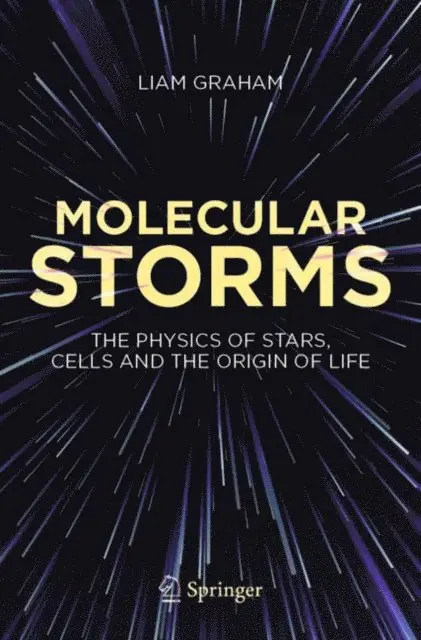
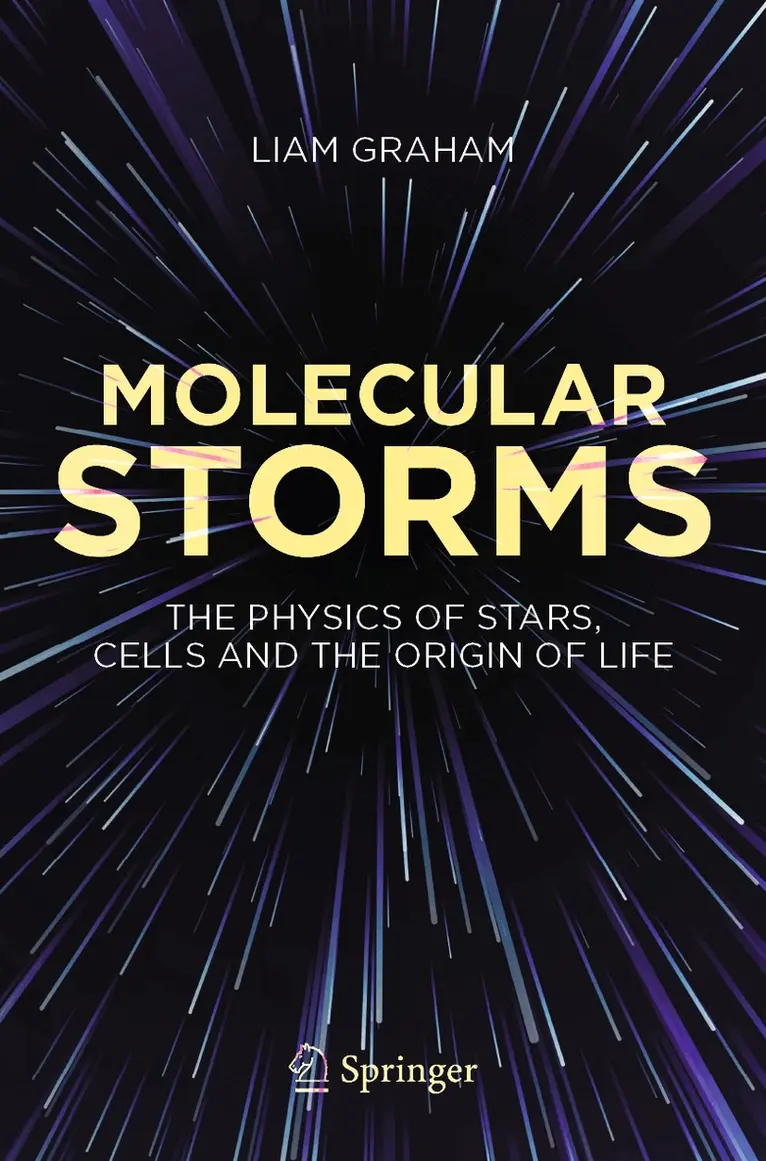
Why is the universe the way it is? Wherever we look, we find ordered structures: from stars to planets to living cells. This book shows that the same driving force is behind structure everywhere: the incessant random motion of the components of matter. Physicists call it thermal noise. Let’s call it the molecular storm.This storm drives the fusion reactions that make stars shine. It drives whirlpools and currents in atmospheres and oceans. It spins and distorts molecules until they are in the right orientation to react and form new substances. In living cells, it drives proteins to fold and molecules to self-assemble. It is behind every detail of the astonishing molecular machines that control cellular processes.Using cutting-edge research, “Molecular Storms” takes us on a dazzling journey from the early universe to the interior of the smallest living things. There, in a nanoscale world of biological devices, it explains the physics behind the chemical system which we call Life.Whether you''re someone with a general interest in science or a student looking to add context to your studies, this book is for you. "Molecular Storms" is an accessible and captivating read that will deepen your appreciation of the power of science to explain the world.500 kr
Skickas inom 10-15 vardagar
710 kr
Läs direkt efter köp
Complex systems seem to magically emerge from the interactions of their parts. A whirlpool emerges from water molecules. A living cell from organic molecules. You emerge from the cells of your body. Not since chaos has a concept from physics spread like wildfire to other disciplines. Emergence can be found from chemistry to economics; from psychology to ecology. At its heart is the alluring idea that there’s more to the world than physics, that there is a holistic component to nature, an edge of mystery.
“Physics Fixes All the Facts” starts by taking you on a tour through a fascinating world of complexity, exploring phenomena from the inside of an atomic nucleus to bacterial behaviour to the ability of your thoughts to affect the world. These examples are used along with a thorough exploration of the philosophical literature to untangle the notoriously poorly defined concept of emergence. This reveals something surprising: the term emergence is redundant. In its weak form it is so weak that it applies to everything. In its strong form it is so restrictive that it is like the belief that there are pixies in your garden, impossible to exclude but not worth spending your time on. Emergence either applies to all systems or to none. Rather than telling us something about the nature of the world, it is an illusion, an artefact of our cognitive limitations.
The past decade has seen a dozen or so monographs and collections about emergence, almost all resolutely supportive of the concept. This book aims to redress the balance. But it is more than just a campaign against the idea of emergence. Graham presents a framework called Austere Physicalism and argues that it is the only coherent way to view the world. He uses this framework to reinterpret so-called emergent phenomena and investigates its wider implications for science. In this radically materialist view, we are nothing but physical systems among others. “Physics Fixes All the Facts” ends by exploring what this means for our sense of free will and consciousness.
The book will appeal to academics in fields which use the concepts of complexity or emergence. Scientists and philosophers alike will find unexpected and exciting ideas in these pages. But the target audience is much broader including students who want to add context to their studies and the intellectually curious with some scientific background.
500 kr
Skickas inom 10-15 vardagar