733 kr
Skickas inom 10-15 vardagar
733 kr
Skickas inom 10-15 vardagar
990 kr
Skickas inom 7-10 vardagar
400 kr
Läs direkt efter köp
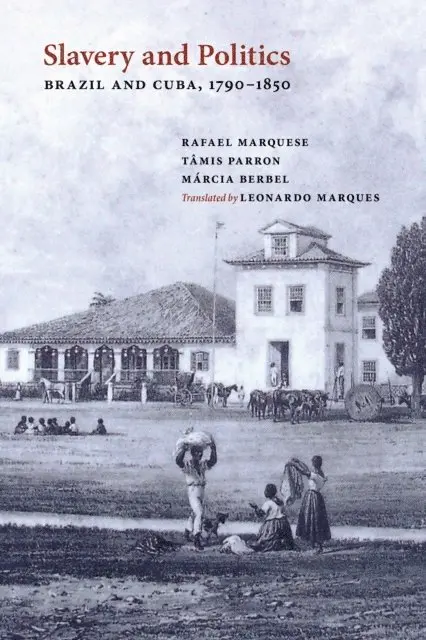
The politics of slavery and slave trade in nineteenth-century Cuba and Brazil is the subject of this acclaimed study, first published in Brazil in 2010 and now available for the first time in English. Cubans and Brazilians were geographically separate from each other, but they faced common global challenges that unified the way they re-created their slave systems between 1790 and 1850 on a basis completely departed from centuries-old colonial slavery. Here the authors examine the early arguments and strategies in favor of slavery and the slave trade and show how they were affected by the expansion of the global market for tropical goods, the American Revolution, the Haitian Revolution, the collapse of Iberian monarchies, British abolitionism, and the international pressure opposing the transatlantic slave trade. This comprehensive survey contributes to the comparative history of slavery, placing the subject in a global context rather than simply comparing the two societies as isolated units.
2 610 kr
Skickas inom 10-15 vardagar
2 610 kr
Skickas inom 10-15 vardagar
838 kr
Läs direkt efter köp
838 kr
Läs direkt efter köp
850 kr
Läs direkt efter köp
From the role of sugar in the early history of the colonial era to coffee in the long nineteenth century, commodities have played a crucial role in the development of the Brazilian economy.
Drawing on the history of commodities approach, this book explores both the external and internal commodity markets since the time that Portuguese settlers established new commodity frontiers to supply global markets based on the coerced labor of the native population and of millions of enslaved Africans and their descendants. The chapters in this book each focus on a specific commodity – including cotton, leather, timber, and soy – that have shaped not only the history of Brazil but also of the wider world. Each contributor outlines how a particular export sector integrated Brazil into global circuits of trade, thus contributing to the making of the modern capitalist economy. This approach also allows for the exploration of different aspects of the extraction and production of these goods, including the various labor regimes employed and the environmental conditions and impacts that accompanied them.
The book will be of interest to all readers in economic history, especially in its intersections with social, political, cultural, and environmental processes and in the broader context of the development of global capitalism.
856 kr
Läs direkt efter köp
From the role of sugar in the early history of the colonial era to coffee in the long nineteenth century, commodities have played a crucial role in the development of the Brazilian economy.
Drawing on the history of commodities approach, this book explores both the external and internal commodity markets since the time that Portuguese settlers established new commodity frontiers to supply global markets based on the coerced labor of the native population and of millions of enslaved Africans and their descendants. The chapters in this book each focus on a specific commodity – including cotton, leather, timber, and soy – that have shaped not only the history of Brazil but also of the wider world. Each contributor outlines how a particular export sector integrated Brazil into global circuits of trade, thus contributing to the making of the modern capitalist economy. This approach also allows for the exploration of different aspects of the extraction and production of these goods, including the various labor regimes employed and the environmental conditions and impacts that accompanied them.
The book will be of interest to all readers in economic history, especially in its intersections with social, political, cultural, and environmental processes and in the broader context of the development of global capitalism.