
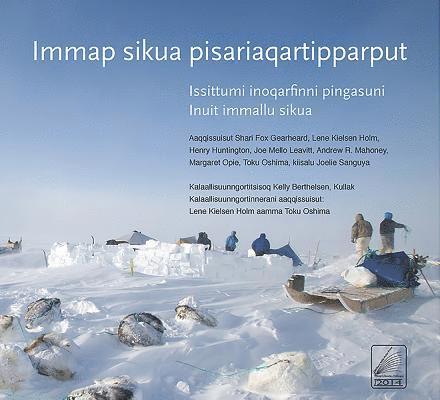
The Meaning of Ice celebrates Arctic sea ice as it is seen and experienced by the Inuit, Iñupiat, and Inughuit, who for generations have lived with it and thrived on what it offers. With extensive details offered through their own drawings and writings, this book describes the great depth of Inuit, Iñupiat, and Inughuit knowledge of sea ice and the critical and complex role it plays in their relationships with their environment and with one another. Over forty Inuit, Iñupiat, and Inughuit from three different Arcticcommunities contributed stories, original artwork, hand-drawn illustrations, maps, family photos, and even recipes to this book. Professional and historical photographs, children’s artwork, and innovative graphics add more to the story of The Meaning of Ice.The Meaning of Ice is an important contribution to understanding the Arctic and its people at a time when the region is undergoing profound change, not least in terms of sea ice. It takes readers beyond what sea ice is, to broaden our appreciation of what sea ice means.
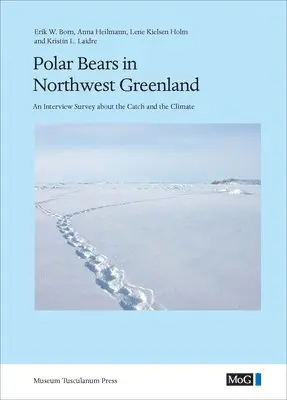
The rationale for this survey was the indication from hunting statistics, satellite telemetry and second-hand reports that the catch of polar bears in Northwest Greenland had increased since the early 1990s simultaneously with marked changes in weather conditions, sea ice cover and glaciers. Building on information provided by seventy-two polar bear hunters living in Qaanaaq and Upernavik, this volume offers important discussions about polar bear biology, polar bear catch, climate change, and the effect of these changes on the polar bears and the catch. The survey also presents the demography of the catch of polar bears in the area during 1952-2005, described on the basis of 588 catches.
This volume presents the results of an interview survey among Greenland subsistence hunters on walruses and the catch of walruses in West and Northwest Greenland. In these areas, the catch of walruses is still an important part of the traditional subsistence hunting culture. The Greenland walrus hunting grounds have experienced marked environmental changes due to climate change and quotas were introduced for the catch across all of Greenland in 2006. Thus, we wanted to explore how these changes had affected the local communities by interviewing seventy-six experienced walrus hunters living in twenty-two settlements and towns along the ca. 1,700 km coast from Maniitsoq in the south to Siorapaluk in the north. The interviews resulted in a wealth of detailed information about how climate changes and introduction of quotas have affected the walruses and the walrus hunting practice. The main text summarises the broad findings while more details are provided in the individual hunter statements in four appendices.
By exploring indigenous people’s knowledge and use of sea ice, the SIKU project has demonstrated the power of multiple perspectives and introduced a new field of interdisciplinary research, the study of social (socio-cultural) aspects of the natural world, or what we call the social life of sea ice. It incorporates local terminologies and classifications, place names, personal stories, teachings, safety rules, historic narratives, and explanations of the empirical and spiritual connections that people create with the natural world. In opening the social life of sea ice and the value of indigenous perspectives we make a novel contribution to IPY, to science, and to the public