556 kr
Skickas inom 7-10 vardagar
556 kr
Skickas inom 7-10 vardagar
670 kr
Läs direkt efter köp
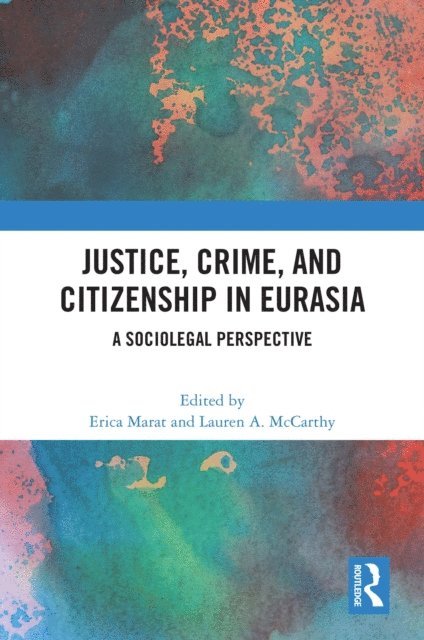
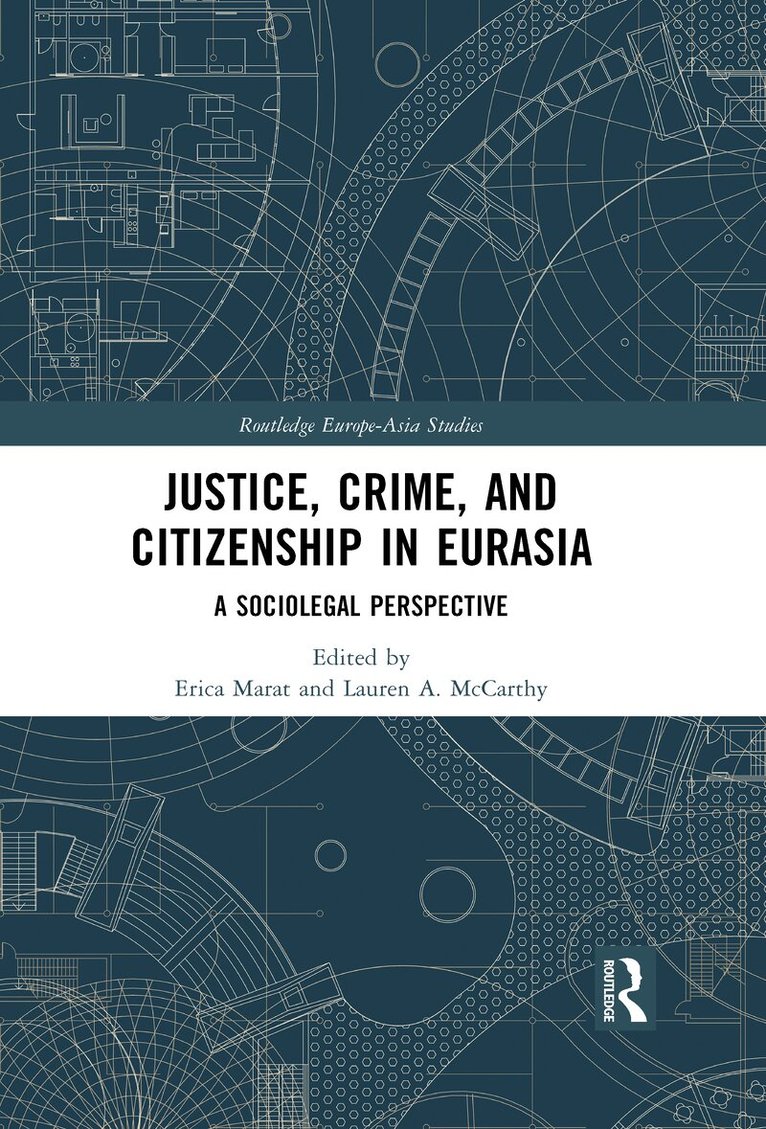
What role does law play in post-communist societies? This book examines the law as a social institution in Eurasia, exploring how it is shaped in everyday interactions between state and society, organisations and individuals, and between law enforcement and other government entities. It bridges the gap between theoretically rich work on law-in-action and the empirical reality of Eurasia.
The contributions in this volume include research on policing, the legal profession, public attitudes towards law, regime support and oppositional mobilisation, crime policy, and property rights, among others. The studies shift away from the common perception that, in Eurasia, the law exists only as a tool for the state to enforce order and suppress dissent. Instead, they show, through empirical analyses, that citizens evade, use, reinterpret and shape the law even in authoritarian contexts—sometimes containing state violence and challenging the regime, and other times reinforcing state capture from below.
The chapters in this book were originally published as a special issue of the journal Europe-Asia Studies.
680 kr
Läs direkt efter köp
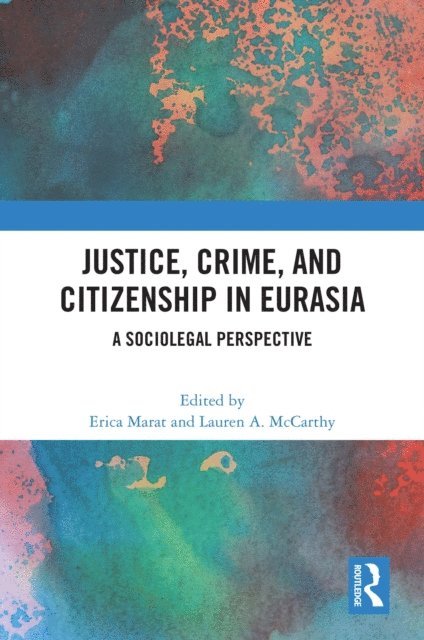
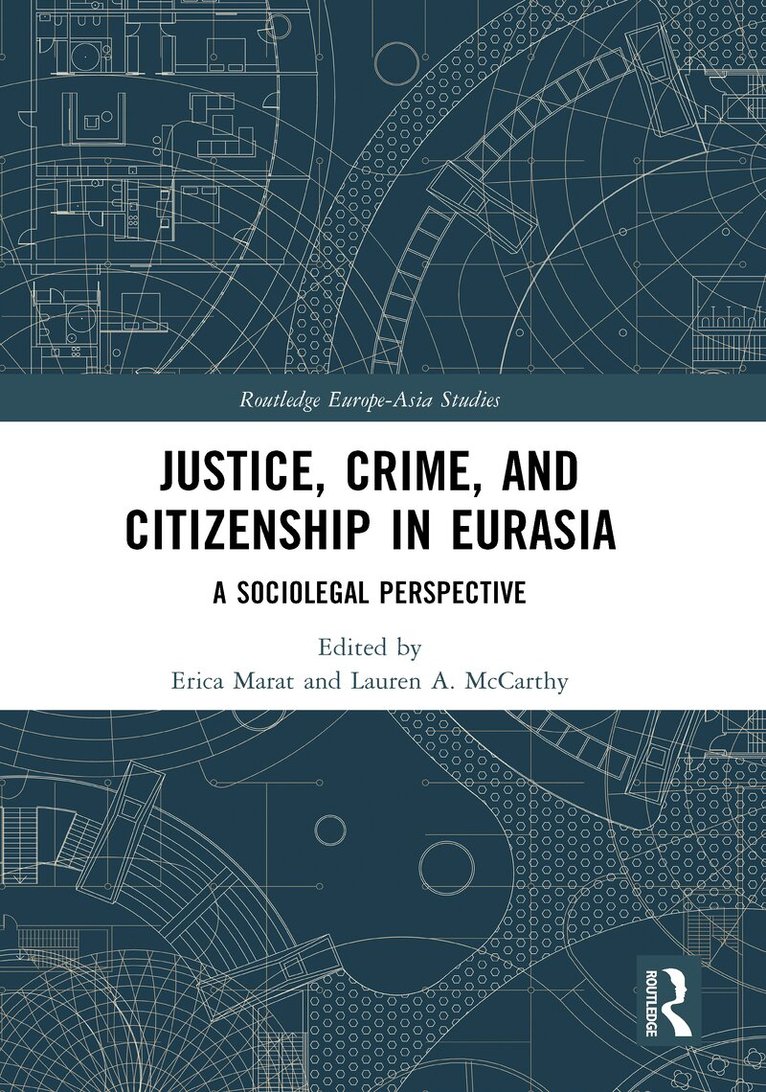
What role does law play in post-communist societies? This book examines the law as a social institution in Eurasia, exploring how it is shaped in everyday interactions between state and society, organisations and individuals, and between law enforcement and other government entities. It bridges the gap between theoretically rich work on law-in-action and the empirical reality of Eurasia.
The contributions in this volume include research on policing, the legal profession, public attitudes towards law, regime support and oppositional mobilisation, crime policy, and property rights, among others. The studies shift away from the common perception that, in Eurasia, the law exists only as a tool for the state to enforce order and suppress dissent. Instead, they show, through empirical analyses, that citizens evade, use, reinterpret and shape the law even in authoritarian contexts—sometimes containing state violence and challenging the regime, and other times reinforcing state capture from below.
The chapters in this book were originally published as a special issue of the journal Europe-Asia Studies.
2 311 kr
Skickas inom 10-15 vardagar
583 kr
Skickas inom 10-15 vardagar
681 kr
Kommande
Since 2012, the Russian state has relied increasingly on the law as a tool of repressive governance, using it to consolidate its power, dissuade opposition and punish its enemies. New laws have been passed to suppress particular forms of activity while other laws passed for ostensibly reasonable purposes have been used in ways that stretch their meaning and application.
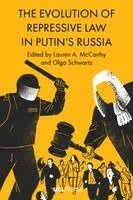
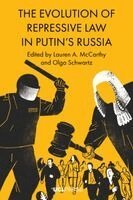
The Evolution of Repressive Law in Putin’s Russia takes a socio-legal perspective to trace the development of this regime of legalized repression, by looking at both the laws on the books and the law in action. Each chapter is a case study of a single repressive law regime, containing the context and a short legal history followed by analysis of its implementation. The authors cover terrorism, extremism, treason and espionage laws. They also trace restrictions on freedom of assembly, traditional and online media, and speech in multiple contexts, including the COVID era and the 2022 war in Ukraine. Importantly, this book takes a ground-up perspective, centering the voices of those who have engaged with these laws in practice. The contributors have been on the front lines of documenting and resisting the evolution of Russia’s repressive legal system that we document in this book and, as such, have also been caught in its crosshairs.
453 kr
Kommande
Since 2012, the Russian state has relied increasingly on the law as a tool of repressive governance, using it to consolidate its power, dissuade opposition and punish its enemies. New laws have been passed to suppress particular forms of activity while other laws passed for ostensibly reasonable purposes have been used in ways that stretch their meaning and application.
The Evolution of Repressive Law in Putin’s Russia takes a socio-legal perspective to trace the development of this regime of legalized repression, by looking at both the laws on the books and the law in action. Each chapter is a case study of a single repressive law regime, containing the context and a short legal history followed by analysis of its implementation. The authors cover terrorism, extremism, treason and espionage laws. They also trace restrictions on freedom of assembly, traditional and online media, and speech in multiple contexts, including the COVID era and the 2022 war in Ukraine. Importantly, this book takes a ground-up perspective, centering the voices of those who have engaged with these laws in practice. The contributors have been on the front lines of documenting and resisting the evolution of Russia’s repressive legal system that we document in this book and, as such, have also been caught in its crosshairs.