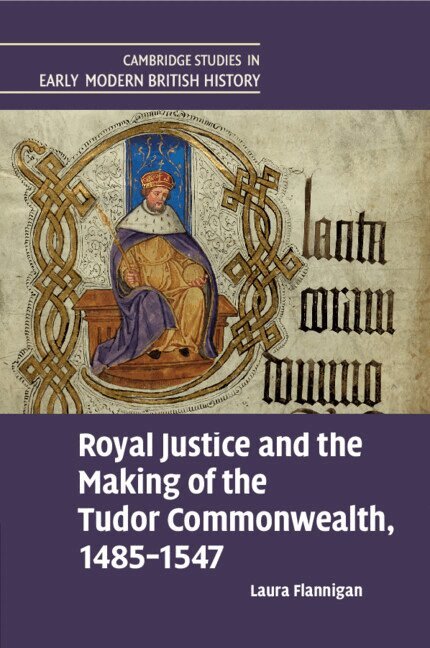
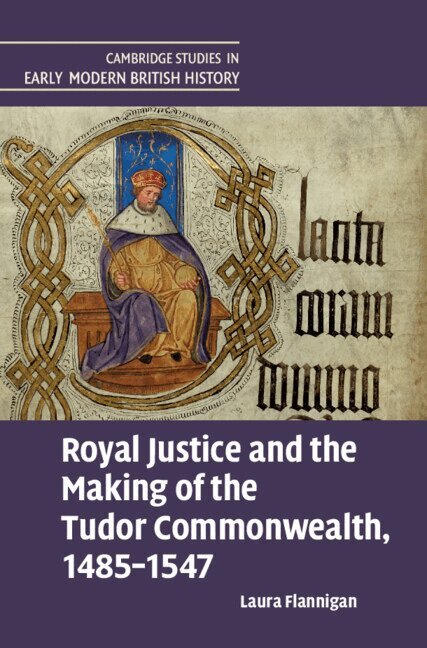
The dawn of the Tudor regime is one of most recognisable periods of English history. Yet the focus on its monarchs' private lives and ministers' constitutional reforms creates the impression that this age's major developments were isolated to halls of power, far removed from the wider populace. This book presents a more holistic vision of politics and society in late medieval and early modern England. Delving into the rich but little-studied archive of the royal Court of Requests, it reconstructs collaborations between sovereigns and subjects on the formulation of an important governmental ideal: justice. Examining the institutional and social dimensions of this point of contact, this study places ordinary people, their knowledge and demands at the heart of a judicial revolution unfolding within the governments of Henry VII and Henry VIII. Yet it also demonstrates that directing extraordinary royal justice into ordinary procedures created as many problems as it solved.
The dawn of the Tudor regime is one of most recognisable periods of English history. Yet the focus on its monarchs' private lives and ministers' constitutional reforms creates the impression that this age's major developments were isolated to halls of power, far removed from the wider populace. This book presents a more holistic vision of politics and society in late medieval and early modern England. Delving into the rich but little-studied archive of the royal Court of Requests, it reconstructs collaborations between sovereigns and subjects on the formulation of an important governmental ideal: justice. Examining the institutional and social dimensions of this point of contact, this study places ordinary people, their knowledge and demands at the heart of a judicial revolution unfolding within the governments of Henry VII and Henry VIII. Yet it also demonstrates that directing extraordinary royal justice into ordinary procedures created as many problems as it solved.
Providing a clear and accessible guide to using pre-modern English legal sources, Researching with English Court Records, 1200–1700 introduces readers to the legal archives of this transformational period and outlines how they might be used for various lines of historical research. By 1700, most English people lived within reach of a range of law courts and regularly found themselves embroiled in legal processes. The documents produced during these processes represent some of the most coherent and consistent primary sources available to historians. Yet even aside from its sheer volume, the paperwork remaining from any single part of England’s sprawling system of courts can pose significant challenges to researchers. This book offers a set of newly commissioned, expert guides to legal documents, with chapters divided into two sections. Part I, ‘Courts and their Records’, consists of chapters by scholars in law, history, and archives outlining the development and records of specific English jurisdictions between 1200 and 1700, including manor courts, church courts, common-law courts, and newer equity and admiralty jurisdictions. In Part II, ‘Approaches to Legal Records’, chapters explore the value and utility of legal documents for different histories: from the study of crime, punishment, and popular politics to the more recently developed histories of gender and marginalised peoples.The target audience is researchers new to this material: including, but not limited to, university students looking for primary source materials for dissertations; authors of trade histories seeking illustrative sources; and members of the public hoping to use legal archives for family history research.
Providing a clear and accessible guide to using pre-modern English legal sources, Researching with English Court Records, 1200–1700 introduces readers to the legal archives of this transformational period and outlines how they might be used for various lines of historical research. By 1700, most English people lived within reach of a range of law courts and regularly found themselves embroiled in legal processes. The documents produced during these processes represent some of the most coherent and consistent primary sources available to historians. Yet even aside from its sheer volume, the paperwork remaining from any single part of England’s sprawling system of courts can pose significant challenges to researchers. This book offers a set of newly commissioned, expert guides to legal documents, with chapters divided into two sections. Part I, ‘Courts and their Records’, consists of chapters by scholars in law, history, and archives outlining the development and records of specific English jurisdictions between 1200 and 1700, including manor courts, church courts, common-law courts, and newer equity and admiralty jurisdictions. In Part II, ‘Approaches to Legal Records’, chapters explore the value and utility of legal documents for different histories: from the study of crime, punishment, and popular politics to the more recently developed histories of gender and marginalised peoples.The target audience is researchers new to this material: including, but not limited to, university students looking for primary source materials for dissertations; authors of trade histories seeking illustrative sources; and members of the public hoping to use legal archives for family history research.