2 515 kr
Skickas inom 10-15 vardagar
2 515 kr
Skickas inom 10-15 vardagar
642 kr
Skickas inom 10-15 vardagar
746 kr
Läs direkt efter köp
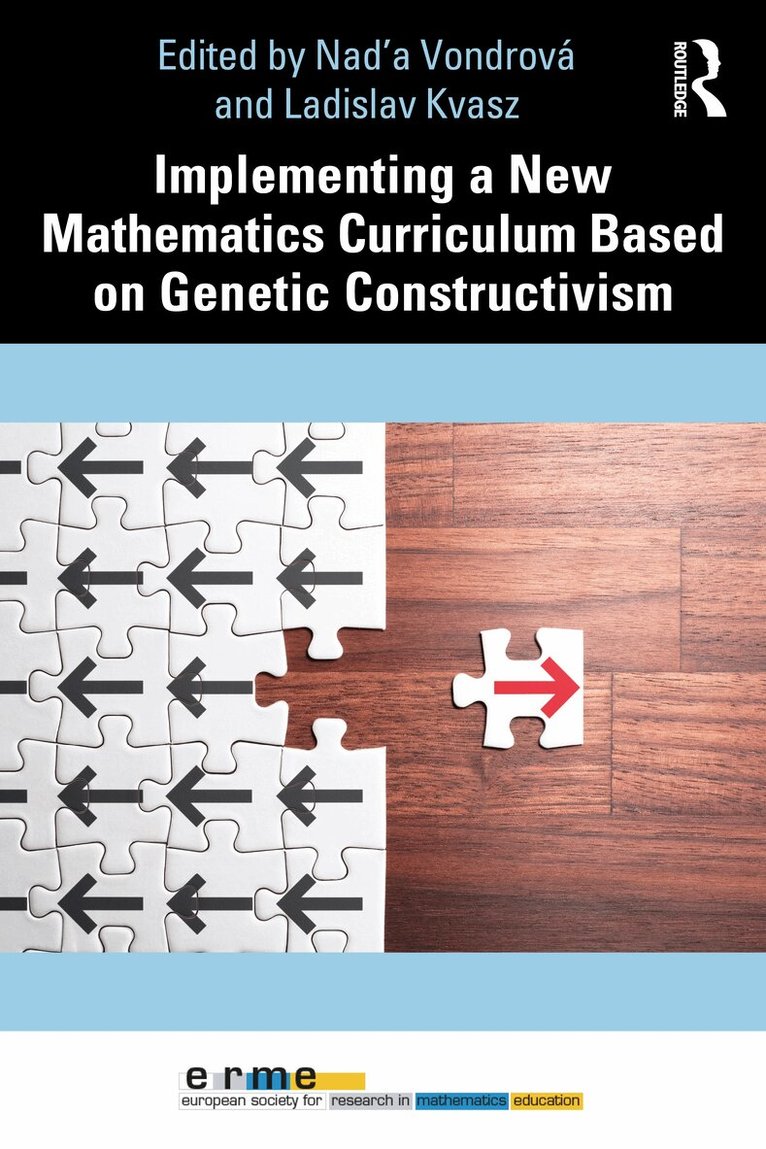
This book shows the transformative power of genetic constructivism in mathematics education, exploring how research, practice, and policy converged to drive educational innovations in the Czech Republic can offer valuable insights into the evolution of mathematics teaching on an international scale.
Drawing on a seventy-year legacy of advancements, the book highlights the pioneering ideas that emerged during the communist regime and were further developed after the Velvet Revolution, influenced by both East-European and global perspectives. Each chapter sees leading international experts reflect on the development and large-scale implementation of genetic constructivism, examining its impact on learners and providing forward-looking recommendations for the future of mathematics education. The book also delves into key themes, including the origins and defining characteristics of genetic constructivism, practical applications in schools, and an evaluation of its influence on student learning, all while maintaining a consistent focus on joyful, autonomous discovery supported by thoughtful teaching.
Encouraging readers to critically assess their own teaching methods, this is the ideal resource for researchers, educators, and policymakers seeking innovative strategies to enhance mathematics education.
762 kr
Läs direkt efter köp
This book shows the transformative power of genetic constructivism in mathematics education, exploring how research, practice, and policy converged to drive educational innovations in the Czech Republic can offer valuable insights into the evolution of mathematics teaching on an international scale.
Drawing on a seventy-year legacy of advancements, the book highlights the pioneering ideas that emerged during the communist regime and were further developed after the Velvet Revolution, influenced by both East-European and global perspectives. Each chapter sees leading international experts reflect on the development and large-scale implementation of genetic constructivism, examining its impact on learners and providing forward-looking recommendations for the future of mathematics education. The book also delves into key themes, including the origins and defining characteristics of genetic constructivism, practical applications in schools, and an evaluation of its influence on student learning, all while maintaining a consistent focus on joyful, autonomous discovery supported by thoughtful teaching.
Encouraging readers to critically assess their own teaching methods, this is the ideal resource for researchers, educators, and policymakers seeking innovative strategies to enhance mathematics education.
549 kr
Skickas inom 10-15 vardagar
718 kr
Läs direkt efter köp
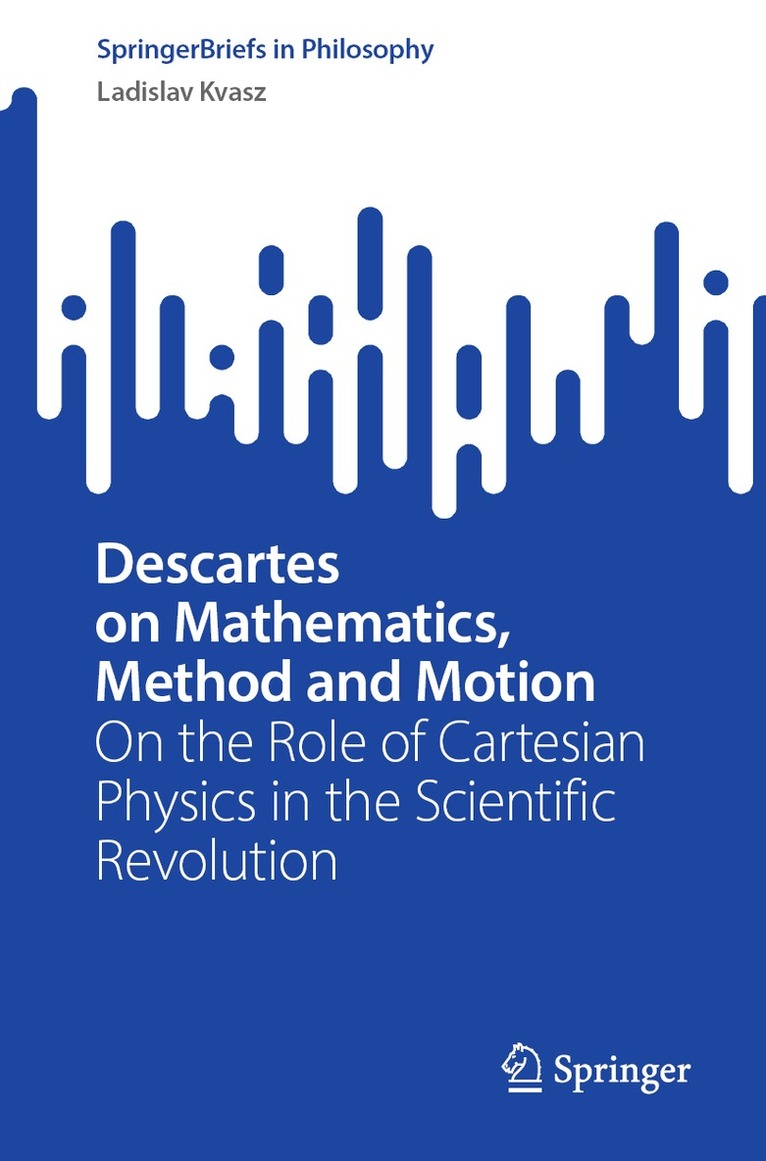
This book argues that Descartes’ physics was a milestone on the road to modern mathematical physics. After Newton introduced a completely different approach to mathematical description of motion, Descartes’ physics became obsolete and even difficult to comprehend. This text follows the language of Descartes and the means of which motion can be described. It argues that Descartes achieved almost everything that later Newton was able to do—to describe the motion of interacting bodies- by different (i.e. algebraic) means. This volume completely refutes the received view according to which Descartes’ physics was merely a kind of discursive natural philosophy. To make this interpretation more plausible the book follows Descartes’ ideas from his early work in mathematics, through his invention of the analytic method towards his mature physics. It shows that Descartes followed a similar heuristic pattern.
The volume appeals to students and researchers; it invites the reader equippedwith minimal understanding of college mathematics to follow Descartes on his intellectual journey through the Scientific Revolution. The reader will gain a deeper understanding of the role of mathematical language in the creation of modern physics and a glimpse into the fascinating world of Descartes’ scientific thought. Several of Descartes’ philosophical ideas can be traced back to his scientific interests and thus the book elucidates the motivation behind some of Descartes’ key positions in the area of epistemology and method. In the penultimate chapter the book presents four arguments in favor of seeing Descartes as a physicist on par with Galileo and Newton.
515 kr
Skickas inom 10-15 vardagar
518 kr
Läs direkt efter köp
107 kr
Skickas inom 10-15 vardagar
Linguistic Innovations in the Development of Classical Mathematics
1 090 kr
Skickas inom 10-15 vardagar
1 449 kr
Läs direkt efter köp