1 025 kr
Skickas inom 10-15 vardagar
1 025 kr
Skickas inom 10-15 vardagar
3 105 kr
Skickas inom 10-15 vardagar
860 kr
Läs direkt efter köp
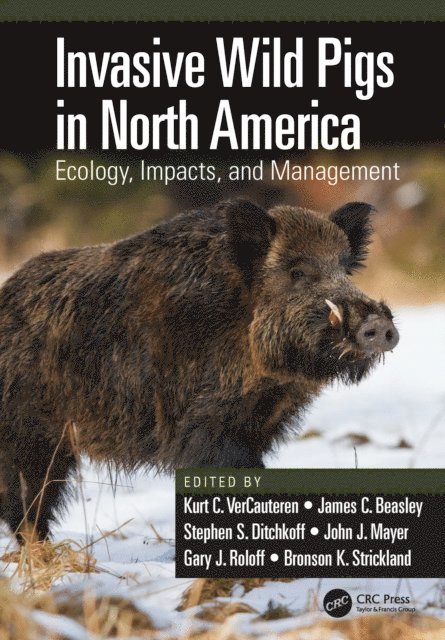
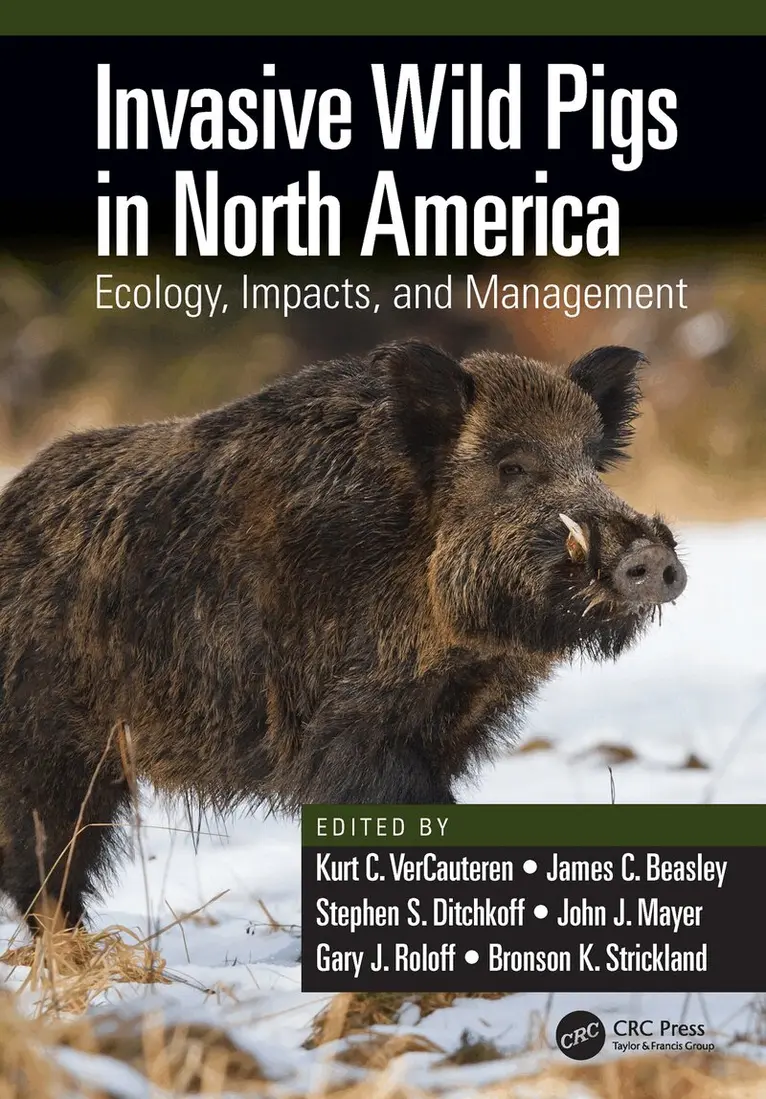
Throughout North America, non-native wild pigs have become an ecologically and economically destructive invasive species. Though they are regarded as a popular game species by some, provide economic benefits to others, and are even engrained into societal heritage in some areas, wild pigs are responsible for an extraordinary amount of damage in both natural and anthropogenic systems throughout North America. As the density and range of wild pig habitat have substantially increased over the last several decades, the magnitude and diversity of their negative impacts are not yet fully realized or quantified. With various conflicts continually emerging, wild pig management is difficult and expensive to achieve. As a result, wild pigs represent one of the greatest wildlife management challenges North America faces in the 21st century.
Invasive Wild Pigs in North America: Ecology, Impacts, and Management addresses all aspects of wild pig biology, ecology, damage, and management in a single comprehensive volume. It assimilates and organizes information on the most destructive introduced vertebrate species in the United States, establishing a foundation from which managers, researchers, policy makers, and other stakeholders can build upon into the future. The book provides comprehensive coverage of wild pig biology and ecology, techniques for management and research, and regional chapters. It is an asset to readers interested in wild pigs, the resources they impact, and how to mitigate those impacts, and establishes a vision of the future of wild pigs in North America.
Features:
Compiles valuable knowledge for a broad audience including wild pig managers, researchers, adversaries, and enthusiasts from across North America
Addresses taxonomy, morphology, genetics, physiology, spatial ecology, population dynamics, diseases and parasites, and the naturalized niche of wild pigs
Includes chapters on damage to resources, management, research methods, human dimensions and education, and policy and legislation
Contains full color images and case studies of interesting and informative situations being created by wild pigs throughout North America
Includes a chapter on wild pigs at the wildland–urban interface, a more recent and especially challenging issue
860 kr
Läs direkt efter köp
Throughout North America, non-native wild pigs have become an ecologically and economically destructive invasive species. Though they are regarded as a popular game species by some, provide economic benefits to others, and are even engrained into societal heritage in some areas, wild pigs are responsible for an extraordinary amount of damage in both natural and anthropogenic systems throughout North America. As the density and range of wild pig habitat have substantially increased over the last several decades, the magnitude and diversity of their negative impacts are not yet fully realized or quantified. With various conflicts continually emerging, wild pig management is difficult and expensive to achieve. As a result, wild pigs represent one of the greatest wildlife management challenges North America faces in the 21st century.
Invasive Wild Pigs in North America: Ecology, Impacts, and Management addresses all aspects of wild pig biology, ecology, damage, and management in a single comprehensive volume. It assimilates and organizes information on the most destructive introduced vertebrate species in the United States, establishing a foundation from which managers, researchers, policy makers, and other stakeholders can build upon into the future. The book provides comprehensive coverage of wild pig biology and ecology, techniques for management and research, and regional chapters. It is an asset to readers interested in wild pigs, the resources they impact, and how to mitigate those impacts, and establishes a vision of the future of wild pigs in North America.
Features:
Compiles valuable knowledge for a broad audience including wild pig managers, researchers, adversaries, and enthusiasts from across North America
Addresses taxonomy, morphology, genetics, physiology, spatial ecology, population dynamics, diseases and parasites, and the naturalized niche of wild pigs
Includes chapters on damage to resources, management, research methods, human dimensions and education, and policy and legislation
Contains full color images and case studies of interesting and informative situations being created by wild pigs throughout North America
Includes a chapter on wild pigs at the wildland–urban interface, a more recent and especially challenging issue
Research and Perspectives in a Changing World
2 042 kr
Skickas inom 10-15 vardagar
2 677 kr
Läs direkt efter köp
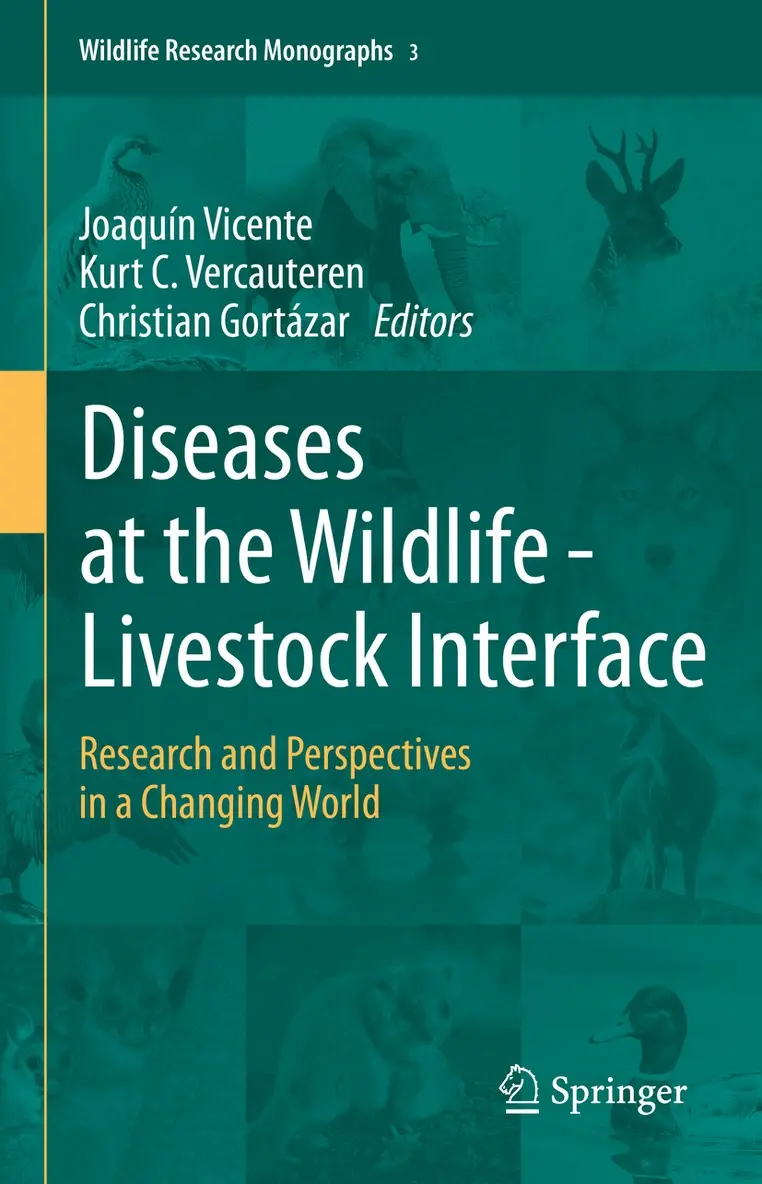
Shared diseases among wildlife, livestock and humans, often transboundary, are relevant to public health and global economy, as being highlighted currently relative to the global COVID19 pandemic. Diseases at these interfaces also impact the conservation of biodiversity and must be considered when managing wildlife. While wildlife and domestic livestock have coexisted in dynamic systems for thousands of years, spillover disease risks are higher today than in the past due to global patterns of increasing close contact and interactions among wildlife, livestock and humans in the context of complex, diverse and numerous circumstances. Multidisciplinary studies of animal interfaces, especially those involving wildlife, therefore, must be brought to the forefront so that knowledge gaps can be realized and filled to inform managers and policy makers.
In the first part of the book authors illustrate and discuss ecological and epidemiological concepts related to the interfaces, with avision towards socio-ecological system health. In addition, the history of past animal interfaces provides the necessary perspective to focus current questions, better understand present situations, and informs how we can best approach the future. The second part discusses the myriad of similar and differing wildlife- livestock interfaces found around the world from a regional point of view. The third part focuses on how to assess the spatial and temporal overlap between livestock and wildlife, and authors present new technical innovations about how inter-transmissions between wild and domestic populations can be quantified. An overview of main modeling approaches available to quantify multi-host disease transmission at the wildlife/livestock interface, illustrated with specific-case studies, is also presented. Finally, the need for interdisciplinary approaches and a dedicated thematic field to approach the wildlife/livestock interfaces and create opportunities to promote wildlife–livestock coexistence is emphasized.
The concluding chapter presents perspectives and directions to better understanding disease dynamics at the wildlife/livestock interface, global change and implications for the future. The changing distribution of interfaces, ongoing human and environmental changes (e. g. climate warming, changes in animal production systems, etc.) and their likely impacts and consequences for the interfaces and disease transmission processes are all discussed.