452 kr
Skickas inom 7-10 vardagar
452 kr
Skickas inom 7-10 vardagar
523 kr
Skickas inom 7-10 vardagar
965 kr
Läs direkt efter köp
965 kr
Läs direkt efter köp
863 kr
Skickas inom 7-10 vardagar
507 kr
Läs direkt efter köp
What is moral courage? Why is it important and what drives it? An argument for why we should care about moral courage and how it shapes the world around us.
War, totalitarianism, pandemics, and political repression are among the many challenges and crises that force us to consider what humane people can do when the world falls apart. When tolerance disappears, truth becomes rare, and civilized discourse is a distant ideal, why do certain individuals find the courage to speak out when most do not?
When Conscience Calls offers powerful portraits of ordinary people performing extraordinary acts—be it confronting presidents and racist mobs or simply caring for and protecting the vulnerable. Uniting these portraits is the idea that moral courage stems not from choice but from one’s identity. Ultimately, Kristen Renwick Monroe argues bravery derives from who we are, our core values, and our capacity to believe we must change the world. When Conscience Calls is a rich examination of why some citizens embrace anger, bitterness, and fearmongering while others seek common ground, fight against dogma, and stand up to hate.
280 kr
Skickas inom 7-10 vardagar
1 073 kr
Skickas inom 10-15 vardagar
840 kr
Skickas inom 7-10 vardagar
433 kr
Skickas inom 7-10 vardagar
610 kr
Skickas inom 7-10 vardagar
433 kr
Läs direkt efter köp
1 148 kr
Skickas inom 7-10 vardagar
516 kr
Läs direkt efter köp
534 kr
Skickas inom 7-10 vardagar
984 kr
Skickas inom 10-15 vardagar
987 kr
Skickas inom 7-10 vardagar
435 kr
Skickas
1 161 kr
Läs direkt efter köp
With a list of contributors that reads like a "Who''s Who" of political psychology, this comprehensive volume introduces the major concepts, debates, and themes in the field and provides an overview of its intellectual development, its disparate parts, the major controversies and some suggestions for the future direction of the field.
2 564 kr
Skickas inom 10-15 vardagar
780 kr
Skickas inom 10-15 vardagar
454 kr
Läs direkt efter köp
457 kr
Läs direkt efter köp
921 kr
Läs direkt efter köp
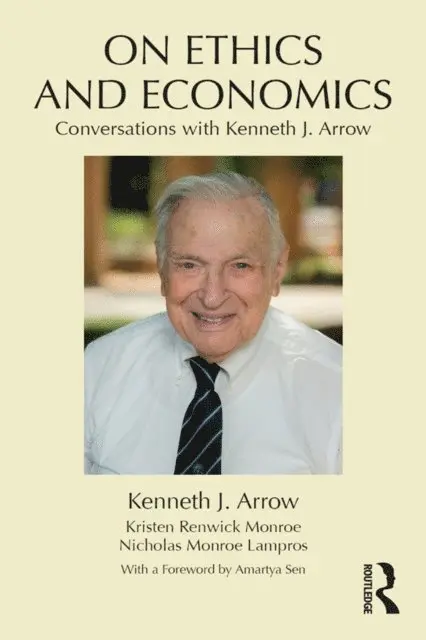
Part intellectual autobiography and part exposition of complex yet contemporary economic ideas, this lively conversation with renowned scholar and public intellectual Kenneth J. Arrow focuses on economics and politics in light of history, current events, and philosophy as well. Reminding readers that economics is about redistribution and thus about how we treat each other, Arrow shows that the intersection of economics and ethics is of concern not just to economists but for the public more broadly. With a foreword by Amartya Sen, this book highlights the belief that government can be a powerful force for good, and is particularly relevant in the current political climate and to the lay reader as well as the economist.
927 kr
Läs direkt efter köp
Part intellectual autobiography and part exposition of complex yet contemporary economic ideas, this lively conversation with renowned scholar and public intellectual Kenneth J. Arrow focuses on economics and politics in light of history, current events, and philosophy as well. Reminding readers that economics is about redistribution and thus about how we treat each other, Arrow shows that the intersection of economics and ethics is of concern not just to economists but for the public more broadly. With a foreword by Amartya Sen, this book highlights the belief that government can be a powerful force for good, and is particularly relevant in the current political climate and to the lay reader as well as the economist.
864 kr
Läs direkt efter köp
877 kr
Läs direkt efter köp
713 kr
Läs direkt efter köp
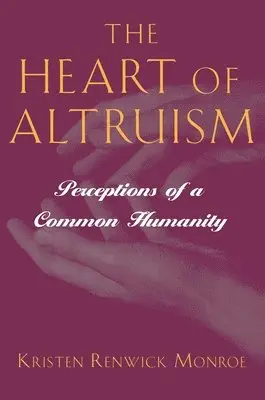
Is all human behavior based on self-interest? Many social and biological theories would argue so, but such a perspective does not explain the many truly heroic acts committed by people willing to risk their lives to help others. In The Heart of Altruism, Kristen Renwick Monroe boldly lays the groundwork for a social theory receptive to altruism by examining the experiences described by altruists themselves: from Otto, a German businessman who rescued over a hundred Jews in Nazi Germany, to Lucille, a newspaper poetry editor, who, armed with her cane, saved a young girl who was being raped. Monroe''s honest and moving interviews with these little-known heroes enable her to explore the causes of altruism and the differences between altruists and other people. By delineating an overarching perspective of humanity shared by altruists, Monroe demonstrates how social theories may begin to account for altruism and debunks the notions of scientific inevitability that stem from an overemphasis on self-interest. As Monroe has discovered, the financial and religious backgrounds of altruists vary greatly--as do their views on issues such as welfare, civil rights, and morality. Altruists do, however, share a certain way of looking at the world: where the rest of us see a stranger, altruists see a fellow human being. It is this perspective that many social theories overlook. Monroe restores altruism to a general theory of ethical political behavior. She argues that to understand what makes one person act out of concern for others and not the self, we need to ask how that individual''s perspective sets the range of options he or she finds available.
646 kr
Läs direkt efter köp
The significance of identity and psychology in determining moral choiceWhat causes genocide? Why do some stand by, doing nothing, while others risk their lives to help the persecuted? Ethics in an Age of Terror and Genocide analyzes riveting interviews with bystanders, Nazi supporters, and rescuers of Jews during the Holocaust to lay bare critical psychological forces operating during genocide. Monroe''s insightful examination of these moving—and disturbing—interviews underscores the significance of identity for moral choice.Monroe finds that self-image and identity—especially the sense of self in relation to others—determine and delineate our choice options, not just morally but cognitively. She introduces the concept of moral salience to explain how we establish a critical psychological relationship with others, classifying individuals in need as "people just like us" or reducing them to strangers perceived as different, threatening, or even beyond the boundaries of our concern. Monroe explicates the psychological dehumanization that is a prerequisite for genocide and uses her knowledge of human behavior during the Holocaust to develop a broader theory of moral choice, one applicable to other forms of ethnic, religious, racial, and sectarian prejudice, aggression, and violence. Her book fills a long-standing void in ethics and suggests that identity is more fundamental than reasoning in our treatment of others.