137 kr
Skickas inom 3-6 vardagar
137 kr
Skickas inom 3-6 vardagar
1 442 kr
Skickas inom 7-10 vardagar
104 kr
Läs direkt efter köp
653 kr
Skickas inom 10-15 vardagar
543 kr
Skickas inom 7-10 vardagar
749 kr
Läs direkt efter köp
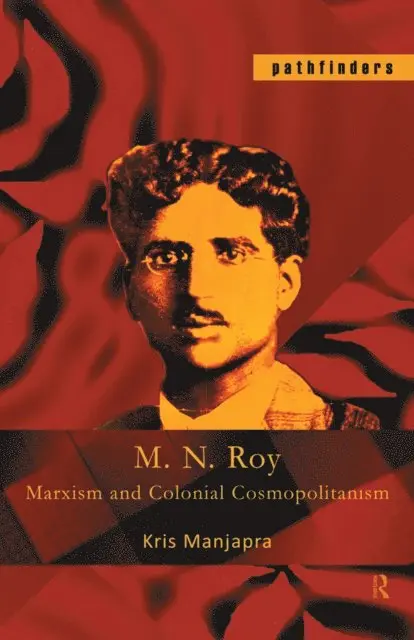
This is a work of South Asian intellectual history written from a transnational perspective and based on the life and work of M.N. Roy, one of India’s most formidable Marxist intellectuals. Swadeshi revolutionary, co-founder of the Mexican Communist Party, member of the Communist International Presidium, and a major force in the rise of Indian communism, M.N. Roy was a colonial cosmopolitan icon of the interwar years. Exploring the intellectual production of this important thinker, this book traces the historical context of his ideas from 19th-century Bengal to Weimar Germany, through the tumultuous period of world politics in the 1930s and 1940s, and on to post-Independence India.
In this book the author makes a number of valuable theoretical contributions. He argues for the importance of conceiving the ‘deterritorial’ zones of thought and action through which Indian anti-colonial political thought operated, and advances a new periodisation for Swadeshi on this basis. He also argues against viewing ‘international communism’ of the 1920s as a single monolith by highlighting the fractures and contestations that influenced colonial politics worldwide.
A fresh and insightful perspective on the history of India in the interwar years, this book will be of great interest to scholars and students of the modern history of South and East Asia, America and Europe, and to those interested in anti-colonial struggles, Communist politics and trajectories of Marxist thought in the 20th century.
722 kr
Läs direkt efter köp
This is a work of South Asian intellectual history written from a transnational perspective and based on the life and work of M.N. Roy, one of India’s most formidable Marxist intellectuals. Swadeshi revolutionary, co-founder of the Mexican Communist Party, member of the Communist International Presidium, and a major force in the rise of Indian communism, M.N. Roy was a colonial cosmopolitan icon of the interwar years. Exploring the intellectual production of this important thinker, this book traces the historical context of his ideas from 19th-century Bengal to Weimar Germany, through the tumultuous period of world politics in the 1930s and 1940s, and on to post-Independence India.
In this book the author makes a number of valuable theoretical contributions. He argues for the importance of conceiving the ‘deterritorial’ zones of thought and action through which Indian anti-colonial political thought operated, and advances a new periodisation for Swadeshi on this basis. He also argues against viewing ‘international communism’ of the 1920s as a single monolith by highlighting the fractures and contestations that influenced colonial politics worldwide.
A fresh and insightful perspective on the history of India in the interwar years, this book will be of great interest to scholars and students of the modern history of South and East Asia, America and Europe, and to those interested in anti-colonial struggles, Communist politics and trajectories of Marxist thought in the 20th century.
401 kr
Skickas inom 7-10 vardagar
378 kr
Läs direkt efter köp
386 kr
Läs direkt efter köp
2 602 kr
Skickas inom 10-15 vardagar
245 kr
Skickas inom 3-6 vardagar
824 kr
Skickas inom 3-6 vardagar
Age of Entanglement erforscht die Muster, die deutsche und indische Intellektuelle vom 19. Jahrhundert bis in die Jahre nach dem Zweiten Weltkrieg verbinden. Kris Manjapra zeichnet die sich überschneidenden Ideen und Karrieren von Philologen, Physikern, Dichtern, Wirtschaftswissenschaftlern und anderen nach, die Ideen austauschten, Netzwerke bildeten und die Welten des anderen studierten. Über die gut einstudierte Kolonialismuskritik hinaus rekonstruiert diese Studie die moderne Geistesgeschichte im Sinne der verknoteten intellektuellen Reiserouten scheinbar fremder Menschen. Die Zusammenarbeit in den Wissenschaften, Künsten und Geisteswissenschaften führte zu außergewöhnlichen Begegnungen zwischen deutschen und indischen Köpfen. Meghnad Saha traf Albert Einstein, Stella Kramrisch brachte das Bauhaus nach Kalkutta, und Girindrasekhar Bose begann eine Korrespondenz mit Sigmund Freud. Rabindranath Tagore reiste nach Deutschland, um Gelehrte für eine neue Universität zu rekrutieren, und Himanshu Rai arbeitete mit Franz Osten zusammen, um in Bombay Filmstudios einzurichten. Diese Interaktionen, so Manjapra, zeigten gemeinsame Reaktionen auf die Hegemonie des britischen Imperiums. Deutsche und Inder hofften, in einander die Werkzeuge zu finden, die nötig waren, um eine anglozentrische Weltordnung zu stören. Wie Manjapra zeigt, sind transnationale Begegnungen nicht von Natur aus fortschrittlich. Vom Orientalismus über den Arianismus bis hin zum Szientismus waren die deutsch-indischen Verstrickungen weder notwendigerweise liberal noch konventionell kosmopolitisch, oft ebenso sehr durch Manipulation wie durch echte Kooperation gekennzeichnet.
Die Übersetzung dieses Buches wurde mit Mitteln des Ministeriums für Wissenschaft, Forschung und Kunst Baden-Württemberg gefördert und ausgezeichnet.
903 kr
Läs direkt efter köp
926 kr
Läs direkt efter köp