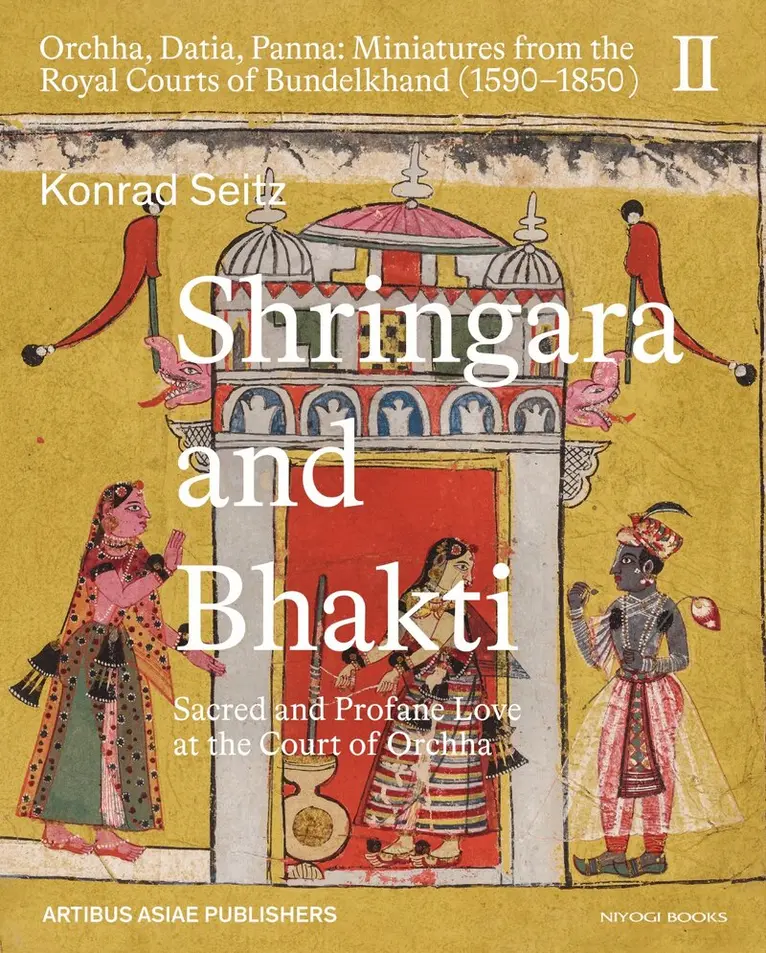
This lavishly illustrated book deals with the second and third periods of Orchha painting, which span the years 1605 through 1675. A central theme of the paintings presented in this volume is the love between the archetypal couple Krishna and Radha, which is both mystical-religious and secular-playful in nature.This lavishly illustrated book, the second volume in the series Orchha,Datia, Panna: Miniatures from the Royal Courts of Bundelkhand (1590–1850),deals with the second and third periods of Orchha painting, which span the years 1605 through 1675. A central theme of the paintings presented in this volume is the love between the archetypal couple Krishna and Radha, which is both mystical-religious and secular-playful in nature. Indeed, it is the confluence of sacred and profane love that gives India’s culture and art its unique spirit. The images were created to illustrate poetic works such as the Rasikapriya, whose author, the Orchha court poet Keshavdas, invites his readers to savor the aesthetic and religious delight of Radha-Krishna love through his riti lyrics in the vernacular language of his era. Through stylistic analyzes and interpretations of over 100 paintings from his collection, many of them published here for the first time, the author brings to light the accomplishments of the Orchha school during its heyday in the seventeenth century.
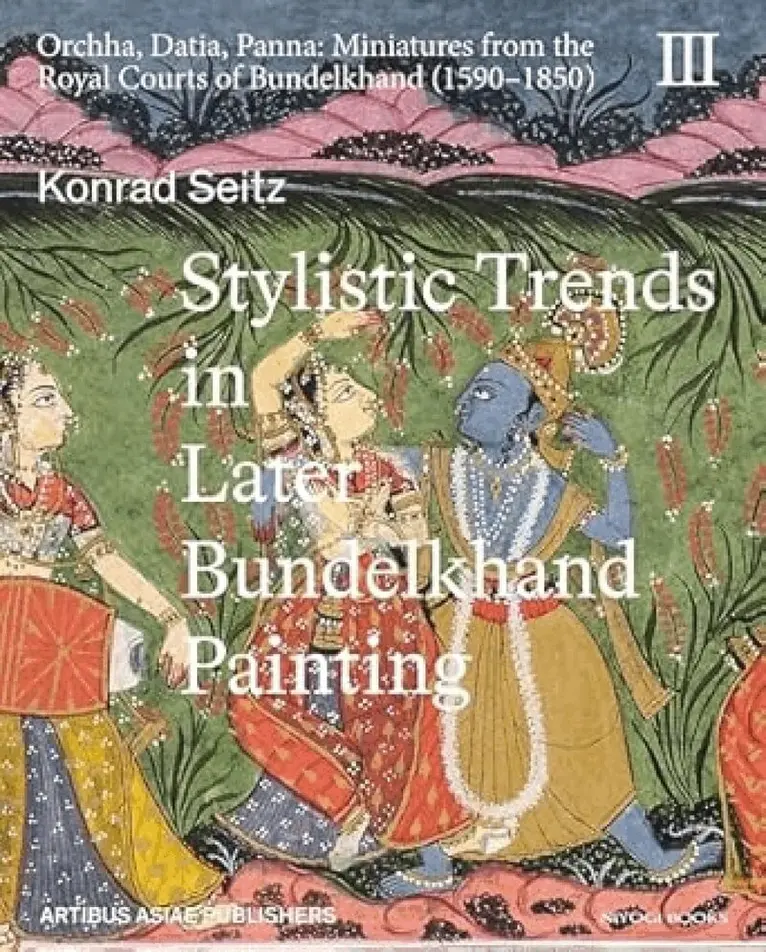
This lavishly illustrated book, the third and final volume in the series Orchha, Datia, Panna: Miniatures from the Royal Courts of Bundelkhand, deals with the third, fourth, and fifth periods of Bundelkhand painting, which spans the years 1635 through 1840. It begins with the Mughalizing painting styles that predominated in Datia after the disintegration of Orchha in 1635 and the rise of Datia as an independent principality and major cultural center. It also addresses the development of Bundelkhand painting after 1675, when Raja Chhatrasal established Panna as the capital of his Bundela kingdom. Bundelkhand painting ceased with the raja’s death in 1731, and it was only after a long interruption that it experienced an Indian summer at the court of Datia during the period of British suzerainty in the nineteenth century. However, the style of the latter era no longer bore a resemblance to the Datia and Orchha schools of the seventeenth century, but was rather an offshoot of the prevailing Mighal-Rajput style developed by painters who had left Delhi in the second half of the eighteenth century.