1 146 kr
Skickas inom 10-15 vardagar
1 146 kr
Skickas inom 10-15 vardagar
1 127 kr
Skickas inom 7-10 vardagar
1 054 kr
Läs direkt efter köp
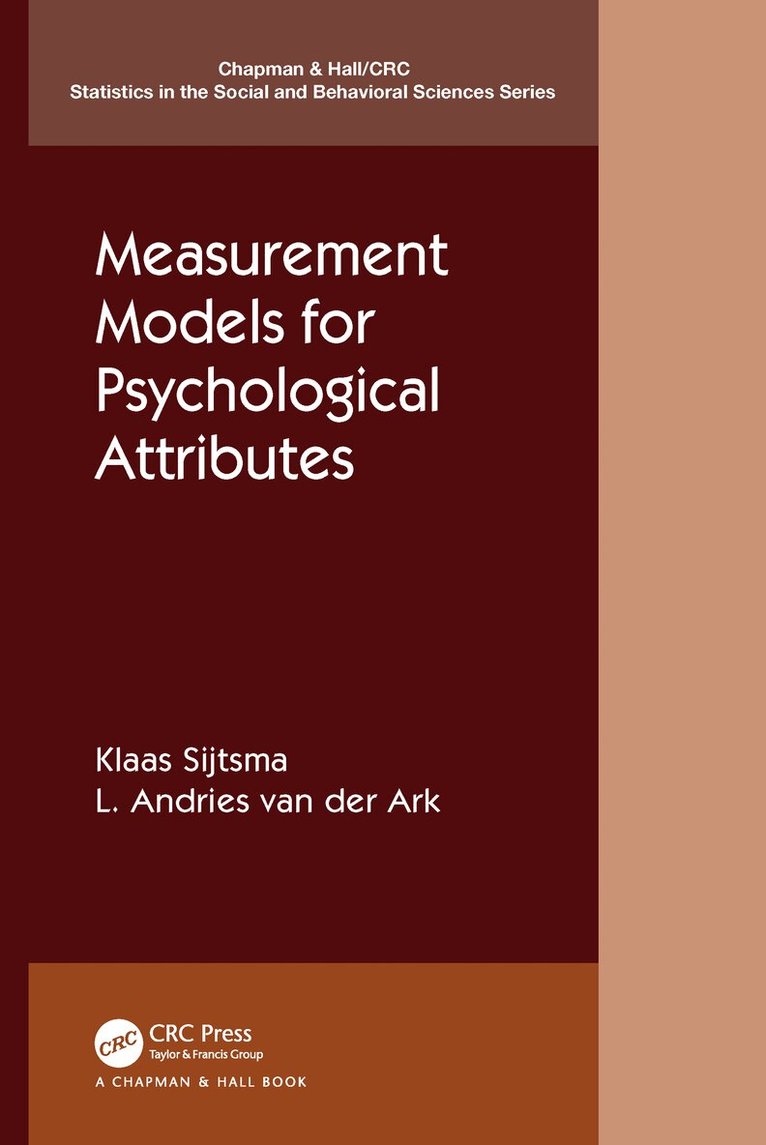
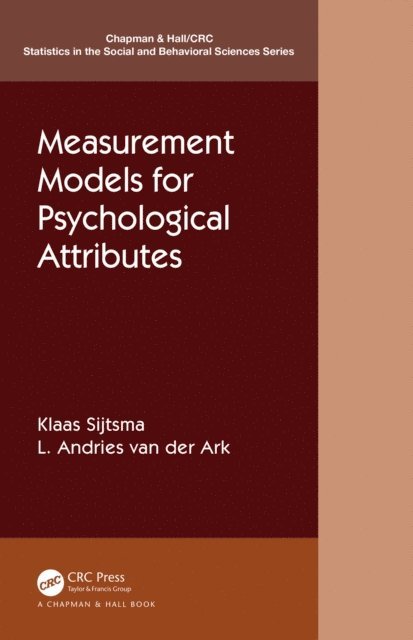
Despite the overwhelming use of tests and questionnaires, the psychometric models for constructing these instruments are often poorly understood, leading to suboptimal measurement. Measurement Models for Psychological Attributes is a comprehensive and accessible treatment of the common and the less than common measurement models for the social, behavioral, and health sciences. The monograph explains the adequate use of measurement models for test construction, points out their merits and drawbacks, and critically discusses topics that have raised and continue to raise controversy. Because introductory texts on statistics and psychometrics are sufficient to understand its content, the monograph may be used in advanced courses on applied psychometrics, and is attractive to both researchers and graduate students in psychology, education, sociology, political science, medicine and marketing, policy research, and opinion research.
The monograph provides an in-depth discussion of classical test theory and factor models in Chapter 2; nonparametric and parametric item response theory in Chapter 3 and Chapter 4, respectively; latent class models and cognitive diagnosis models in Chapter 5; and discusses pairwise comparison models, proximity models, response time models, and network psychometrics in Chapter 6. The chapters start with the theory and methods of the measurement model and conclude with a real-data example illustrating the measurement model.
2 371 kr
Skickas inom 3-6 vardagar
1 529 kr
Skickas inom 3-6 vardagar
554 kr
Läs direkt efter köp
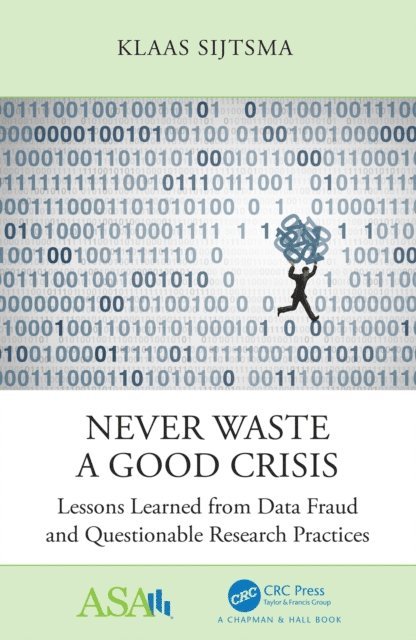
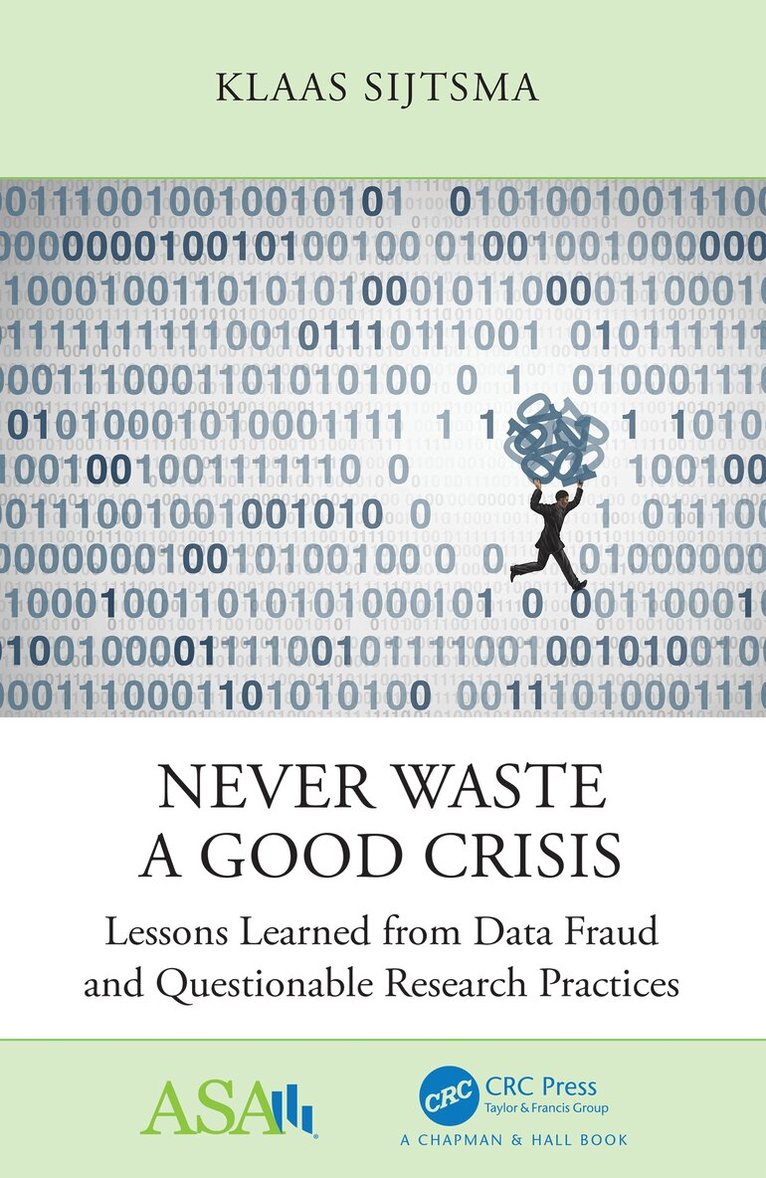
This book covers statistical consequences of breaches of research integrity such as fabrication and falsification of data, and researcher glitches summarized as questionable research practices. It is unique in that it discusses how unwarranted data manipulation harms research results and that questionable research practices are often caused by researchers’ inadequate mastery of the statistical methods and procedures they use for their data analysis. The author’s solution to prevent problems concerning the trustworthiness of research results, no matter how they originated, is to publish data in publicly available repositories and encourage researchers not trained as statisticians not to overestimate their statistical skills and resort to professional support from statisticians or methodologists.
The author discusses some of his experiences concerning mutual trust, fear of repercussions, and the bystander effect as conditions limiting revelation of colleagues’ possible integrity breaches. He explains why people are unable to mimic real data and why data fabrication using statistical models stills falls short of credibility. Confirmatory and exploratory research and the usefulness of preregistration, and the counter-intuitivenature of statistics, are discussed.
The author questions the usefulness of statistical advice concerning frequentist hypothesis testing, Bayes-factor use, alternative statistics education, and reduction of situational disturbances like performance pressure, as stand-alone means to reduce questionable research practices when researchers lack experience with statistics.
An interview with the author can be found here: https://www.tilburguniversity.edu/magazine/overview/former-rector-sijtsma-turn-statistician-fight-fraud-and-sloppiness.
542 kr
Läs direkt efter köp
This book covers statistical consequences of breaches of research integrity such as fabrication and falsification of data, and researcher glitches summarized as questionable research practices. It is unique in that it discusses how unwarranted data manipulation harms research results and that questionable research practices are often caused by researchers’ inadequate mastery of the statistical methods and procedures they use for their data analysis. The author’s solution to prevent problems concerning the trustworthiness of research results, no matter how they originated, is to publish data in publicly available repositories and encourage researchers not trained as statisticians not to overestimate their statistical skills and resort to professional support from statisticians or methodologists.
The author discusses some of his experiences concerning mutual trust, fear of repercussions, and the bystander effect as conditions limiting revelation of colleagues’ possible integrity breaches. He explains why people are unable to mimic real data and why data fabrication using statistical models stills falls short of credibility. Confirmatory and exploratory research and the usefulness of preregistration, and the counter-intuitivenature of statistics, are discussed.
The author questions the usefulness of statistical advice concerning frequentist hypothesis testing, Bayes-factor use, alternative statistics education, and reduction of situational disturbances like performance pressure, as stand-alone means to reduce questionable research practices when researchers lack experience with statistics.
An interview with the author can be found here: https://www.tilburguniversity.edu/magazine/overview/former-rector-sijtsma-turn-statistician-fight-fraud-and-sloppiness.
474 kr
Skickas inom 10-15 vardagar
1 203 kr
Skickas inom 10-15 vardagar
1 074 kr
Läs direkt efter köp
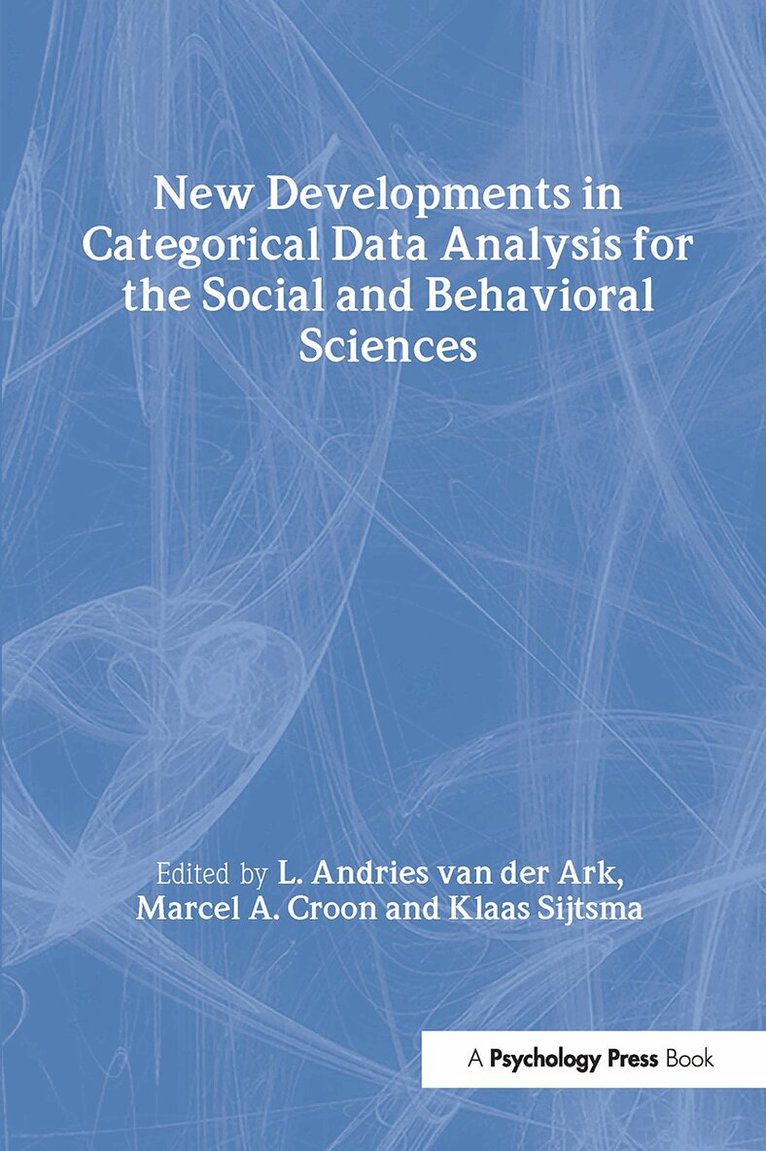
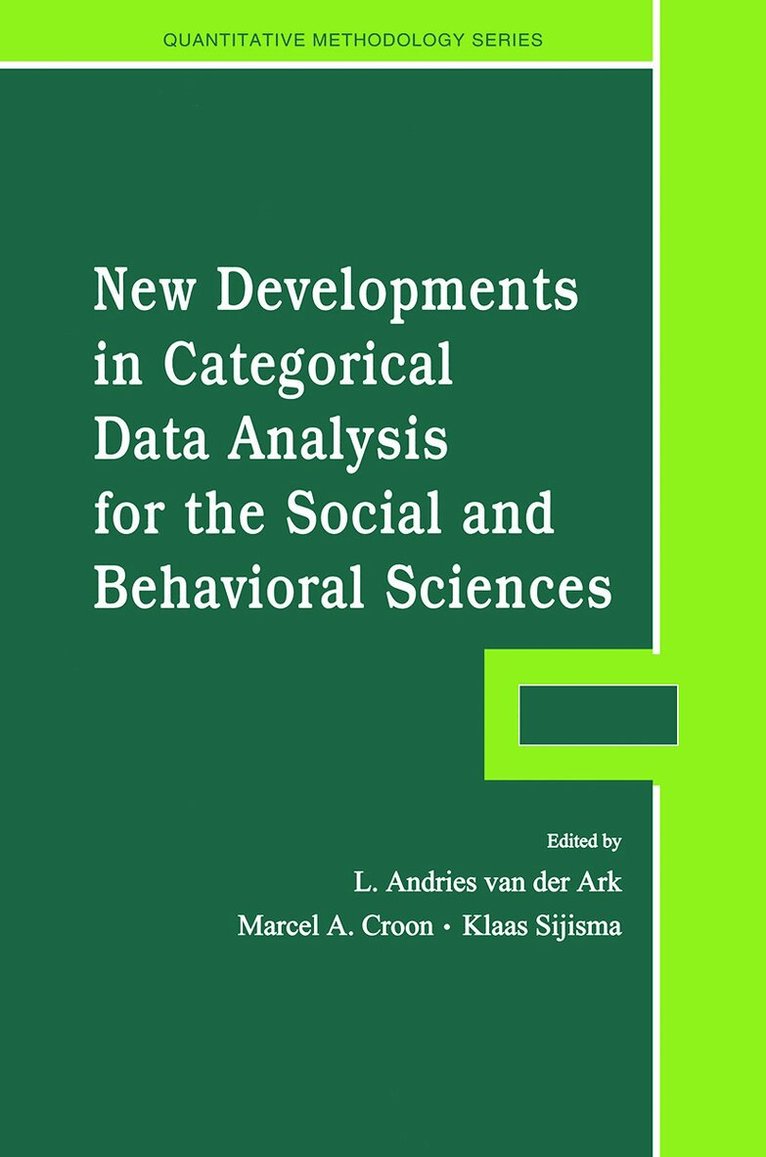
Categorical data are quantified as either nominal variables--distinguishing different groups, for example, based on socio-economic status, education, and political persuasion--or ordinal variables--distinguishing levels of interest, such as the preferred politician or the preferred type of punishment for committing burglary. This new book is a collection of up-to-date studies on modern categorical data analysis methods, emphasizing their application to relevant and interesting data sets.This volume concentrates on latent class analysis and item response theory. These methods use latent variables to explain the relationships among observed categorical variables. Latent class analysis yields the classification of a group of respondents according to their pattern of scores on the categorical variables. This provides insight into the mechanisms producing the data and allows the estimation of factor structures and regression models conditional on the latent class structure. Item response theory leads to the identification of one or more ordinal or interval scales. In psychological and educational testing these scales are used for individual measurement of abilities and personality traits.The focus of this volume is applied. After a method is explained, the potential of the method for analyzing categorical data is illustrated by means of a real data example to show how it can be used effectively for solving a real data problem. These methods are accessible to researchers not trained explicitly in applied statistics. This volume appeals to researchers and advanced students in the social and behavioral sciences, including social, developmental, organizational, clinical and health psychologists, sociologists, educational and marketing researchers, and political scientists. In addition, it is of interest to those who collect data on categorical variables and are faced with the problem of how to analyze such variables--among themselves or in relation to metric variables.
2 996 kr
Skickas inom 10-15 vardagar
1 077 kr
Läs direkt efter köp
Despite the overwhelming use of tests and questionnaires, the psychometric models for constructing these instruments are often poorly understood, leading to suboptimal measurement. Measurement Models for Psychological Attributes is a comprehensive and accessible treatment of the common and the less than common measurement models for the social, behavioral, and health sciences. The monograph explains the adequate use of measurement models for test construction, points out their merits and drawbacks, and critically discusses topics that have raised and continue to raise controversy. Because introductory texts on statistics and psychometrics are sufficient to understand its content, the monograph may be used in advanced courses on applied psychometrics, and is attractive to both researchers and graduate students in psychology, education, sociology, political science, medicine and marketing, policy research, and opinion research.
The monograph provides an in-depth discussion of classical test theory and factor models in Chapter 2; nonparametric and parametric item response theory in Chapter 3 and Chapter 4, respectively; latent class models and cognitive diagnosis models in Chapter 5; and discusses pairwise comparison models, proximity models, response time models, and network psychometrics in Chapter 6. The chapters start with the theory and methods of the measurement model and conclude with a real-data example illustrating the measurement model.
1 181 kr
Tillfälligt slut