533 kr
Skickas inom 7-10 vardagar
533 kr
Skickas inom 7-10 vardagar
1 435 kr
Skickas inom 7-10 vardagar
972 kr
Läs direkt efter köp
972 kr
Läs direkt efter köp
420 kr
Kommande
328 kr
Läs direkt efter köp
408 kr
Läs direkt efter köp
301 kr
Skickas inom 7-10 vardagar
640 kr
Läs direkt efter köp
370 kr
Skickas inom 7-10 vardagar
424 kr
Läs direkt efter köp
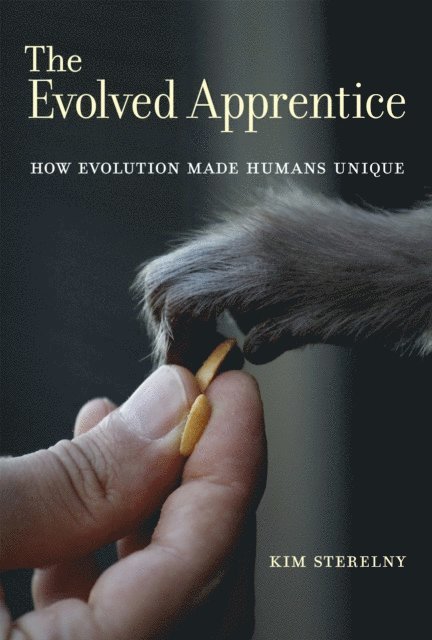
A new theory of the evolution of human cognition and human social life that emphasizes the role of information sharing across generations.
Over the last three million years or so, our lineage has diverged sharply from those of our great ape relatives. Change has been rapid (in evolutionary terms) and pervasive. Morphology, life history, social life, sexual behavior, and foraging patterns have all shifted sharply away from those of the other great apes. In The Evolved Apprentice, Kim Sterelny argues that the divergence stems from the fact that humans gradually came to enrich the learning environment of the next generation. Humans came to cooperate in sharing information, and to cooperate ecologically and reproductively as well, and these changes initiated positive feedback loops that drove us further from other great apes.
Sterelny develops a new theory of the evolution of human cognition and human social life that emphasizes the gradual evolution of information-sharing practices across generations and how these practices transformed human minds and social lives. Sterelny proposes that humans developed a new form of ecological interaction with their environment, cooperative foraging. The ability to cope with the immense variety of human ancestral environments and social forms, he argues, depended not just on adapted minds but also on adapted developmental environments.
854 kr
Läs direkt efter köp
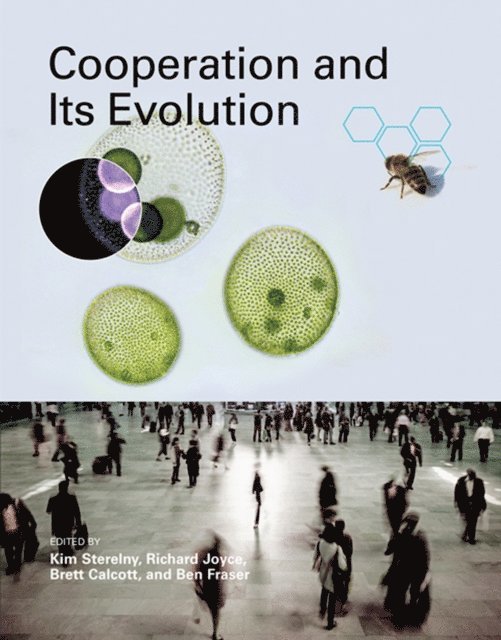
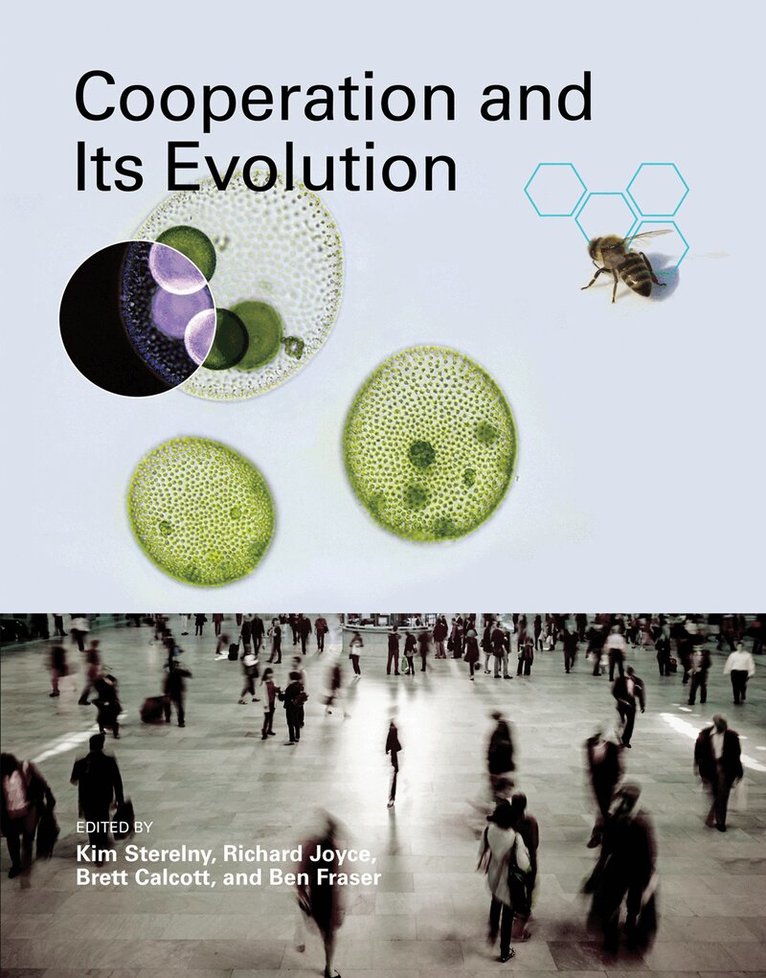
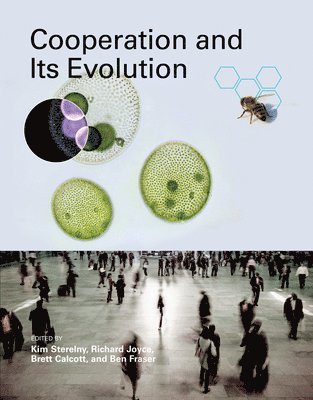
Essays from a range of disciplinary perspectives show the central role that cooperation plays in structuring our world.
This collection reports on the latest research on an increasingly pivotal issue for evolutionary biology: cooperation. The chapters are written from a variety of disciplinary perspectives and utilize research tools that range from empirical survey to conceptual modeling, reflecting the rich diversity of work in the field. They explore a wide taxonomic range, concentrating on bacteria, social insects, and, especially, humans.
Part I ("Agents and Environments") investigates the connections of social cooperation in social organizations to the conditions that make cooperation profitable and stable, focusing on the interactions of agent, population, and environment. Part II ("Agents and Mechanisms") focuses on how proximate mechanisms emerge and operate in the evolutionary process and how they shape evolutionary trajectories. Throughout the book, certain themes emerge that demonstrate the ubiquity of questions regarding cooperation in evolutionary biology: the generation and division of the profits of cooperation; transitions in individuality; levels of selection, from gene to organism; and the "human cooperation explosion" that makes our own social behavior particularly puzzling from an evolutionary perspective.
443 kr
Läs direkt efter köp
524 kr
Skickas inom 7-10 vardagar
1 137 kr
Skickas inom 3-6 vardagar
1 390 kr
Skickas inom 7-10 vardagar
452 kr
Skickas inom 7-10 vardagar
547 kr
Skickas inom 7-10 vardagar
1 518 kr
Skickas inom 7-10 vardagar
2 526 kr
Skickas inom 10-15 vardagar
710 kr
Skickas inom 10-15 vardagar
1 043 kr
Läs direkt efter köp
1 036 kr
Läs direkt efter köp
876 kr
Skickas inom 10-15 vardagar
147 kr
Läs direkt efter köp
621 kr
Tillfälligt slut