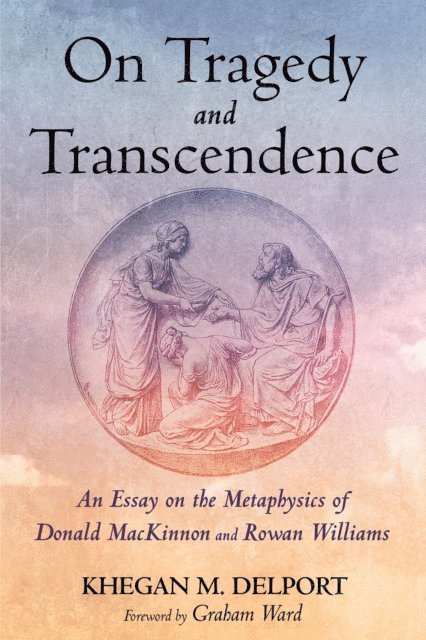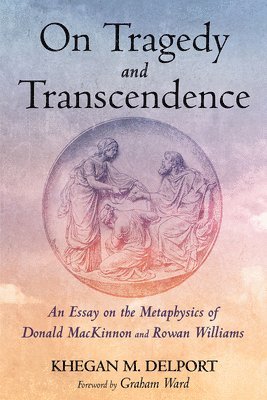
From the time of Plato's proposed expulsion of the poets, tragedy has repeatedly proposed a challenge to philosophical and theological certainties. This is apparent already in early Christianity amongst leading figures during the patristic age. But this raises the question: Why was the theme of tragedy still accepted and deployed throughout the history of Christianity nevertheless? Is this merely an accident or is there something more substantial at play? Can Christian theology take the tragic seriously? Must Christianity ultimately deny the tragic to be coherent, or might it be able to sustain its negativity? Some like George Steiner, David Bentley Hart, and John Milbank have doubts about such a coherency, but others think differently. This book aims to examine this debate, laying out the lines of disagreement and continuing tensions. Through a critical examination of the work of Donald MacKinnon and the eminent Christian thinker Rowan Williams, the book aims to show that there is a path for reconciling the claims of Christian orthodoxy and the experience of tragedy, one that is able to maintain a metaphysical foundation for both real transcendence and unfolding historicity, without denying either.
COVID-19 has impacted the way we see the world and the way we view spirituality; in times of crisis, people turn or return to religion or spirituality. Most of the South African population identifies as Christian. This brings to the fore what is meant by "spirituality" in a country crippled by the remains of apartheid structure, rampant corruption, poverty, and various systemic problems. Overall, there is a lack of scholarship investigating "spirituality" and "spirituality studies" from the global South. This book aims to bridge the gap. New avenues are investigated of thinking about God in difficult circumstances, as ideologies of hope and prosperity are reshaped. This book links text and context, spirituality and material culture, self and society, the analogue and the digital, contemplation and action, saying and unsaying; in short, the question of experiencing God in both everything and nothingness comes under the scope of this book.
How does a film's setting not only shape how we engage with its depiction of urban life but also of religion and theology? This edited collection offers a theological reflection on film, focusing on the role of "the city." Calvin D. Ullrich, Khegan M. Delport, Marthinus J. Havenga and their contributors offer theological reflections on film, illuminating traditional theological features which appear across city-focused cinema. Gathering contributions from a variety of theological experts working predominantly at the intersection of theological systematics, culture, and political ethics, the volume incorporates a variety of films where "the city" can become the object of and the object for vivified theological interest.Across three sections, Ullrich, Delport, Havenga and their contributors discuss both theological implications in cinema depicting both real life and fictional cities. Within this context, "the city" becomes understood as an aesthetic backdrop, a theological metaphor/imagination, and an un/livable communal and atomized location/space. Through this multi-leveled approach, the essays herein ask critical questions about the role "the city" has in shaping not only a film's viewing experience, but the religious and theological queries it engages.