• Fri frakt över 249 kr
  • •
  • Snabba leveranser
  • •
  • Billiga böcker
Kundservice
Bokus logotyp. Gå till startsidan.
  • Erbjudanden
  • E-böcker
  • Jul
  • Nyheter
  • Pocket
  • Spel & pussel
  • Student
  • Topplistor
  • Barn & ungdom
  • Bokus Play
Black Week 15% på allt med kod:
Se alla aktuella erbjudanden

Mina sidor

    Hjälp

    • Kundservice
    • Vanliga frågor och svar
    • Frakt och leverans
    • Retur vid ångerrätt
    • Reklamera vara
    • Betalning
    • Köpvillkor
    • Allmänna villkor
    • Information om webbplatsens tillgänglighet

    Om Bokus

    • Om oss
    • Pressrum
    • För studenter
    • För företag
    • För bibliotek och offentlig verksamhet
    • För leverantörer
    • Hållbarhet

    Populärt

    • Aktuella erbjudanden
    • Bokus Play
    • Presentkort
    • Student
    • Nyheter
    • Topplistor
    • Black friday
    • Signerade böcker
    • Engelska böcker
    • Jul

    Inspiration

    • Boktips
    • BookTok
    • Populära bokserier
    • Barnbokskaraktärer
    • Populära författare
    • Bokcirkel
    • Prisbelönade böcker
    • Barn och läsning

    Mina sidor

      Hjälp

      • Kundservice
      • Vanliga frågor och svar
      • Frakt och leverans
      • Retur vid ångerrätt
      • Reklamera vara
      • Betalning
      • Köpvillkor
      • Allmänna villkor
      • Information om webbplatsens tillgänglighet

      Om Bokus

      • Om oss
      • Pressrum
      • För studenter
      • För företag
      • För bibliotek och offentlig verksamhet
      • För leverantörer
      • Hållbarhet

      Populärt

      • Aktuella erbjudanden
      • Bokus Play
      • Presentkort
      • Student
      • Nyheter
      • Topplistor
      • Black friday
      • Signerade böcker
      • Engelska böcker
      • Jul

      Inspiration

      • Boktips
      • BookTok
      • Populära bokserier
      • Barnbokskaraktärer
      • Populära författare
      • Bokcirkel
      • Prisbelönade böcker
      • Barn och läsning
      Logotyp för Bokus
      Följ oss på Facebook (extern länk)Följ oss på Instagram (extern länk)Följ oss på YouTube (extern länk)Följ oss på TikTok (extern länk)
      Bokus @ CookiesIntegritetspolicyKöpvillkor
      Till Citymail hemsida (extern länk)Till DHL hemsida (extern länk)Till Instabox hemsida (extern länk)Till Bring hemsida (extern länk)Till Budbee hemsida (extern länk)Till Postnord hemsida (extern länk)Till Schenker hemsida (extern länk)Till Early Bird hemsida (extern länk)Till Walleys hemsida (extern länk)
      • Skönlitteratur
      • Barn och ungdom
      • Deckare
      • Samhälle och politik
      • Spel och pussel
      • Kalender
      • Fantasy, SciFi och skräck
      • Psykologi och pedagogik
      • Biografier
      • Sport, fritid och hobby
      • Historia och arkeologi
      • Hälsa och familj
      • Mat och dryck
      • Tecknade serier
      • Ekonomi och Ledarskap
      • Filosofi och religion
      • Kultur
      • Pennor och tillbehör
      • Naturvetenskap och teknik
      • Medicin
      • Läromedel
      • Juridik
      • Djur och Natur
      • Språk och ordböcker
      • Ande, kropp och själ
      • Måla och pyssla
      • Reseguider
      • Hem och Trädgård
      • Data och IT
      • Anteckning
      • Kort, Kuvert och Brevpapper
      • Kontorsmaterial
      • Lästillbehör
      • Garn stickning
      • Presentinslagning
      • Romaner
      • Romance
      • Feelgood
      • Action och Äventyrsromaner
      • Komedi
      • Poesi
      • Noveller
      • Litteraturvetenskap
      • Essäer
      • Myter
      • Dramatik
      • Erotiska böcker
      • Antologier
      • Sagor
      • Folksagor
      • Barnböcker 3-6 år
      • Barnböcker 6-9 år
      • Barnböcker 9-12 år
      • Barnböcker 0-3 år
      • Faktaböcker
      • Pysselböcker
      • Kapitelböcker
      • Böcker 12-15 år
      • Lättlästa barnböcker
      • Ungdomsböcker
      • Böcker om känslor
      • Klassiska barnböcker
      • Populära teman
      • Kokböcker för barn
      • Presentböcker
      • Godnattsagor
      • Thriller
      • Polisromaner
      • Deckare
      • Mysdeckare
      • Psykologisk spänning
      • Historiska deckare
      • Klassiska deckare
      • Samhälle och kultur
      • Politik och statsskick
      • Social välfärd och brottslighet
      • Reportage, journalistik och krönikor
      • Krig och försvar
      • Sociologi och antropologi
      • Spel
      • Pussel
      • Leksaker
      • Adventskalender
      • Kalender och almanacka
      • Fantasy
      • Science fiction
      • Skräck
      • Psykologi
      • Pedagogik
      • Sanna berättelser
      • Biografier
      • Självbiografier och Memoarer
      • Tal
      • Hantverk och handarbete
      • Hobby, spel och lekar
      • Sportböcker
      • Humor och presentböcker
      • Fordonsböcker
      • Fiske, jakt och skytte
      • Antikviteter och samlarobjekt
      • Fest och bröllop
      • Livsstil och stilguider
      • Historia
      • Arkeologi
      • Hälsa
      • Relationer
      • Självhjälp och praktiska råd
      • Föräldraböcker
      • Självförsörjning och grön livsstil
      • Prepping och överlevnadskunskap
      • Kokböcker
      • Kokböcker från kända kockar
      • Drycker
      • Tobak
      • Tecknade serier och romaner
      • Manga
      • Företagsekonomi
      • Ledarskapsböcker
      • Nationalekonomi
      • Industrier och branscher
      • Karriärplanering
      • Privatekonomi
      • Religion och tro
      • Filosofi
      • Musikböcker
      • Konstböcker
      • Scenkonst och film
      • Arkitektur
      • Fotoböcker
      • Designböcker
      • Pennor
      • Penntillbehör
      • Matematik och naturvetenskap
      • Teknik och industri
      • Geovetenskap
      • Andra medicinska specialiteter
      • Medicin: allmänt
      • Omvårdnad och medicinska stödfunktioner
      • Klinisk medicin och internmedicin
      • Medicin: icke kliniska discipliner
      • Medicinska studiehandledningar och referensmaterial
      • Alternativ medicin och terapier
      • Kirurgi
      • Veterinärmedicin
      • Läromedel: språk
      • Läromedel: matematik och naturvetenskap
      • Läromedel: samhälle och humaniora
      • Läromedel: yrkesutbildning och övriga ämnen
      • Läromedel: estetiska ämnen
      • Läromedel: studiehandledningar och handböcker
      • Särskilda rättsområden
      • Rättsvetenskap
      • Lagtextsamlingar, lagböcker
      • Internationell rätt
      • Juridik: handböcker
      • Djurböcker
      • Naturböcker
      • Språk: referensverk och allmänt
      • Språkundervisning och språkinlärning
      • Språkvetenskap och lingvistik
      • Ande, kropp och själ
      • Övernaturliga fenomen / det paranormala
      • Pyssel & DIY
      • Kreativitet
      • Måla och teckna
      • Fotoalbum och tillbehör
      • Reseböcker
      • Kartböcker
      • Parlörer
      • Trädgårdsböcker
      • Hus och hem
      • Heminredning
      • Systemvetenskap och AI
      • Informationsteknik: allmänt
      • Programmeringsböcker
      • Digital livsstil och datorspel
      • Grafik och bildbehandling
      • Databaser
      • Affärsapplikationer
      • Människa – datorinteraktion
      • Tillämpad datateknik
      • IT-säkerhet
      • Nätverk och kommunikation
      • Operativsystem
      • Hårdvara
      • It-certifieringar
      • Anteckningsböcker och block
      • Notisblock och flikar
      • Anteckning för barn
      • Gästböcker och adressböcker
      • Kort
      • Kuvert
      • Brevpapper
      • Etiketter
      • Placeringskort
      • Skrivbordsprodukter
      • Skrivbordsförvaring
      • Kopieringspapper
      • Arkivering och bokföring
      • Bokstöd och Book Nook
      • Läslampor
      • Bokmärken
      • Läsglasögon
      • Garn
      • Stickor
      • Presentpapper
      • Presentsnören
      • Presentpåsar
      1. Författare
      2. Kentaro Sakuwa

      Kentaro Sakuwa – författare

      Visar alla böcker från författaren Kentaro Sakuwa. Handla med fri frakt och snabb leverans.
      6 produkter
      Information om vår produktsortering

      Lär dig mer om vår produktsortering och varför vissa produkter visas och prioriteras framför andra.

      Hoppa över filtreringsmeny
      Böcker
      6 produkter
      Information om vår produktsortering

      Lär dig mer om vår produktsortering och varför vissa produkter visas och prioriteras framför andra.

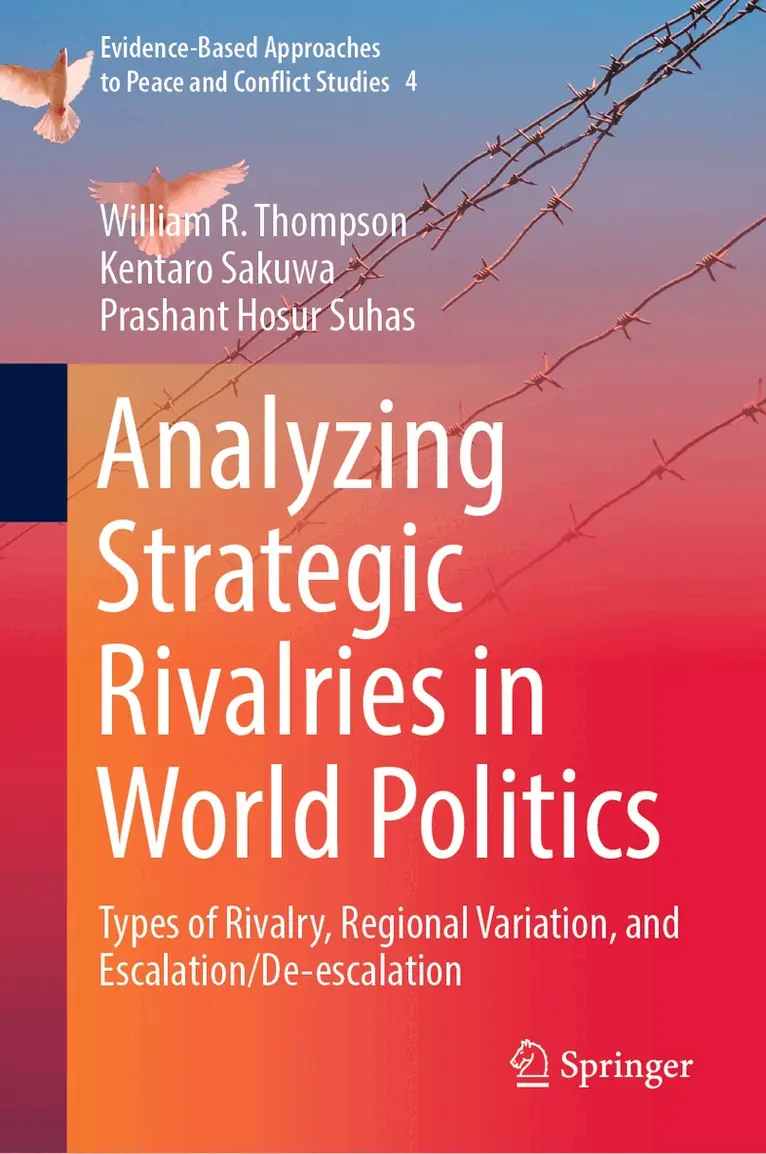
      • William R. Thompson, Kentaro Sakuwa, Prashant Hosur Suhas - Analyzing Strategic Rivalries in World Politics, Inbunden. Tillgänglighet: Lägg i varukorg
        Del 4 - Evidence-Based Approaches to Peace and Conflict Studies

        Analyzing Strategic Rivalries in World Politics

        Types of Rivalry, Regional Variation, and Escalation/De-escalation

        AvWilliam R. Thompson,Kentaro Sakuwam. fl.

        Inbunden, Engelska, 2021

        1 324 kr

        Skickas inom 10-15 vardagar

        Strategic rivalries are contests between states that view one another as threatening competitors and treat each other as enemies. A disproportionate amount of interstate conflict is generated by a relatively small number of these pairs of states engaged in rivalries that can persist for years. Thus, to understand interstate peace and conflict, it is useful to know how rivalries work in general and more specifically. In the past two decades, a strenuous effort has been mounted to introduce the concept of rivalry and demonstrate its utility in unraveling conflict situations. Yet all rivalries are not exactly alike. We need to move to a more rewarding differentiation of how they differ in general. Principal rivalries are those antagonisms that are most significant to the decision makers in a state. The main distinction on issues about which rivals dispute are positional and spatial concerns. Positional rivalries contend over regional and global influence. Spatial rivals contend over which state deserves to control disputed territory. Interventionary rivalries predominate in sub-Saharan Africa. Their primary focus involves neighboring states attempting to influence who rules and how co-ethnics are treated. This book updates the inventory of strategic rivalries from 1816 to 2020. Principal rivalries are identified for the first time and cover the same period. A theory stressing the two main types of rivalry (positional and spatial) is elaborated and tested. Regional variations on the origins and terminations of spatial rivalry are explored and interpreted. In addition, attention is paid to fluctuations in the intensity of positional rivalries by examining the working of the contemporary major power triangle (United States, Soviet Union/Russia, and China) and, more generally, the dynamics of regional power that are rising in terms of their relative capability and status in the system. Variations in cooperation and termination dynamics both in general andaccording to rivalry type are also examined.  Overall, the emphases of the book are split between demonstrating the utility of distinguishing among rivalry types and examining selected rivalry dynamics.

      • Prashant Hosur Suhas, Kentaro Sakuwa, William R. Thompson - Analyzing Strategic Rivalries in World Politics, E-bok. Tillgänglighet: Lägg i varukorg

        Analyzing Strategic Rivalries in World Politics

        Types of Rivalry, Regional Variation, and Escalation/De-escalation

        AvPrashant Hosur Suhas,Kentaro Sakuwam. fl.

        E-bok
        Engelska, 2021

        1 785 kr

        Läs direkt efter köp

        Strategic rivalries are contests between states that view one another as threatening competitors and treat each other as enemies. A disproportionate amount of interstate conflict is generated by a relatively small number of these pairs of states engaged in rivalries that can persist for years. Thus, to understand interstate peace and conflict, it is useful to know how rivalries work in general and more specifically. In the past two decades, a strenuous effort has been mounted to introduce the concept of rivalry and demonstrate its utility in unraveling conflict situations. Yet all rivalries are not exactly alike. We need to move to a more rewarding differentiation of how they differ in general. Principal rivalries are those antagonisms that are most significant to the decision makers in a state. The main distinction on issues about which rivals dispute are positional and spatial concerns. Positional rivalries contend over regional and global influence. Spatial rivals contend over which state deserves to control disputed territory. Interventionary rivalries predominate in sub-Saharan Africa. Their primary focus involves neighboring states attempting to influence who rules and how co-ethnics are treated.

        This book updates the inventory of strategic rivalries from 1816 to 2020. Principal rivalries are identified for the first time and cover the same period. A theory stressing the two main types of rivalry (positional and spatial) is elaborated and tested. Regional variations on the origins and terminations of spatial rivalry are explored and interpreted. In addition, attention is paid to fluctuations in the intensity of positional rivalries by examining the working of the contemporary major power triangle (United States, Soviet Union/Russia, and China) and, more generally, the dynamics of regional power that are rising in terms of their relative capability and status in the system. Variations in cooperation and termination dynamics both in general andaccording to rivalry type are also examined.  Overall, the emphases of the book are split between demonstrating the utility of distinguishing among rivalry types and examining selected rivalry dynamics.

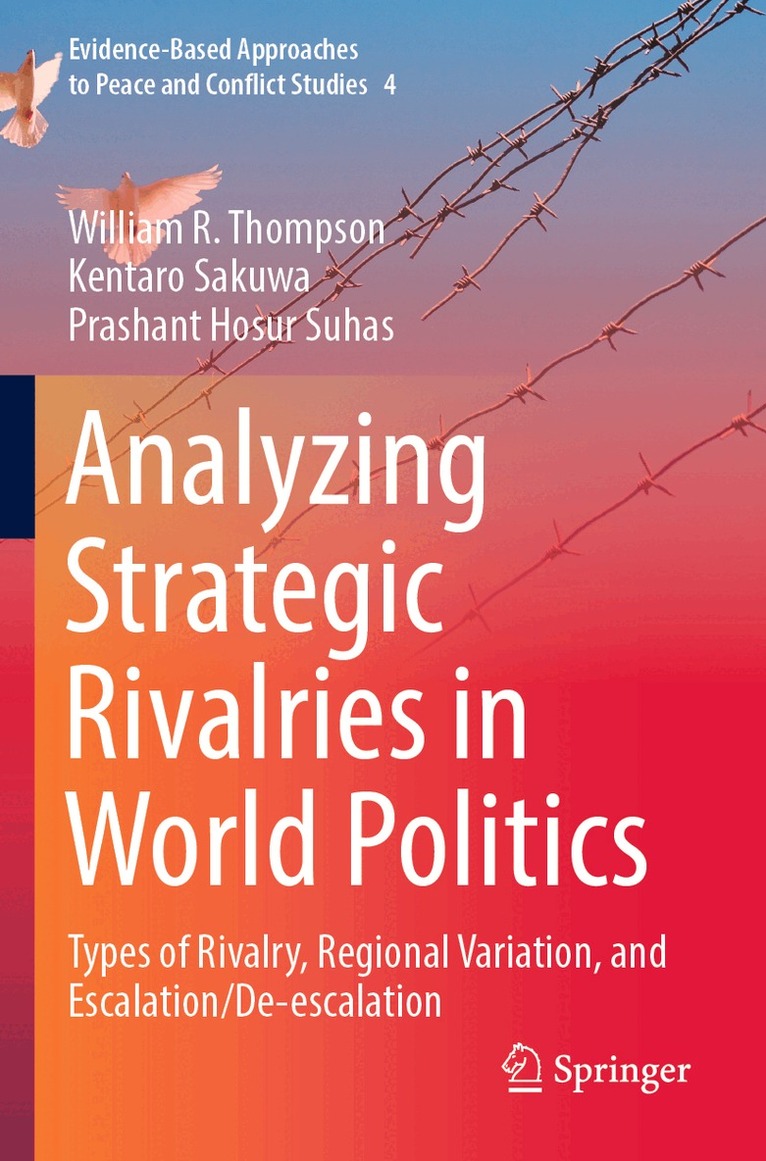
      • William R. Thompson, Kentaro Sakuwa, Prashant Hosur Suhas - Analyzing Strategic Rivalries in World Politics, Häftad. Tillgänglighet: Lägg i varukorg
        Del 4 - Evidence-Based Approaches to Peace and Conflict Studies

        Analyzing Strategic Rivalries in World Politics

        Types of Rivalry, Regional Variation, and Escalation/De-escalation

        AvWilliam R. Thompson,Kentaro Sakuwam. fl.

        Häftad, Engelska, 2022

        727 kr

        Skickas inom 7-10 vardagar

        Strategic rivalries are contests between states that view one another as threatening competitors and treat each other as enemies. A disproportionate amount of interstate conflict is generated by a relatively small number of these pairs of states engaged in rivalries that can persist for years. Thus, to understand interstate peace and conflict, it is useful to know how rivalries work in general and more specifically. In the past two decades, a strenuous effort has been mounted to introduce the concept of rivalry and demonstrate its utility in unraveling conflict situations. Yet all rivalries are not exactly alike. We need to move to a more rewarding differentiation of how they differ in general. Principal rivalries are those antagonisms that are most significant to the decision makers in a state. The main distinction on issues about which rivals dispute are positional and spatial concerns. Positional rivalries contend over regional and global influence. Spatial rivals contend over which state deserves to control disputed territory. Interventionary rivalries predominate in sub-Saharan Africa. Their primary focus involves neighboring states attempting to influence who rules and how co-ethnics are treated. This book updates the inventory of strategic rivalries from 1816 to 2020. Principal rivalries are identified for the first time and cover the same period. A theory stressing the two main types of rivalry (positional and spatial) is elaborated and tested. Regional variations on the origins and terminations of spatial rivalry are explored and interpreted. In addition, attention is paid to fluctuations in the intensity of positional rivalries by examining the working of the contemporary major power triangle (United States, Soviet Union/Russia, and China) and, more generally, the dynamics of regional power that are rising in terms of their relative capability and status in the system. Variations in cooperation and termination dynamics both in general andaccording to rivalry type are also examined.  Overall, the emphases of the book are split between demonstrating the utility of distinguishing among rivalry types and examining selected rivalry dynamics.
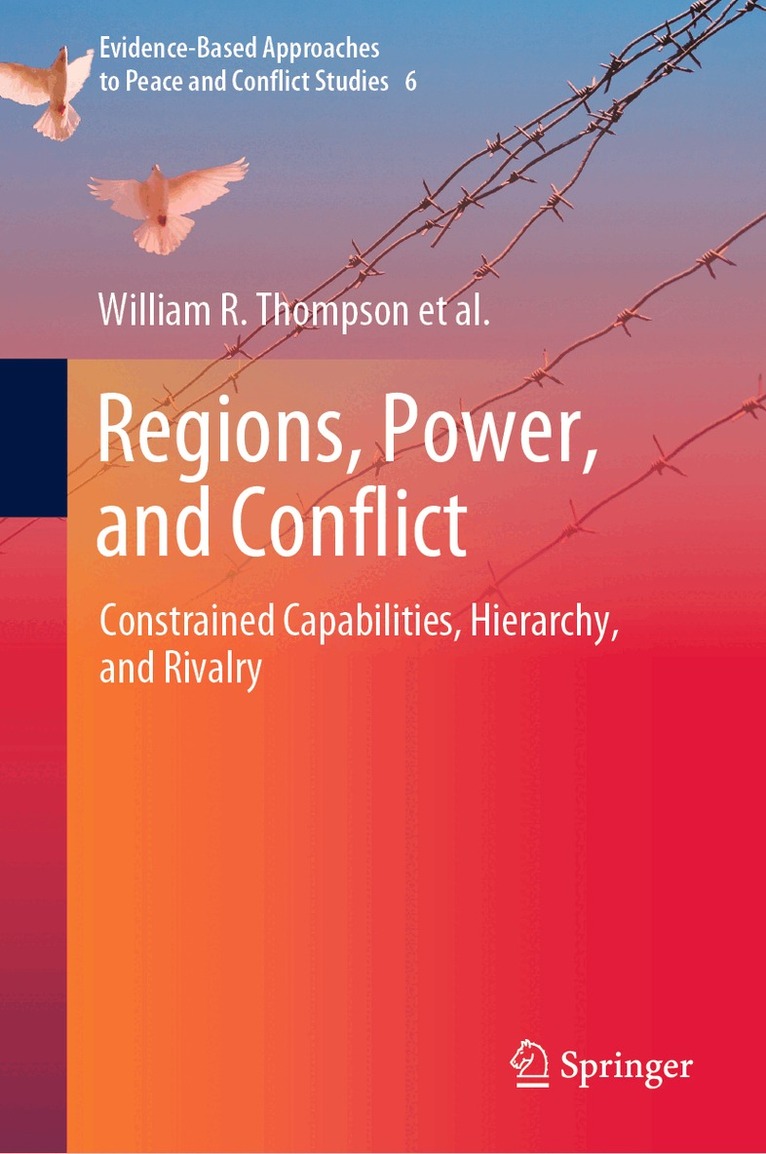
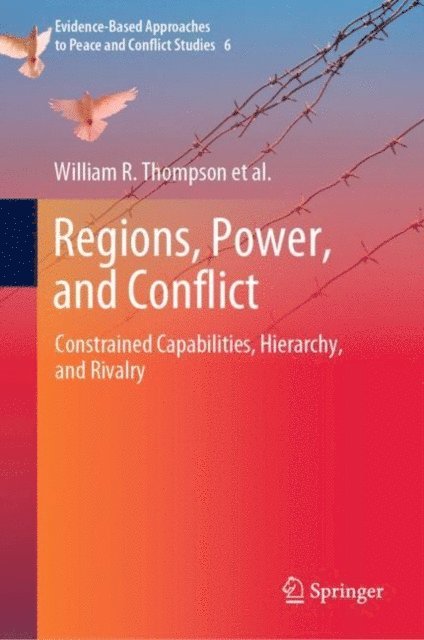
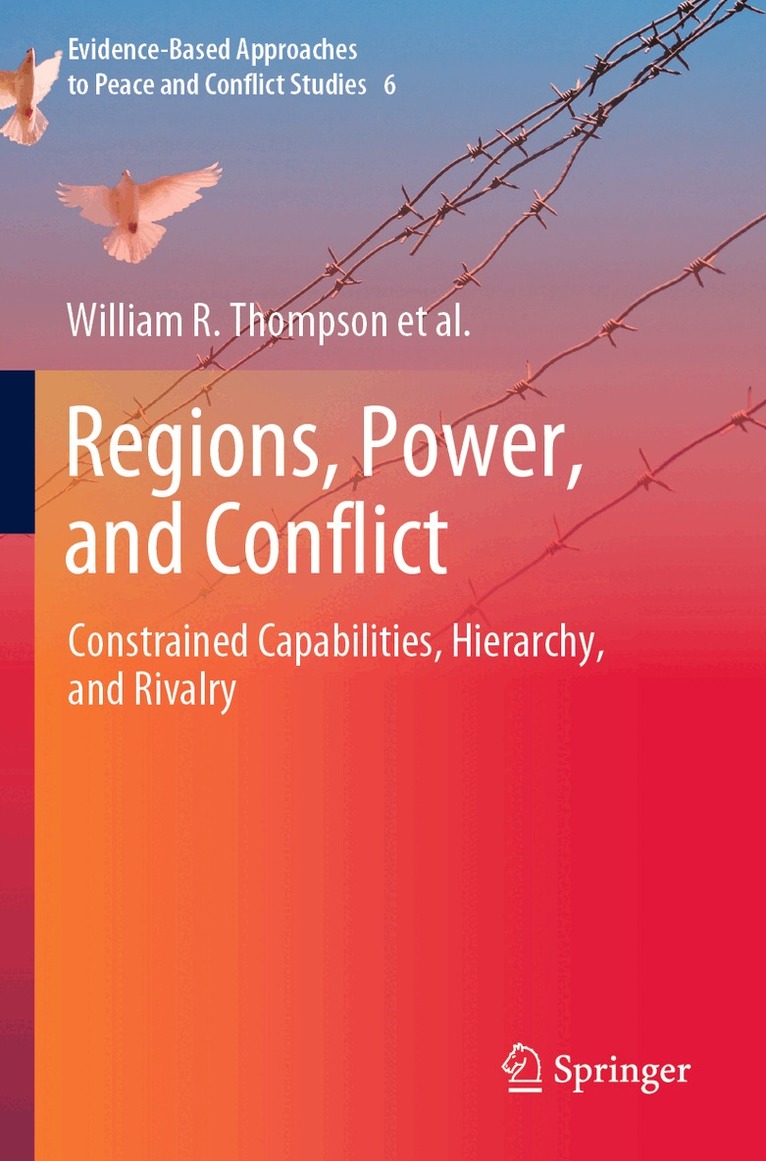
      • William R. Thompson, Thomas J. Volgy, Paul Bezerra, Jacob Cramer, Kelly Marie Gordell, Manjeet Pardesi, Karen Rasler, J. Patrick Rhamey Jr., Kentaro Sakuwa, Rachel Van Nostrand, Leila Zakhirova - Regions, Power, and Conflict, Inbunden. Tillgänglighet: Lägg i varukorg
        Del 6 - Evidence-Based Approaches to Peace and Conflict Studies

        Regions, Power, and Conflict

        Constrained Capabilities, Hierarchy, and Rivalry

        AvWilliam R. Thompson,Thomas J. Volgym. fl.

        Inbunden, Engelska, 2022

        1 654 kr

        Skickas inom 10-15 vardagar

        The three main levels of analysis in international relations have been the systemic, the national, and the individual.  A fourth level that falls between the systemic and the national is the region.  It is woefully underdeveloped in comparison to the attention afforded the other three.  Yet regions tend to be distinctive theaters for international politics.  Otherwise, we would not recognize that Middle Eastern interstate politics somehow does not resemble Latin American interstate politics or interstate politics in Southern Africa (although once the Middle East and Southern Africa may have seemed more similar in their mutual fixation with opposition to domestic policies in Israel and  South Africa, respectively). This book, divided into three parts, first makes a case for studying regional politics even though it must also be appreciated that regional boundaries are also hazy and not always easy to pin down empirically.  The second part examines power distributions within regions as an important entry point to studying regional similarities and differences.  Two emphases are stressed.  One is that regional power assessments need to be conditioned by controlling for weak states which are more common in some regions than they are in others.  The other emphasis is on regional power hierarchies.  Some regions have strong regional hierarchies while others do not. Regions with strong hierarchies operate much differently from those without them in the sense that the former are more pacific than the latter.  The third part of the book focuses on regional differences in terms of conflict behavior, order preferences, rivalries, and rivalry termination.
      • Leila Zakhirova, Rachel Van Nostrand, Kentaro Sakuwa, J. Patrick Rhamey Jr., Karen Rasler, Manjeet Pardesi, Kelly Marie Gordell, Jacob Cramer, Paul Bezerra, Thomas J. Volgy, William R. Thompson - Regions, Power, and Conflict, E-bok. Tillgänglighet: Lägg i varukorg

        Regions, Power, and Conflict

        Constrained Capabilities, Hierarchy, and Rivalry

        AvLeila Zakhirova,Rachel Van Nostrandm. fl.

        E-bok
        Engelska, 2022

        2 111 kr

        Läs direkt efter köp

        The three main levels of analysis in international relations have been the systemic, the national, and the individual.  A fourth level that falls between the systemic and the national is the region.  It is woefully underdeveloped in comparison to the attention afforded the other three.  Yet regions tend to be distinctive theaters for international politics.  Otherwise, we would not recognize that Middle Eastern interstate politics somehow does not resemble Latin American interstate politics or interstate politics in Southern Africa (although once the Middle East and Southern Africa may have seemed more similar in their mutual fixation with opposition to domestic policies in Israel and  South Africa, respectively). 

        This book, divided into three parts, first makes a case for studying regional politics even though it must also be appreciated that regional boundaries are also hazy and not always easy to pin down empirically.  The second part examines power distributions within regions as an important entry point to studying regional similarities and differences.  Two emphases are stressed.  One is that regional power assessments need to be conditioned by controlling for weak states which are more common in some regions than they are in others.  The other emphasis is on regional power hierarchies.  Some regions have strong regional hierarchies while others do not. Regions with strong hierarchies operate much differently from those without them in the sense that the former are more pacific than the latter.  The third part of the book focuses on regional differences in terms of conflict behavior, order preferences, rivalries, and rivalry termination.

      • William R. Thompson, Thomas J. Volgy, Paul Bezerra, Jacob Cramer, Kelly Marie Gordell, Manjeet Pardesi, Karen Rasler, J. Patrick Rhamey Jr., Kentaro Sakuwa, Rachel Van Nostrand, Leila Zakhirova - Regions, Power, and Conflict, Häftad. Tillgänglighet: Lägg i varukorg
        Del 6 - Evidence-Based Approaches to Peace and Conflict Studies

        Regions, Power, and Conflict

        Constrained Capabilities, Hierarchy, and Rivalry

        AvWilliam R. Thompson,Thomas J. Volgym. fl.

        Häftad, Engelska, 2023

        1 654 kr

        Skickas inom 10-15 vardagar

        The three main levels of analysis in international relations have been the systemic, the national, and the individual.  A fourth level that falls between the systemic and the national is the region.  It is woefully underdeveloped in comparison to the attention afforded the other three.  Yet regions tend to be distinctive theaters for international politics.  Otherwise, we would not recognize that Middle Eastern interstate politics somehow does not resemble Latin American interstate politics or interstate politics in Southern Africa (although once the Middle East and Southern Africa may have seemed more similar in their mutual fixation with opposition to domestic policies in Israel and  South Africa, respectively). This book, divided into three parts, first makes a case for studying regional politics even though it must also be appreciated that regional boundaries are also hazy and not always easy to pin down empirically.  The second part examines power distributions within regions as an important entry point to studying regional similarities and differences.  Two emphases are stressed.  One is that regional power assessments need to be conditioned by controlling for weak states which are more common in some regions than they are in others.  The other emphasis is on regional power hierarchies.  Some regions have strong regional hierarchies while others do not. Regions with strong hierarchies operate much differently from those without them in the sense that the former are more pacific than the latter.  The third part of the book focuses on regional differences in terms of conflict behavior, order preferences, rivalries, and rivalry termination.