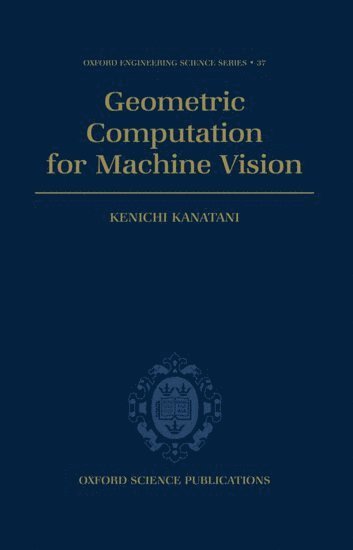
Geometric Computation for Machine Vision
4 821 kr
Skickas inom 10-15 vardagar
4 821 kr
Skickas inom 10-15 vardagar
1 512 kr
Skickas inom 10-15 vardagar
792 kr
Skickas inom 10-15 vardagar
827 kr
Skickas inom 10-15 vardagar
316 kr
Skickas inom 3-6 vardagar
901 kr
Läs direkt efter köp
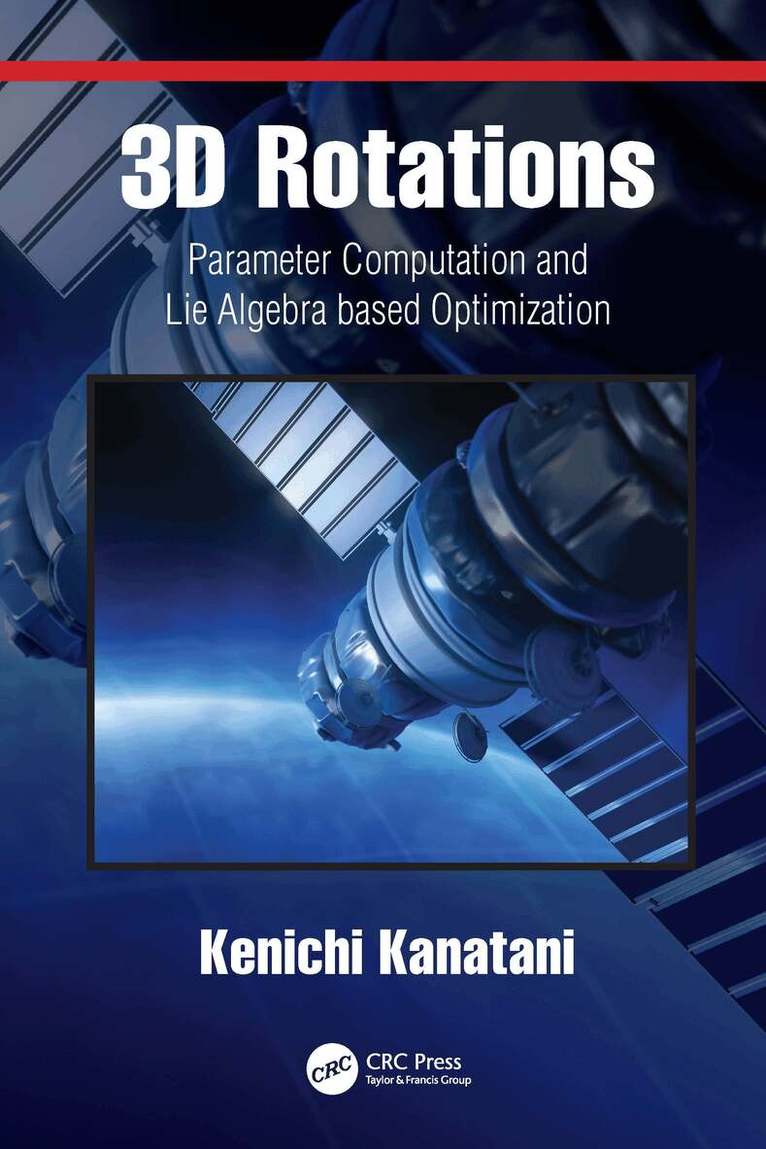
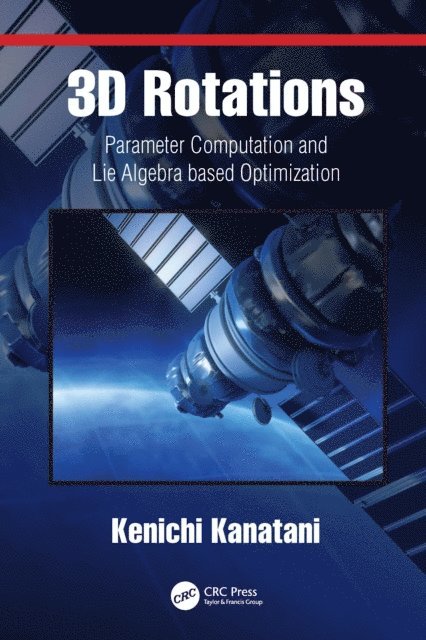
3D rotation analysis is widely encountered in everyday problems thanks to the development of computers. Sensing 3D using cameras and sensors, analyzing and modeling 3D for computer vision and computer graphics, and controlling and simulating robot motion all require 3D rotation computation. This book focuses on the computational analysis of 3D rotation, rather than classical motion analysis. It regards noise as random variables and models their probability distributions. It also pursues statistically optimal computation for maximizing the expected accuracy, as is typical of nonlinear optimization. All concepts are illustrated using computer vision applications as examples.
Mathematically, the set of all 3D rotations forms a group denoted by SO(3). Exploiting this group property, we obtain an optimal solution analytical or numerically, depending on the problem. Our numerical scheme, which we call the "Lie algebra method," is based on the Lie group structure of SO(3).
This book also proposes computing projects for readers who want to code the theories presented in this book, describing necessary 3D simulation setting as well as providing real GPS 3D measurement data. To help readers not very familiar with abstract mathematics, a brief overview of quaternion algebra, matrix analysis, Lie groups, and Lie algebras is provided as Appendix at the end of the volume.
901 kr
Läs direkt efter köp
3D rotation analysis is widely encountered in everyday problems thanks to the development of computers. Sensing 3D using cameras and sensors, analyzing and modeling 3D for computer vision and computer graphics, and controlling and simulating robot motion all require 3D rotation computation. This book focuses on the computational analysis of 3D rotation, rather than classical motion analysis. It regards noise as random variables and models their probability distributions. It also pursues statistically optimal computation for maximizing the expected accuracy, as is typical of nonlinear optimization. All concepts are illustrated using computer vision applications as examples.
Mathematically, the set of all 3D rotations forms a group denoted by SO(3). Exploiting this group property, we obtain an optimal solution analytical or numerically, depending on the problem. Our numerical scheme, which we call the "Lie algebra method," is based on the Lie group structure of SO(3).
This book also proposes computing projects for readers who want to code the theories presented in this book, describing necessary 3D simulation setting as well as providing real GPS 3D measurement data. To help readers not very familiar with abstract mathematics, a brief overview of quaternion algebra, matrix analysis, Lie groups, and Lie algebras is provided as Appendix at the end of the volume.
860 kr
Läs direkt efter köp
1 530 kr
Skickas inom 10-15 vardagar
567 kr
Skickas inom 10-15 vardagar
679 kr
Skickas inom 10-15 vardagar
605 kr
Skickas inom 10-15 vardagar
750 kr
Läs direkt efter köp
903 kr
Läs direkt efter köp
809 kr
Läs direkt efter köp
838 kr
Skickas inom 10-15 vardagar
732 kr
Läs direkt efter köp
565 kr
Skickas inom 10-15 vardagar
565 kr
Skickas inom 10-15 vardagar
734 kr
Läs direkt efter köp