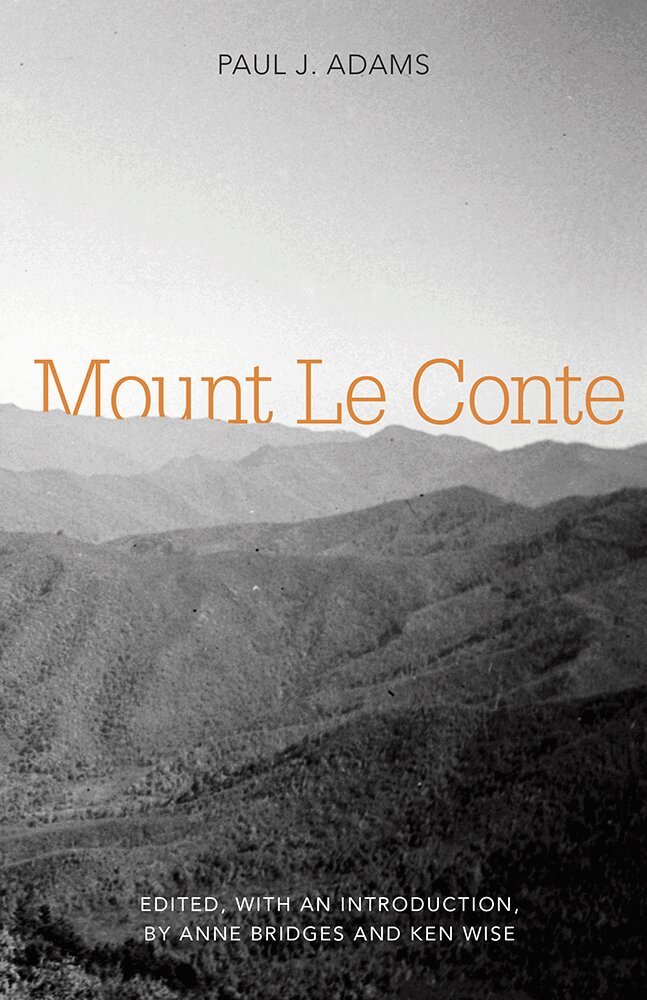
In print for the first time in fifty years, Mount Le Conte is a reissue of the important 1966 self-published memoir by Paul J. Adams (1901–1985), a well-known Tennessee naturalist and the first custodian of the Smoky Mountain’s majestic summit in the years before the area was declared a national park. Appointed custodian of Mount Le Conte in 1925 by the Great Smoky Mountains Conservation Association—the organization leading the national park efforts that would come to fruition in 1934—Adams went to work immediately and spent a year making the camp suitable for overnight visitors. Mount Le Conte, a massive mile-high formation extending five miles from the main divide of the Great Smoky Mountains, with its rugged landscapes, rushing streams, and fecund forests, was considered a prime showplace in efforts to establish the Smokies as a national park. In addition to an extensive introduction, the editors have augmented the original text of Mount Le Conte with several photographs and sketches gleaned from Adams’s personal papers, resulting in a fuller, more complete reconstruction of Adams’s role in establishing the camp that would later come to be known as Le Conte Lodge.An important source on the fascinating history of Mount Le Conte in the pre-Park era, this book is a companion to the recently published Smoky Jack: The Adventures of a Dog and his Master on Mount Le Conte (University of Tennessee Press, 2016).
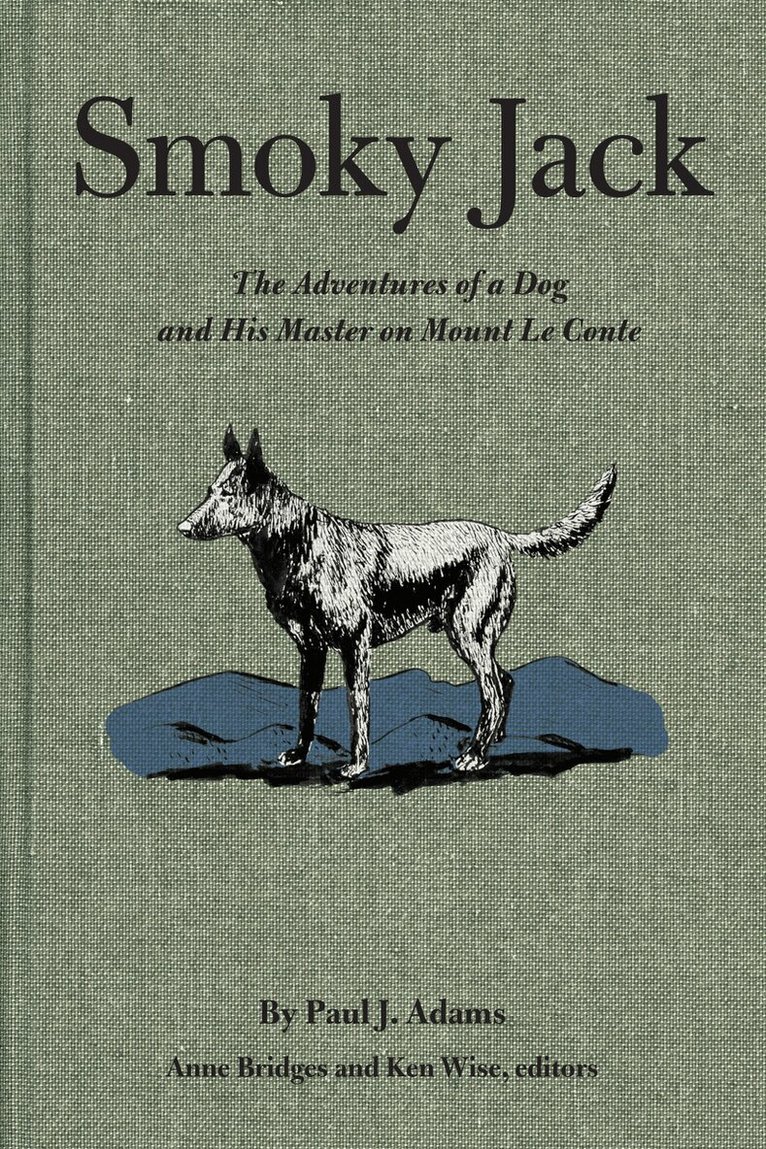
In 1925, Paul Adams was appointed custodian of Mount Le Conte, the third-highest peak of the Great Smoky Mountains National Park. His job was to welcome tourists, give guided tours, and establish a camp that would become known as LeConte Lodge, which still stands in what has become America’s most popular national park. Adams had everything he needed for the job: a passion for the outdoors, a love of hiking, a desire to preserve the native habitat while welcoming visitors, and the companionship of a remarkable dog.During his time on the mountains, Adams trained Smoky Jack to be a pack-dog–not just carrying supplies but actually making the four-hour trip to a store in Gatlinburg and back alone. Over the next nine months, Adams and his dog would become inseperable. Smoky Jack became his assistant, bodyguard, and best friend. Throughout Smoky Jack, readers will also gain a unique glimpse into the early days of the Great Smoky Mountains region during the decade before it was name a national park in 1934.Adams describes the trials and triumphs he and the indomitable German sherpherd faced as they exemplified the ancient relationship between man and dog on Mount Le Conte, building trails, guiding visitors, and making a life in nature. Paul Adams’s faithful Smoky Jack stays by his side until the end.
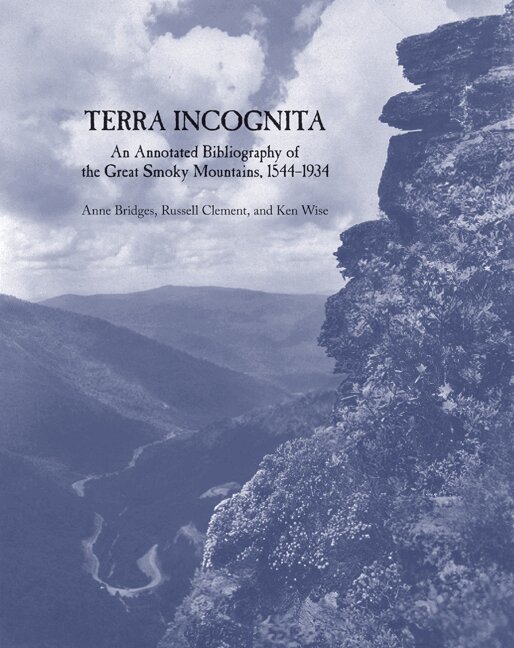
Terra Incognita is the most comprehensive bibliography of sources related to the Great Smoky Mountains ever created. Compiled and edited by three librarians, this authoritative and meticulously researched work is an indispensable reference for scholars and students studying any aspect of the region’s past.Starting with the de Soto map of 1544, the earliest document that purports to describe anything about the Great Smoky Mountains, and continuing through 1934 with the establishment of the Great Smoky Mountains National Park—today the most visited national park in the United States—this volume catalogs books, periodical and journal articles, selected newspaper reports, government publications, dissertations, and theses published during that period.This bibliography treats the Great Smoky Mountain Region in western North Carolina and east Tennessee systematically and extensively in its full historic and social context. Prefatory material includes a timeline of the Great Smoky Mountains and a list of suggested readings on the era covered. The book is divided into thirteen thematic chapters, each featuring an introductory essay that discusses the nature and value of the materials in that section. Following each overview is an annotated bibliography that includes full citation information and a bibliographic description of each entry.Chapters cover the history of the area; the Cherokee in the Great Smoky Mountains; the national forest movement and the formation of the national park; life in the locality; Horace Kephart, perhaps the most important chronicler to document the mountains and their inhabitants; natural resources; early travel; music; literature; early exploration and science; maps; and recreation and tourism. Sure to become a standard resource on this rich and vital region, Terra Incognita is an essential acquisition for all academic and public libraries and a boundless resource for researchers and students of the region.