2 760 kr
Skickas inom 10-15 vardagar
2 760 kr
Skickas inom 10-15 vardagar
754 kr
Skickas inom 10-15 vardagar
5 617 kr
Skickas inom 7-10 vardagar
585 kr
Läs direkt efter köp
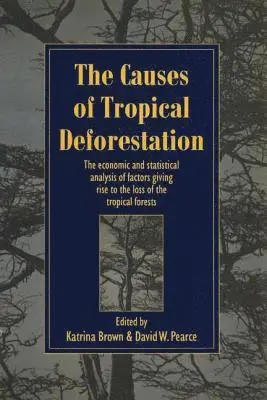
The Causes of Tropical Deforestation (1994) is an analysis of the problem of deforestation, using statistical technique – a form of ‘environ-metrics’ – to discover the true causes of an issue whose basis is hotly debated, and attributed to causes as varied as poverty, external debt, multinational logging companies, government corruption, the IMF, population growth, and non-sustainable agriculture.
589 kr
Läs direkt efter köp
The Causes of Tropical Deforestation (1994) is an analysis of the problem of deforestation, using statistical technique – a form of ‘environ-metrics’ – to discover the true causes of an issue whose basis is hotly debated, and attributed to causes as varied as poverty, external debt, multinational logging companies, government corruption, the IMF, population growth, and non-sustainable agriculture.
2 145 kr
Skickas inom 10-15 vardagar
505 kr
Skickas inom 10-15 vardagar
590 kr
Skickas inom 10-15 vardagar
864 kr
Läs direkt efter köp
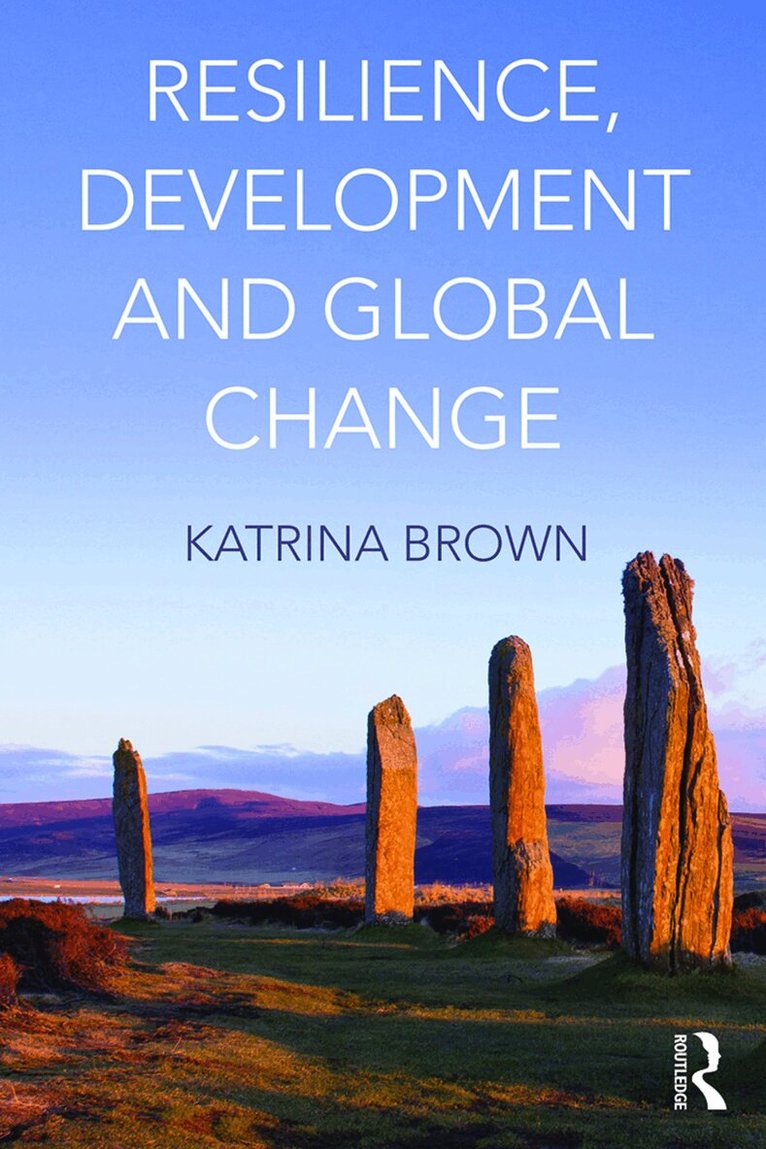
Resilience is currently infusing policy debates and public discourses, widely promoted as a normative goal in fields as diverse as the economy, national security, personal development and well-being. Resilience thinking provides a framework for understanding dynamics of complex, inter-connected social, ecological and economic systems. The book critically analyzes the multiple meanings and applications of resilience ideas in contemporary society and to suggests where, how and why resilience might cause us to re-think global change and development, and how this new approach might be operationalized.
The book shows how current policy discourses on resilience promote business-as-usual rather than radical responses to change. But it argues that resilience can help understand and respond to the challenges of the contemporary age. These challenges are characterized by high uncertainty; globalized and interconnected systems; increasing disparities and limited choices. Resilience thinking can overturn orthodox approaches to international development dominated by modernization, aid dependency and a focus on economic growth and to global environmental change – characterized by technocratic approaches, market environmentalism and commoditization of ecosystem services.
Resilience, Development and Global Change presents a sophisticated, theoretically informed synthesis of resilience thinking across disciplines. It applies resilience ideas specifically to international development and relates resilience to core theories in development and shows how a radical, resilience-based approach to development might transform responses to climate change, to the dilemmas of managing forests and ecosystems, and to rural and urban poverty in the developing world. The book provides fresh perspectives for scholars of international development, environmental studies and geography and add new dimensions for those studying broader fields of ecology and society.
877 kr
Läs direkt efter köp
Resilience is currently infusing policy debates and public discourses, widely promoted as a normative goal in fields as diverse as the economy, national security, personal development and well-being. Resilience thinking provides a framework for understanding dynamics of complex, inter-connected social, ecological and economic systems. The book critically analyzes the multiple meanings and applications of resilience ideas in contemporary society and to suggests where, how and why resilience might cause us to re-think global change and development, and how this new approach might be operationalized.
The book shows how current policy discourses on resilience promote business-as-usual rather than radical responses to change. But it argues that resilience can help understand and respond to the challenges of the contemporary age. These challenges are characterized by high uncertainty; globalized and interconnected systems; increasing disparities and limited choices. Resilience thinking can overturn orthodox approaches to international development dominated by modernization, aid dependency and a focus on economic growth and to global environmental change – characterized by technocratic approaches, market environmentalism and commoditization of ecosystem services.
Resilience, Development and Global Change presents a sophisticated, theoretically informed synthesis of resilience thinking across disciplines. It applies resilience ideas specifically to international development and relates resilience to core theories in development and shows how a radical, resilience-based approach to development might transform responses to climate change, to the dilemmas of managing forests and ecosystems, and to rural and urban poverty in the developing world. The book provides fresh perspectives for scholars of international development, environmental studies and geography and add new dimensions for those studying broader fields of ecology and society.
693 kr
Läs direkt efter köp
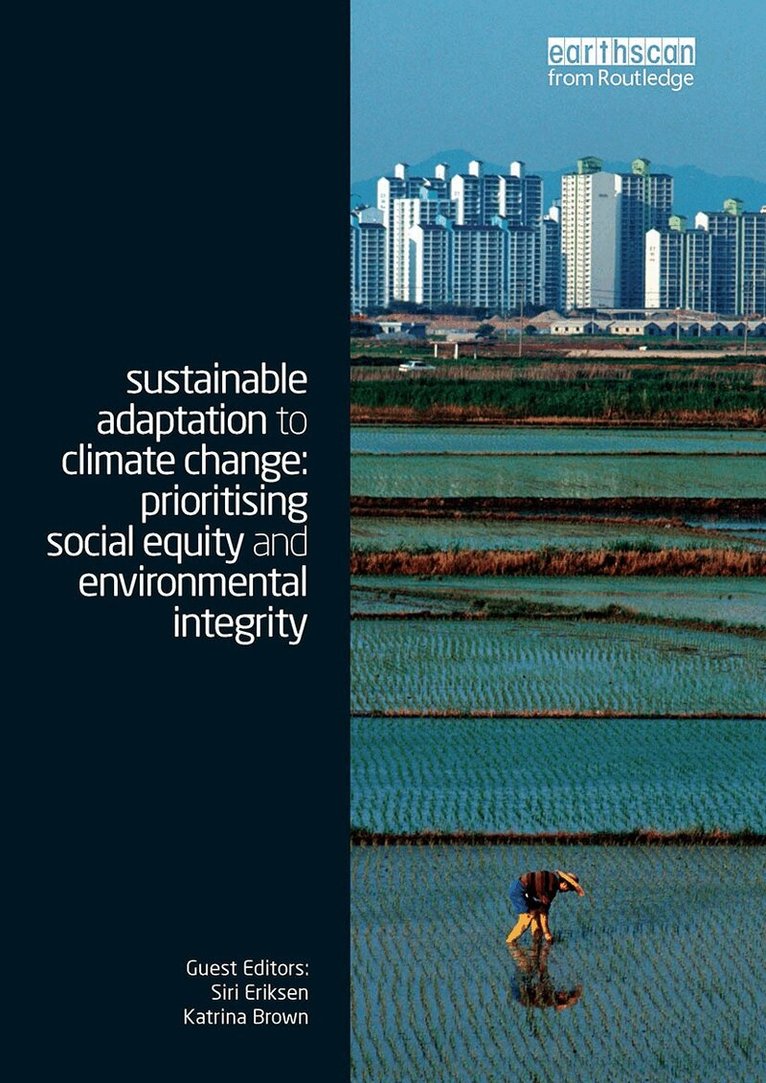
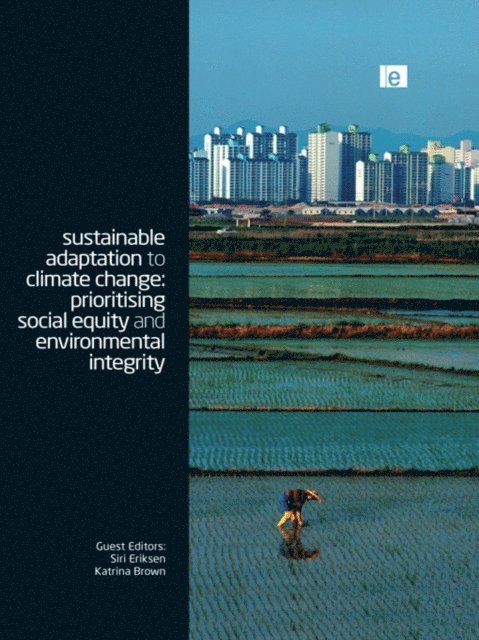
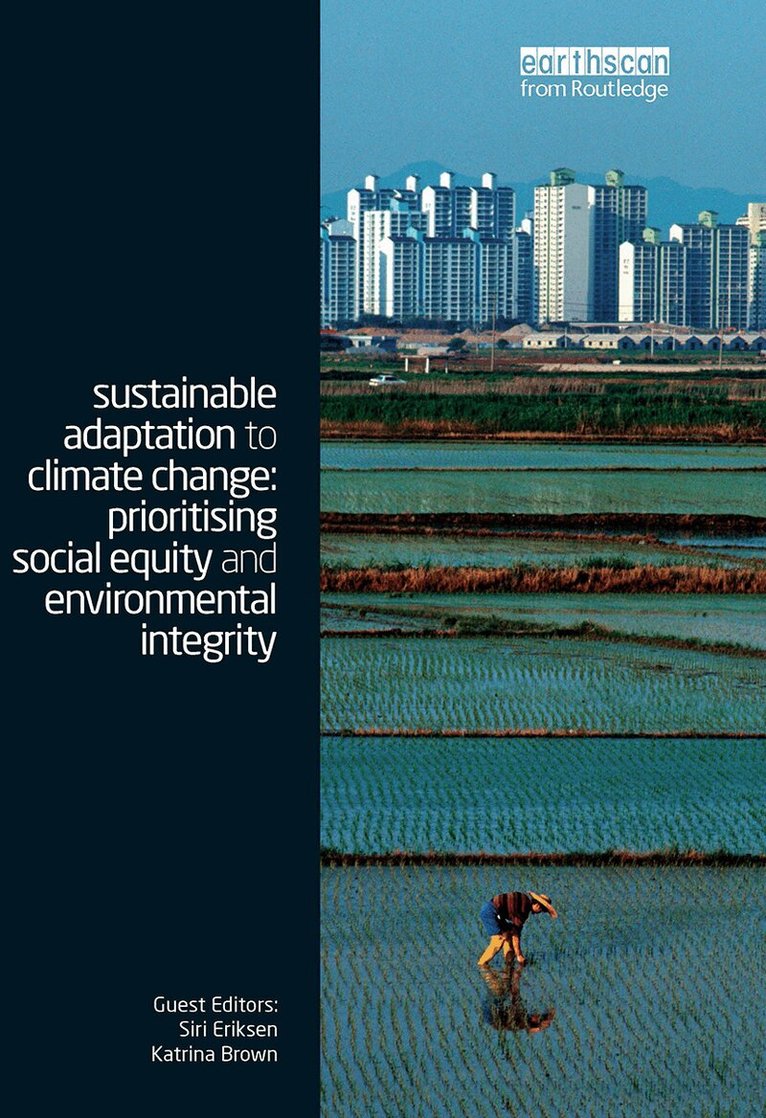
This book sets out how to ensure that adaptation efforts are socially and environmentally sustainable, contributing to poverty reduction as well as confronting the processes driving vulnerability.
Over $100bn a year is pledged to help finance adaptation projects via the The Climate Adaptation Fund. These projects and their funding played a central role in the latest climate talks in Cancun, Mexico, ensuring that adaptation to climate change will be an international priority over the next few decades.
Many existing adaptation projects are however, not environmentally or socially sustainable. Adaptation projects that focus on reducing specific climate sensitivities can, even if bringing benefits, adversely affect vulnerable groups and create social inequity, or even unintentionally undermine environmental integrity.
Sustainable Adaptation to Climate Change examines how adaptation to climate change (types of measures, policy frameworks, and local household strategies) interacts with social and environmental sustainability. A mixture of conceptual and case study-based papers draw on research from Europe, Asia and Africa. It will be of interest to all researchers and policymakers in climate change adaptation and development.
864 kr
Läs direkt efter köp
877 kr
Läs direkt efter köp
578 kr
Skickas inom 10-15 vardagar
663 kr
Läs direkt efter köp
673 kr
Läs direkt efter köp
2 502 kr
Skickas inom 10-15 vardagar
747 kr
Skickas inom 10-15 vardagar
2 502 kr
Skickas inom 10-15 vardagar
258 kr
Skickas inom 7-10 vardagar
151 kr
Skickas inom 7-10 vardagar
1 063 kr
Tillfälligt slut
1 434 kr
Tillfälligt slut